
What Does JazakAllahu Khayran Mean?
JazakAllahu Khayran is the way Muslims say “thank you” that the Prophet Muhammad (pbuh) himself taught — a prayer that Allah reward the person with good. More than politeness, it answers every kindness by handing its reward to God. But what does this phrase actually mean, where does it come from, and why is it so loved? This guide explains.
The Best Way to Say Thank You
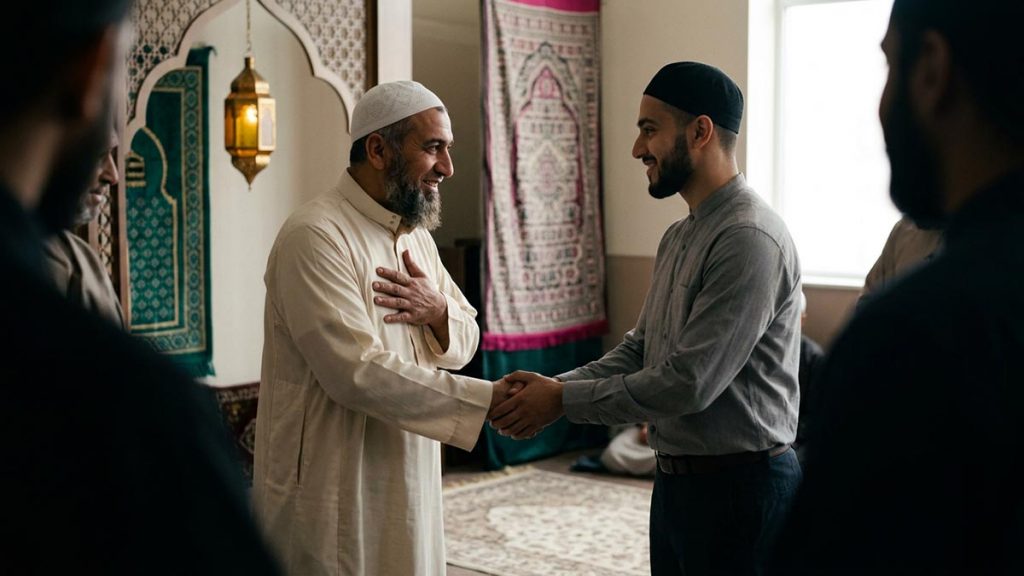
At its simplest, JazakAllahu Khayran (جَزَاكَ اللَّهُ خَيْرًا) means “may Allah reward you with good.” It is said to anyone who has helped or been kind to you, asking Allah to repay them with a reward far greater than words.
It is thanks raised to a prayer. Rather than only acknowledging a favour, the believer asks the Most Generous to give the other person good in this life and the next — a return no human thank you could ever match.
It does not stop with the person but asks Allah *to reward them with good*.
Breaking Down JazakAllahu Khayran
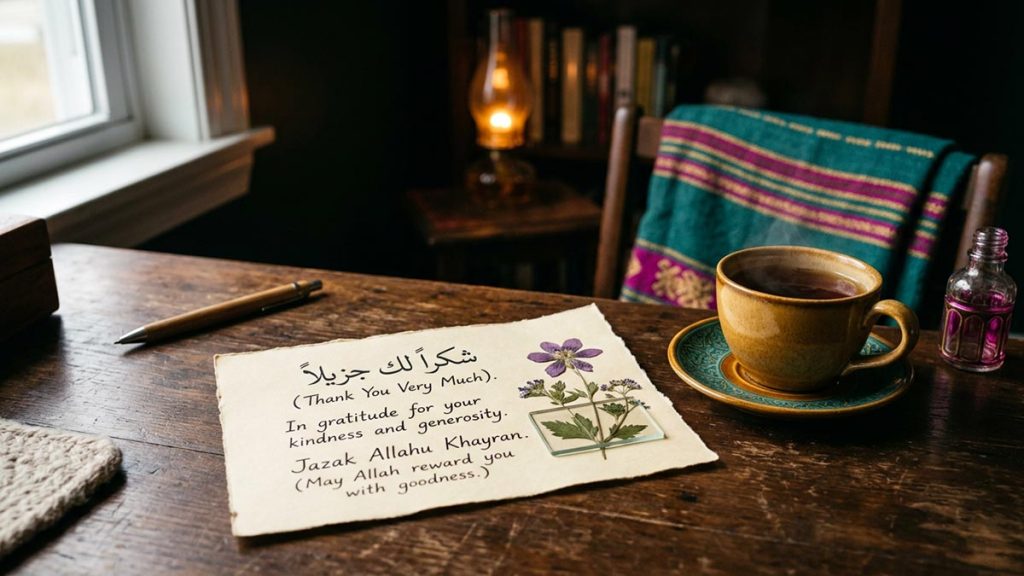
To feel the full weight of the phrase, it helps to unpack it word by word:
- Jazaka — جَزَاكَ — “may He reward you” (jazaki to a woman, jazakum to a group).
- Allahu — اللَّهُ — “Allah,” the One asked to give the reward.
- Khayran — خَيْرًا — “with good,” the goodness prayed for on the other person’s behalf.
Together the words ask Allah to reward a kindness with good — a thank you that becomes a heartfelt dua for the person who helped.
Jazaka Allahu means may Allah reward you, khayran means with good.
A Thank You from the Sunnah
This phrase is not just a custom; it is prophetic guidance. The Prophet (pbuh) taught that whoever has good done to them and says to the doer “JazakAllahu khayran” has praised them in the fullest way — because they have called on Allah to reward them.
That is what makes it so beloved. In a single phrase a believer both thanks a person and prays for them, turning ordinary gratitude into an act of worship and inviting reward for the one who was kind, in the spirit of helping.
Whoever says it to one who helped them has praised them in the fullest way — so the Prophet (pbuh) taught.
When Do Muslims Say JazakAllahu Khayran?
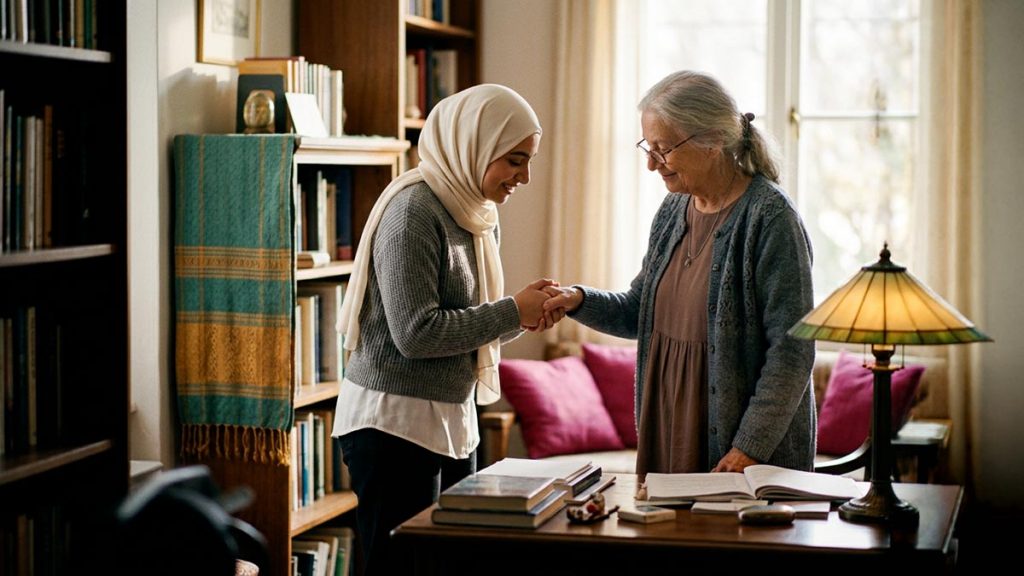
The phrase belongs to every moment of thanks, big or small. A believer says it when someone helps them, gives them advice, shares knowledge, offers a gift, or shows any kindness at all.
It has become the everyday Muslim “thank you,” heard between friends, family, colleagues, and strangers alike. Wherever gratitude is due, this is the phrase that pays it — and asks Allah to reward the generosity behind the kindness.
Said for help, advice, *a gift, or any kindness*.
5 Beautiful Reasons to Say JazakAllahu Khayran
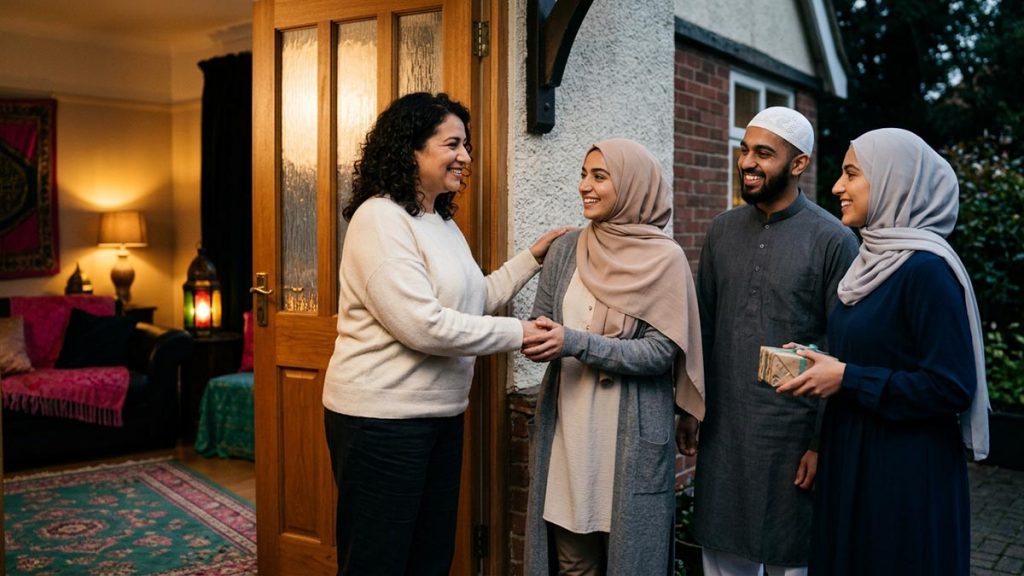
Why do Muslims reach for this phrase over a simple thank you? Here are five reasons:
- It is the fullest praise. The Prophet (pbuh) taught that saying it is the most complete way to thank someone for their kindness.
- It turns thanks into a prayer. Instead of stopping with the person, it asks Allah to reward them with good.
- It seeks a reward beyond your power. No human thank you can match what Allah gives, so the believer asks Him to repay the favour.
- It blesses both people. The one who says it earns reward for praising well; the one who hears it is prayed for.
- It keeps the heart grateful. Making thanks a habit softens the heart and strengthens the bonds of the Ummah.
For all these reasons, believers reach for this phrase again and again — a thank you that is also a gift.
It rewards both people — the one who prays and the one prayed for.
JazakAllahu Khayran and Related Phrases

It stands beside BarakAllahu Feek, “may Allah bless you,” another prayer said in place of a plain thank you; the two are often used together to answer kindness.
And like every supplication that names Allah, it is sealed with Allahumma Ameen, “O Allah, accept” — asking Him to answer the prayer of thanks just made.
Why This Prayer Matters
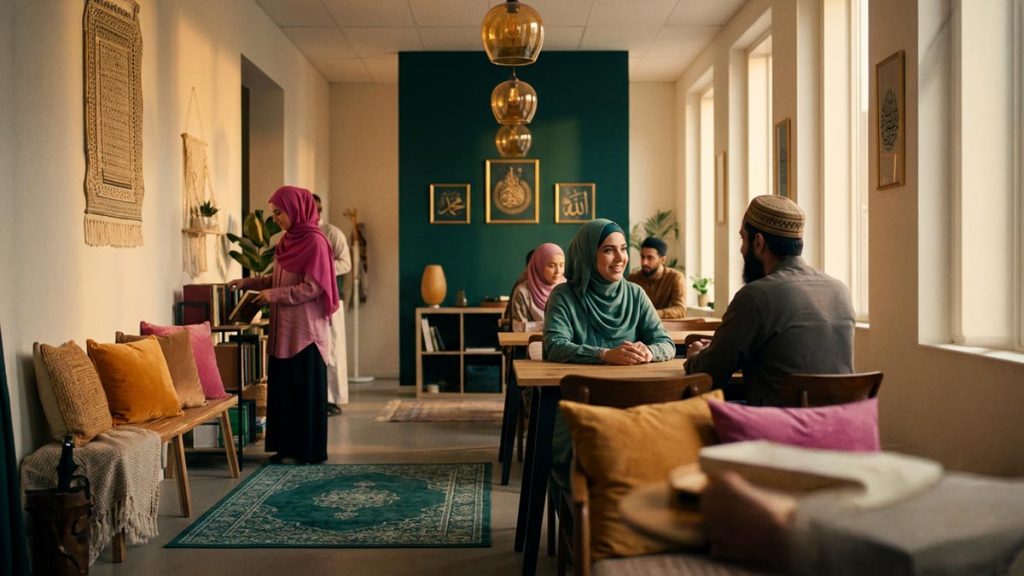
A thank you can be forgotten in a moment. JazakAllahu Khayran plants something lasting instead: a prayer that Allah reward the other person, spoken exactly as the Prophet (pbuh) advised.
In doing so it lifts everyday courtesy into worship. To thank a person by praying for them is to wish them a good far beyond anything we could give — and it keeps a believer’s heart grateful, generous, and closely tied to those around them.
If this deepened your love for the words you already say every day, come and learn with us. Follow It’s About Islam on YouTube, X and Pinterest for daily reminders, Quran reflections and the beautiful meanings behind the phrases every Muslim knows by heart.
It means “may Allah reward you with good.” Muslims say it to thank someone, asking Allah to repay their kindness with good in this life and the next.
The Prophet (pbuh) taught that saying it is the fullest way to thank someone, because it calls on Allah to reward them — a return far greater than a simple thank you.
A common reply is wa iyyakum or wa iyyak, meaning “and to you too,” returning the same prayer that Allah reward them with good.
Both are prayers of thanks. JazakAllahu Khayran asks Allah to reward the person with good; BarakAllahu Feek asks Allah to bless them. They are close in meaning and often used together.
The phrase itself comes from the Sunnah — the teaching of the Prophet (pbuh) — rather than being a verse of the Quran, though the Quran often speaks of Allah rewarding good with good.