
Dua for Depression
5 Sources of Hope in Allah

Depression can cast a long shadow over the heart, draining life of its colour and making hope feel distant. The dua for depression draws on the prayer of Prophet Yunus, who, in the deepest darkness, called upon Allah, declaring His oneness, glorifying Him, and acknowledging his own state. By this prayer, Allah brought Yunus out of the depths and into the light. It is a supplication of hope from the darkest of places, reminding the heart that no darkness is beyond the reach of the mercy of Allah.
لَا إِلَهَ إِلَّا أَنْتَ سُبْحَانَكَ إِنِّي كُنْتُ مِنَ الظَّالِمِينَ
Lā ilāha illā anta subhānaka innī kuntu minaz-zālimīn.
“There is no god but You; glory be to You; indeed, I was among the wrongdoers.”
Islam meets the suffering heart with compassion, never dismissing its pain. The dua for depression is a source of spiritual comfort and hope, a way of turning toward Allah when everything feels heavy. It stands alongside, and never in place of, the real care that depression calls for, including the support of trusted people and the help of professionals, just as any serious condition of the body or heart deserves proper care.
This guide explains the dua for depression, the meaning of Yunus’s prayer in the darkness, and five sources of hope in Allah, so that the heart weighed down by depression may find hope and comfort in turning to Allah, while also reaching for the support and help that matters most.
The Meaning of the Dua for Depression
The dua for depression is the prayer of Prophet Yunus, recorded in Surah Al-Anbiya. After leaving his people in distress, Yunus found himself in the depths of the sea, in the darkness of the night and the belly of the whale, surrounded by layers of darkness. In that overwhelming moment, he called upon Allah with words that declared there is no god but Him, glorified Him as far above any imperfection, and humbly acknowledged his own state. By this prayer, Allah heard him, relieved his distress, and brought him out into the light.

These words carry deep comfort for anyone whose heart feels surrounded by darkness. Yunus did not despair of the mercy of Allah, even in the most hopeless of situations. His prayer affirmed his faith, glorified his Lord, and turned to Him in humility, and Allah answered. The Prophet (pbuh) taught that no Muslim ever supplicates with these words for anything without Allah answering them, making this a supplication of hope from the very depths of despair.
The dua reminds the heart of a profound truth: that no darkness places a person beyond the reach of Allah. Yunus was in a situation from which escape seemed impossible, yet the mercy of Allah reached him there. For the heart weighed down by depression, this is a source of hope, that however dark things feel, the mercy of Allah can reach into that darkness and bring relief, just as it did for Yunus.
لَا إِلَٰهَ إِلَّا أَنْتَ سُبْحَانَكَ إِنِّي كُنْتُ مِنَ الظَّالِمِينَ
La ilaha illa anta subhanaka inni kuntu minaz-zalimin
There is no god but You glory be to You I was among the wrongdoers
Hope in the Darkest Moments
The story of Yunus is, at its heart, a story of hope in the darkest of moments. He was in a place of total darkness, with no apparent way out, and yet he turned to Allah and was answered. The Quran says that Allah saved him from his distress, and adds that this is how He saves the believers. The promise is for everyone: that turning to Allah in the depths brings His relief, no matter how hopeless things appear.
Depression can make a person feel that their darkness will never lift, that no relief is coming. The dua for depression speaks directly to this feeling, reminding the heart that even from the belly of the whale, the mercy of Allah brought light. It is not a promise that the struggle will vanish at once, but a source of hope to hold on to, that the One who brought Yunus out of the depths has not forgotten the suffering heart and can bring it, too, into the light.
This hope is not passive. Just as Yunus called out to Allah, the believer is encouraged to keep turning to Him, to keep making dua even when the heart feels heavy, and to hold on to the rope of hope in His mercy. Despair of the mercy of Allah is something the Quran warns against, for His mercy is vast and reaches further than we can imagine. However dark things feel, hope in Allah is always justified. The believer holds on to this hope not because the darkness is small, but because the mercy of Allah is vast, vaster than any darkness a heart can know. Even when relief feels far away, the very act of turning to Allah and refusing to despair is itself a quiet victory, a thread of light that keeps the heart connected to the One who can lift any darkness.
فَاسْتَجَبْنَا لَهُ وَنَجَّيْنَاهُ مِنَ الْغَمِّ وَكَذَٰلِكَ نُنْجِي الْمُؤْمِنِينَ
Fastajabna lahu wa najjaynahu minal-ghammi wa kadhalika nunjil-mu’minin
So We answered him and saved him from distress and thus We save believers
Five Sources of Hope in Allah
For the heart weighed down by depression, Islam offers sources of hope to hold on to. These five are found in Allah, alongside the real support and help that matters.
- The dua of Yunus, a prayer of hope from the depths that Allah always answers.
- The vastness of His mercy, which reaches into every darkness and is never to be despaired of.
- The nearness of Allah, who hears every prayer and is closer than you imagine.
- The promise of ease, for Allah has assured that with hardship comes ease.
- Support and help, reaching out to trusted people and professionals who can support you.
لَا تَقْنَطُوا مِنْ رَحْمَةِ اللَّهِ إِنَّ اللَّهَ يَغْفِرُ الذُّنُوبَ جَمِيعًا
La taqnatu min rahmatillahi innallaha yaghfirudh-dhunuba jami‘a
Do not despair of the mercy of Allah for His mercy is vast
Caring for Yourself Through Depression
Turning to Allah is the heart of how a believer faces depression, but Islam joins this with caring for oneself in practical ways. Depression is a heavy and real struggle, and just as the body deserves care when it is unwell, so does the heart. Reaching out to trusted family or friends, rather than carrying the weight alone, is an important step, for the believer is not meant to suffer in isolation. Sharing the burden with someone who cares can itself bring relief.
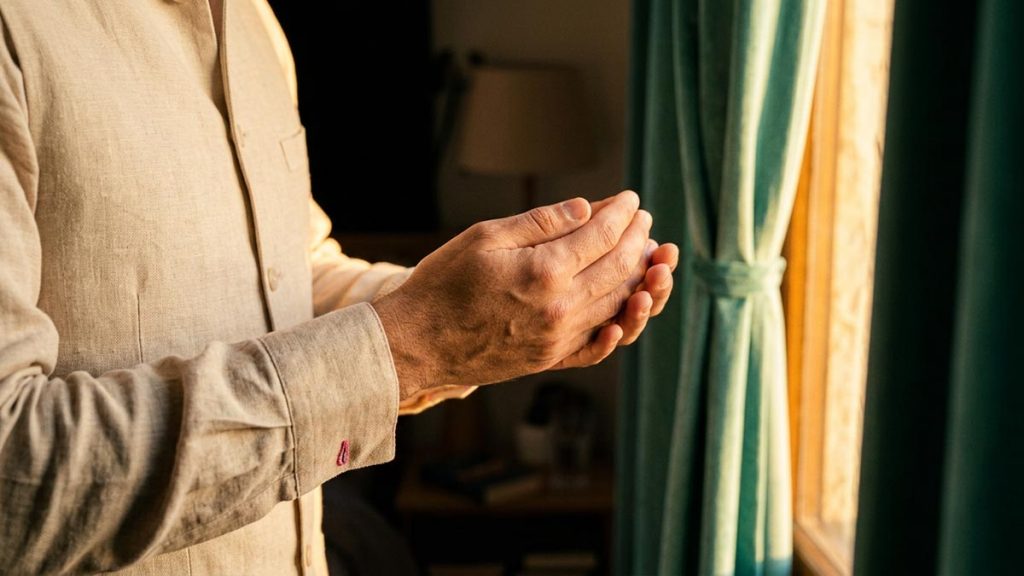
Seeking the help of professionals is also a wise and encouraged step. Just as one would see a doctor for a serious illness of the body, seeking help from a doctor or counsellor for the heart is an act of caring for the trust that Allah has given. There is no shame in it, and it does not lessen one’s faith; rather, it is part of taking the means alongside turning to Allah. The dua for depression and proper care work together, not against each other.
Small steps of self-care also matter: holding on to prayer even when it feels difficult, keeping some routine, spending time with people who lift the heart, and being gentle with oneself. The believer struggling with depression should know that their struggle does not distance them from Allah, that He is near, and that reaching for both His mercy and the help available is a sign of strength, not weakness. The Prophet (pbuh) showed great gentleness toward those who were suffering, and Islam honours the one who seeks help and holds on through hardship. No one is meant to carry the weight of depression alone, and turning to Allah, leaning on trusted people, and accepting professional help are all part of the same path back toward the light.
The Mercy and Hope of Allah
Depression can make hope feel impossibly far away, but the mercy of Allah reaches into every darkness, just as it reached Yunus in the depths. The dua for depression turns the heavy heart toward this mercy, a prayer of hope that Allah always answers, reminding the believer that no darkness is beyond His reach. Held together with the support of trusted people and the help that depression calls for, this dua becomes a source of hope and a means of turning toward the light.
This supplication pairs naturally with the dua for anxiety that seeks calm in Allah, and reflects the trust at the heart of patience in Islam. Together they bring the suffering heart toward the mercy and hope of Allah, who saved Yunus from the depths and saves the believers, and who is never to be despaired of, no matter how dark the present moment may ever seem.
The mercy of Allah reached Yunus in the depths of darkness, and no darkness is beyond its reach. Learn the healing duas with us on YouTube, where the supplications are recited aloud, on X for a gentle reminder of the hope faith brings, and on Pinterest where readers share how they hold on to hope in Allah while caring for themselves.
Frequently Asked Questions
The dua for depression is the Quranic prayer of Prophet Yunus, La ilaha illa anta subhanaka inni kuntu minaz-zalimin, by which Allah brought him out of the darkness. The Prophet (pbuh) taught that Allah always answers this supplication.
Say it whenever your heart feels heavy or surrounded by darkness, turning to Allah with the prayer of hope that He always answers. It is a source of comfort and hope alongside the care that helps.
The dua is a source of spiritual hope and comfort, not a replacement for the real care depression calls for. It works together with the support of trusted people and the help of professionals, never in place of them.
No, struggling with depression does not distance you from Allah, who is near to the suffering heart and whose mercy reaches every darkness. Reaching for both His mercy and the help available is a sign of strength.
Yunus made this prayer in the depths of darkness, and Allah heard him and brought him into the light, promising that this is how He saves the believers. It reminds the heart that no darkness is beyond the mercy of Allah.
Reaching out to trusted people rather than suffering alone, seeking the help of a doctor or counsellor, holding on to prayer, keeping some routine, and being gentle with yourself all help. Islam joins turning to Allah with taking these means.