
The Prophet Said About the Rights of Neighbour
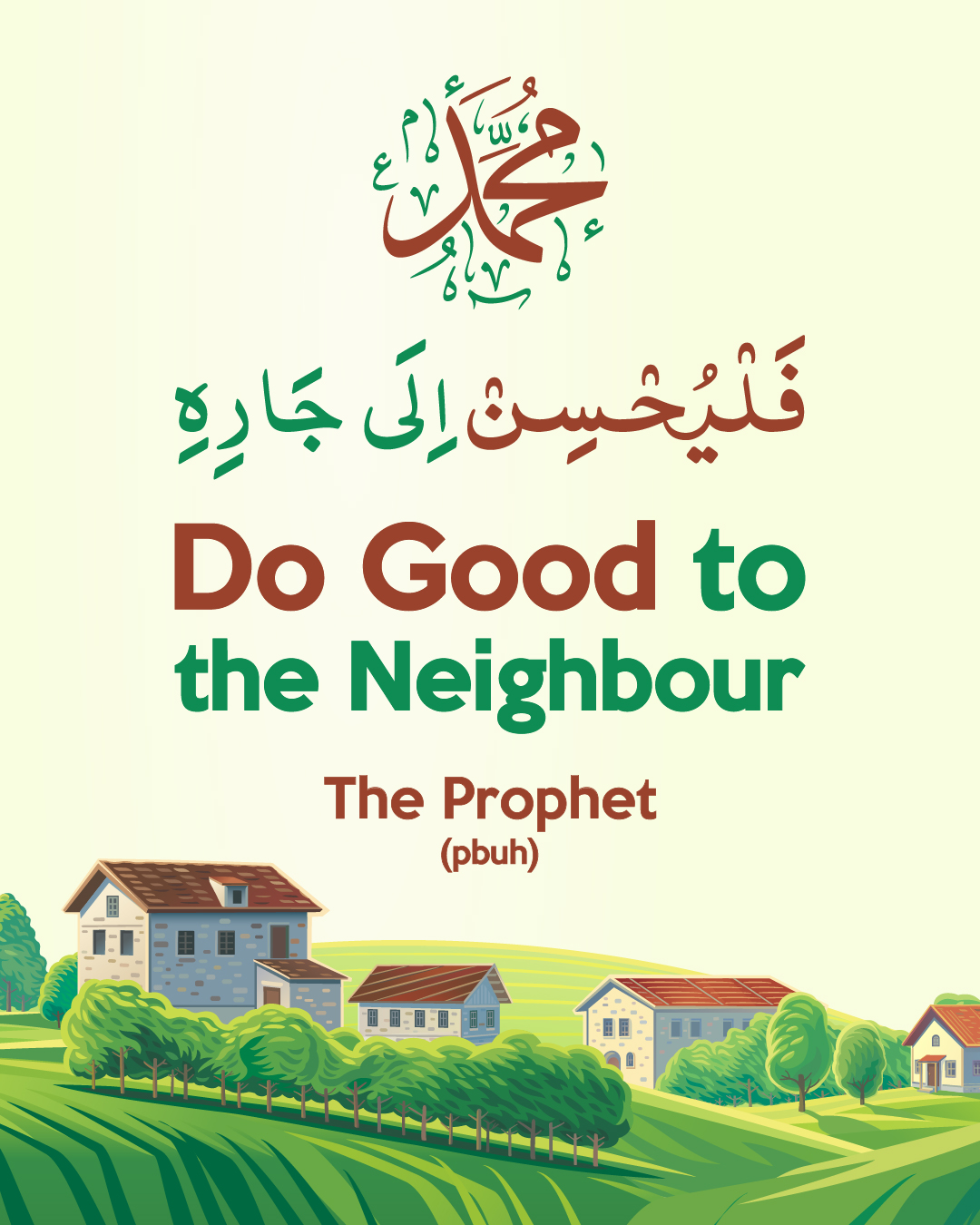
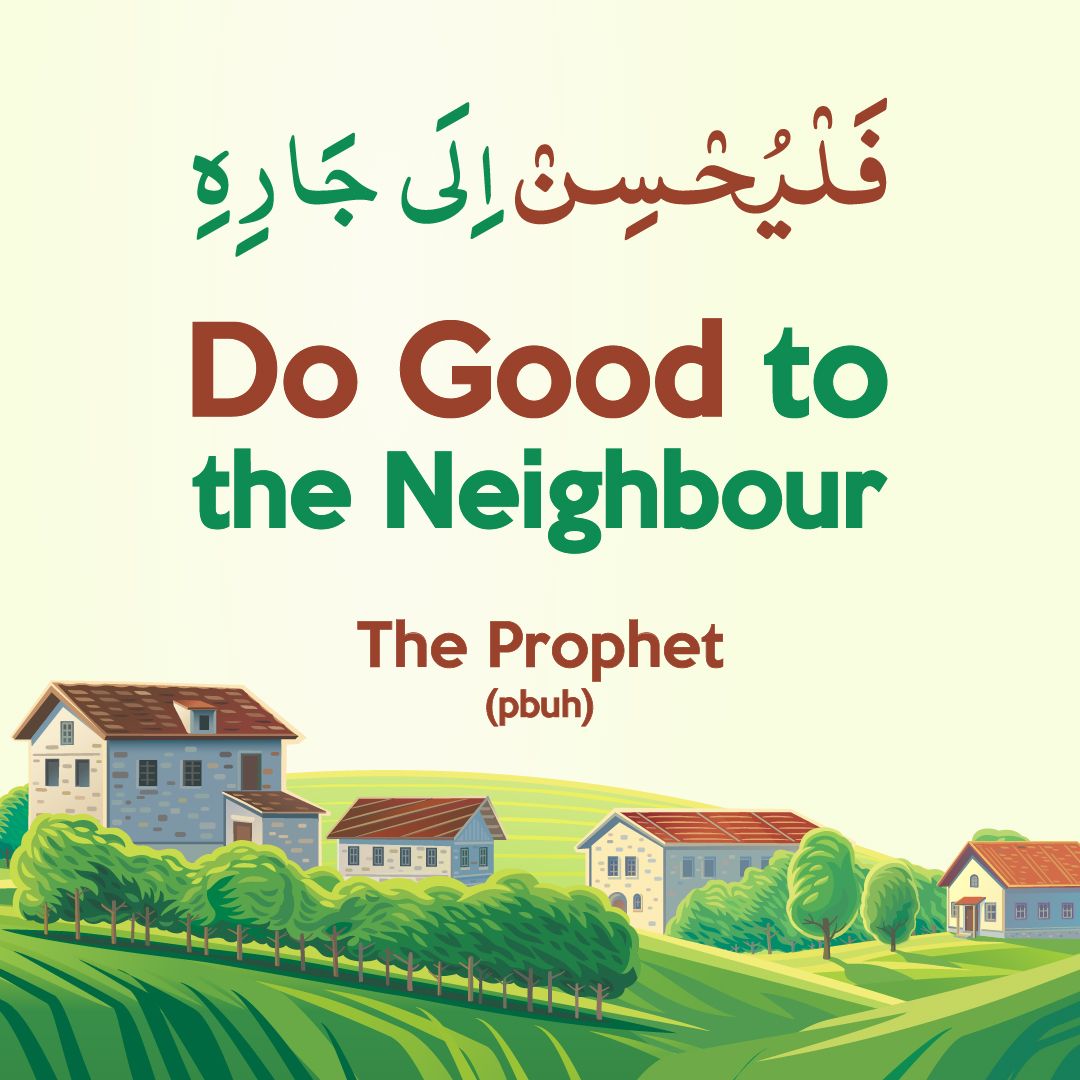
مَنْ كَانَ يُؤْمِنُ بِاللَّهِ وَالْيَوْمِ الآخِرِ فَلْيُحْسِنْ إِلَى جَارِهِ وَمَنْ كَانَ يُؤْمِنُ بِاللَّهِ وَالْيَوْمِ الآخِرِ فَلْيُكْرِمْ ضَيْفَهُ وَمَنْ كَانَ يُؤْمِنُ بِاللَّهِ وَالْيَوْمِ الآخِرِ فَلْيَقُلْ خَيْرًا أَوْ لِيَسْكُتْ
“Whoever believes in Allah and the Last Day should do good to the neighbour. Whoever believes in Allah and the Last Day should honour his guest. Whoever believes in Allah and the Last Day should speak what is good or remain silent.”
In this hadith, the Prophet (pbuh) connects three fundamental behaviours directly to faith in Allah and the Day of Judgement, making it clear that belief must be expressed through how we treat the people around us. Being good to one’s neighbour, honouring guests, and speaking only what is beneficial or choosing silence are not optional acts of kindness, but signs of a person’s true faith. For anyone wanting to understand the rights of neighbours in Islam and how belief is reflected in daily conduct, this hadith serves as one of the most comprehensive and practical teachings of the Prophet (pbuh).
The repetition of the phrase “whoever believes in Allah and the Last Day” three times is deeply intentional. It drives home the point that these are not minor recommendations but essential expressions of faith. The right of the neighbour is especially emphasised in Islam, to the extent that the Prophet (pbuh) said in another narration that Jibreel continued advising him about the neighbour until he thought the neighbour would be given a share of inheritance. This shows the extraordinary weight Islam places on neighbourly relations. Honouring a guest reflects a generous and welcoming spirit that builds trust and warmth within communities. And guarding the tongue is a discipline that protects relationships from the damage caused by careless, hurtful, or unnecessary words. Together, these three teachings form a blueprint for living with dignity, respect, and awareness of Allah in every interaction.
Allah says in Surah An-Nisaa of the Quran, “Worship Allah and associate nothing with Him, and to parents do good, and to relatives, orphans, the needy, the near neighbour, the neighbour farther away, the companion at your side, the traveller” (Quran 4:36), placing the rights of the neighbour alongside worship itself. As Al-Barr, Allah is the Source of all goodness and loves to see His servants extend that goodness to those around them. When a believer treats their neighbour with excellence, they fulfil a command that is deeply woven into the fabric of their faith.