
Discover how the teachings of the Prophet Muhammad (pbuh) guide every aspect of daily life. Explore practical Islamic guidance inspired by the Sunnah on topics from eating and sleeping to patience, gratitude, and beyond.

Aqiqah in Islam
A sacrifice of gratitude for the gift of life

Fathers in Islam
A shepherd, a teacher, and a mercy to his home

Drinking Water in Islam
Sip, pause, and remember Allah

Mothers in Islam
Paradise lies beneath her feet
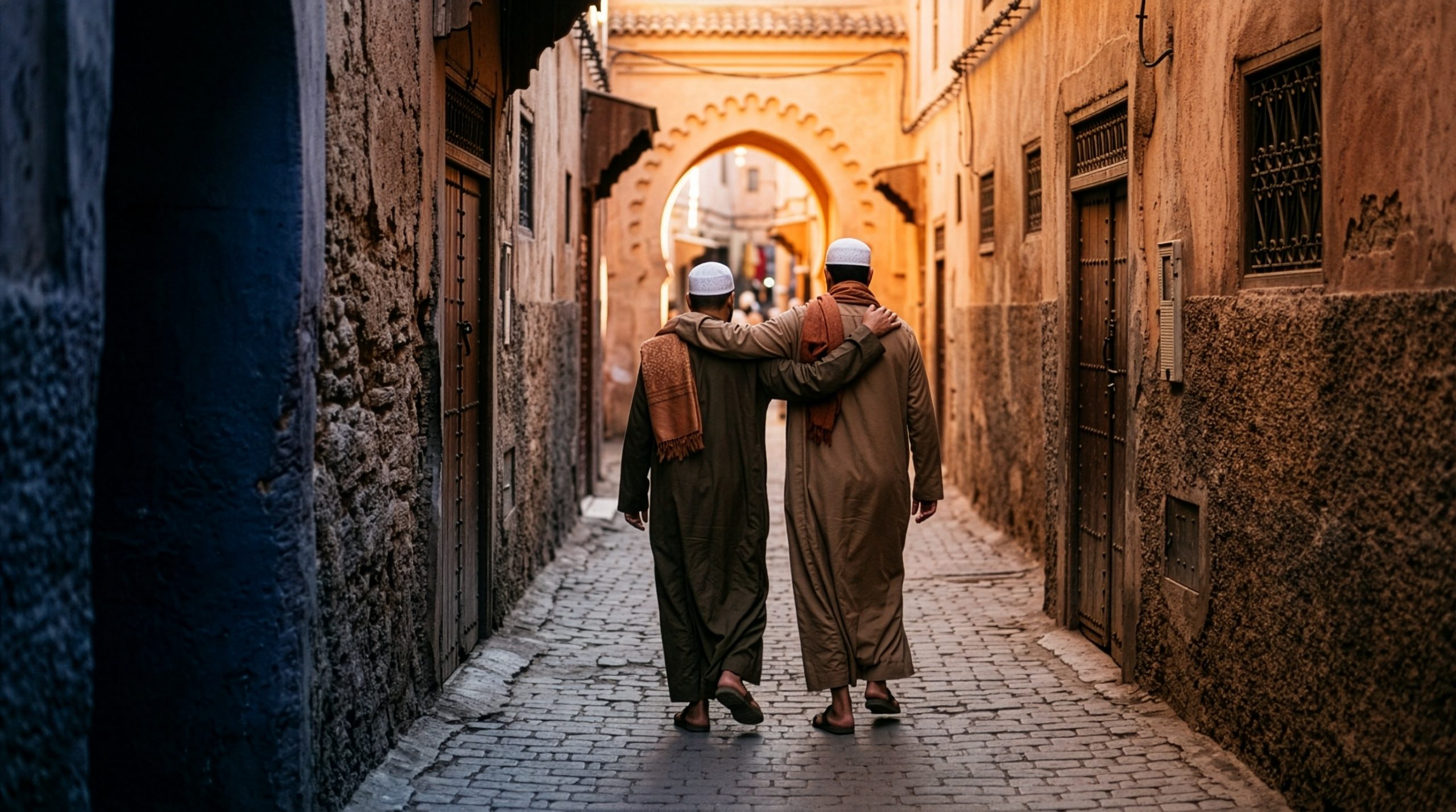
Friends in Islam
Choose the perfume seller, not the blacksmith

Education and Knowledge in Islam
Read, in the name of your Lord
The Prophet Muhammad (pbuh): His Teachings, Sunnah and Example in Islam
The Prophet Muhammad (pbuh) is the messenger of Allah and the most influential figure in the history of Islam. His life, preserved in extraordinary detail through the Hadith collections and the accounts of his companions, offers Muslims a complete and practical guide for living with purpose, compassion, and God-consciousness. From the way he ate and slept to how he managed anger, raised children, and treated strangers, every aspect of the Prophet Muhammad’s (pbuh) daily life carries lessons that remain profoundly relevant over fourteen centuries later.
Allah describes the Prophet Muhammad (pbuh) in the Quran with words that leave no room for doubt about his rank: “And indeed, you are of a great moral character” (Quran 68:4). This divine testimony is not simply praise — it is an invitation for every Muslim to study his character, understand his choices, and follow his example in their own lives. The Prophet Muhammad (pbuh) was not sent merely to deliver a message; he was sent to live it, and through his Sunnah, he left behind a roadmap for generations to come.
لَّقَدْ كَانَ لَكُمْ فِى رَسُولِ ٱللَّهِ أُسْوَةٌ حَسَنَةٌ لِّمَن كَانَ يَرْجُوا۟ ٱللَّهَ وَٱلْيَوْمَ ٱلْـَٔاخِرَ وَذَكَرَ ٱللَّهَ كَثِيرًا
Indeed, in the Messenger of Allah you have an excellent example for whoever has hope in Allah and the Last Day, and remembers Allah often.
This verse from Surah Al-Ahzab establishes the Prophet Muhammad (pbuh) as the ultimate role model — the uswatun hasanah — for all believers. His Sunnah is not a collection of historical anecdotes; it is a living tradition that shapes how Muslims worship, interact, and navigate every challenge of daily existence.
Who Was the Prophet Muhammad (pbuh)?
Born in Makkah in 570 CE, the Prophet Muhammad (pbuh) grew up as an orphan, losing his father before birth and his mother at the age of six. Despite these early hardships, he became known throughout Makkah as Al-Amin (the Trustworthy) and As-Sadiq (the Truthful) — titles given to him by his own community long before prophethood. At the age of forty, he received the first revelation from Allah through the Angel Jibreel in the Cave of Hira, marking the beginning of a twenty-three-year prophetic mission that would transform the entire Arabian Peninsula and, ultimately, the world.

The Prophet Muhammad (pbuh) endured persecution, exile, the loss of beloved family members, and years of struggle — yet he responded to every trial with patience, gratitude, and unwavering trust in Allah. His character was the Quran made manifest. When Aisha (may Allah be pleased with her) was asked about his character, she famously replied: “His character was the Quran” (Sahih Muslim 746). Every principle Allah revealed in the Quran, the Prophet Muhammad (pbuh) embodied in his daily life.
None of you truly believes until I am more beloved to him than his children, his parents, and all of mankind
The Prophet Muhammad (pbuh) as a Mercy to All of Creation
Allah did not describe the Prophet Muhammad (pbuh) merely as a messenger to the Arabs or to the Muslims alone. In Surah Al-Anbiya, Allah declares: “And We have not sent you, except as a mercy to all the worlds” (Quran 21:107). This comprehensive mercy extended to every living being — he taught kindness to animals, care for the environment, justice for enemies, and compassion for those who wronged him. The conquest of Makkah, when the Prophet Muhammad (pbuh) had every worldly reason to seek revenge against those who had persecuted him for over a decade, stands as one of history’s most extraordinary acts of forgiveness. He declared: “Go, for you are free.”
I have not been sent except to perfect good character
This hadith captures the essence of the Prophet Muhammad’s (pbuh) entire mission. While the Quran is the word of Allah, the Sunnah is the practical demonstration of how to live by that word. The Prophet Muhammad (pbuh) did not simply tell people to be honest — he was known as the most honest person in Makkah. He did not simply command charity — he gave so generously that he would sometimes have nothing left for himself. He did not merely preach patience — he endured the Year of Sorrow, the stoning at Taif, and the Battle of Uhud with a steadfastness that moved even his enemies.
How the Prophet Muhammad (pbuh) Guided Daily Life
What sets the Sunnah of the Prophet Muhammad (pbuh) apart from any other moral or philosophical tradition is its extraordinary practicality. He did not teach abstract principles from a distance — he lived among his companions and showed them, through his own actions, how to handle every situation they would encounter. His companions observed and recorded everything in remarkable detail, creating a blueprint for daily life that covers worship, relationships, health, emotions, and social conduct.
Eating and Drinking
The Prophet Muhammad (pbuh) taught Muslims to approach eating with mindfulness and moderation. He famously advised that one third of the stomach should be for food, one third for drink, and one third left empty — a principle that modern nutritional science has consistently validated. He ate with his right hand, began meals with Bismillah, and encouraged sharing food with neighbours and guests. He also placed great importance on drinking water in a specific manner — sipping in three breaths, sitting down, and pausing between each sip — transforming even the simplest act into an act of worship and gratitude.

Sleep and Rest
The Prophet Muhammad’s (pbuh) approach to sleep reflects a perfect balance between self-care and devotion. He recommended sleeping on the right side, performing wudu before bed, reciting specific supplications, and dusting the bedding three times before lying down. He also rose regularly for Tahajjud (the night prayer) and encouraged his household to wake for Fajr, establishing a routine that modern research has linked to improved mental health, better sleep quality, and greater productivity throughout the day.
Family and Relationships
The Prophet Muhammad (pbuh) placed immense importance on family bonds. He honoured mothers above all others, declaring that paradise lies beneath their feet. He recognised the vital role of fathers as shepherds and protectors of their households. He was a devoted husband who helped with chores at home, a gentle father who played with his grandchildren during prayer, and a loyal friend who never forgot those who stood by him in hardship. His teachings on marriage emphasise mutual affection, mercy, and respect as the foundations of a strong household — values echoed in Quran 30:21, where Allah describes the bond between spouses as one of tranquillity, love, and compassion.
Patience, Gratitude and Emotional Wellbeing
Two of the most frequently emphasised virtues in the teachings of the Prophet Muhammad (pbuh) are sabr (patience) and shukr (gratitude). He taught that patience during hardship is a sign of strong faith, and that expressing gratitude — both to Allah and to people — increases blessings and contentment. The Prophet Muhammad (pbuh) also offered deeply practical advice on anger management: change your posture, perform wudu, seek refuge in Allah, and remain silent. These prophetic strategies align remarkably with modern psychological techniques for emotional regulation and remain just as effective today as they were over fourteen hundred years ago.
Charity, Generosity and Social Responsibility
Generosity was central to the Prophet Muhammad’s (pbuh) character. He taught that charity does not decrease wealth and encouraged giving in both abundance and scarcity. From feeding the hungry and caring for orphans to simply smiling at another person or greeting people with Assalamu Alaikum, the Prophet Muhammad (pbuh) showed that charity extends far beyond financial giving — every act of kindness is a form of sadaqah. He was described as more generous than the blowing wind, especially during the month of Ramadan when he would increase his generosity even further.
Your smiling in the face of your brother is an act of charity
Knowledge, Dua and Worship
The Prophet Muhammad (pbuh) declared that seeking knowledge is an obligation upon every Muslim — a statement that ignited a civilisational tradition of scholarship, scientific inquiry, and learning that shaped the golden age of Islamic civilisation. He taught his companions the power of dua (supplication) — a direct, private conversation with Allah that requires no intermediary and no special place. He also emphasised the spiritual and physical rewards of fasting, not only during Ramadan but on voluntary days throughout the year, teaching that fasting purifies the soul, disciplines the body, and draws the believer closer to Allah.
The Sunnah of the Prophet Muhammad (pbuh) and the Quran
The relationship between the Quran and the Sunnah is inseparable. The Quran is the word of Allah — perfect, preserved, and eternal. The Sunnah of the Prophet Muhammad (pbuh) is the divinely guided explanation and practical application of that word. When Allah commands believers to establish prayer, it is the Prophet Muhammad (pbuh) who showed them how to pray. When the Quran instructs Muslims to give zakah, it is the Sunnah that specifies the amounts, the categories, and the conditions. Allah Himself commands obedience to the Prophet Muhammad (pbuh) alongside obedience to Him: “Obey Allah and obey the Messenger” (Quran 4:59).
Understanding the Names of Allah — such as Ar-Rahman (The Most Merciful) and Al-Wadud (The Most Loving) — deepens the believer’s appreciation of why the Prophet Muhammad (pbuh) embodied these divine attributes in his dealings with people. His mercy reflected the mercy of Ar-Rahman. His love for his companions reflected the love of Al-Wadud. Studying the Sunnah alongside the Quran and the Names of Allah creates a comprehensive and deeply moving understanding of what it means to live as a Muslim.
The best of you are those who are best to their families
Why the Teachings of the Prophet Muhammad (pbuh) Matter Today
In a world overwhelmed by conflicting advice on health, relationships, parenting, and personal development, the teachings of the Prophet Muhammad (pbuh) offer a timeless framework rooted in divine wisdom. Centuries before modern science confirmed the benefits of mindful eating, gratitude practices, and emotional regulation, the Prophet Muhammad (pbuh) had already taught these principles to his companions — not as theories, but as a lived reality.
What makes the Sunnah remarkable is that it speaks to every human being regardless of their background, culture, or era. A new Muslim discovering Islam for the first time will find in the Prophet Muhammad’s (pbuh) teachings a clear and accessible starting point. A lifelong believer seeking to deepen their practice will find layers of wisdom they had never noticed before. A non-Muslim studying his life will find principles of justice, compassion, and integrity that transcend any single tradition. As Allah affirms in Surah Al-Qalam: “And indeed, you are of a great moral character” (Quran 68:4).
Sending Blessings Upon the Prophet Muhammad (pbuh)
One of the most beloved acts of worship in Islam is sending salawat (blessings) upon the Prophet Muhammad (pbuh). Allah commands this directly in the Quran: “Indeed, Allah and His angels send blessings upon the Prophet. O you who believe, send blessings upon him and greet him with peace” (Quran 33:56). This is the only act of worship in the Quran where Allah Himself is described as performing it alongside His angels — a distinction that elevates the Prophet Muhammad (pbuh) to a rank shared by no other creation. The Prophet Muhammad (pbuh) taught that whoever sends one blessing upon him, Allah sends ten blessings upon that person in return (Sahih Muslim 408).
What Non-Muslims Have Said About the Prophet Muhammad (pbuh)
The greatness of the Prophet Muhammad (pbuh) is not recognised by Muslims alone. Throughout history, scholars, leaders, and thinkers from all backgrounds have studied his life and been moved to acknowledge the extraordinary nature of his character, his achievements, and his lasting impact on human civilisation. Their words serve as a powerful reminder that the Prophet Muhammad’s (pbuh) influence transcends the boundaries of faith.
Thomas Carlyle, the Scottish historian and philosopher, dedicated an entire chapter to the Prophet Muhammad (pbuh) in his famous 1840 work On Heroes, Hero-Worship, and the Heroic in History. He described him as deeply sincere and earnest, rejecting the false narratives that had circulated in Europe for centuries. Carlyle recognised in the Prophet Muhammad (pbuh) a man driven not by worldly ambition but by an overwhelming conviction in the truth of his message.
A silent great soul; one of those who cannot but be in earnest
Alphonse de Lamartine, the French poet, statesman, and historian, posed a remarkable question in his 1854 work Histoire de la Turquie. After examining the Prophet Muhammad’s (pbuh) life in detail — his moral transformation of an entire society, his legislation, his military leadership, his spiritual legacy, and the billions who have followed his teachings — Lamartine concluded that no figure in history could compare. He asked by what measure of human greatness a man could be judged, and found that the Prophet Muhammad (pbuh) surpassed every standard.
If greatness of purpose and results are the measure who could compare to Muhammad
In the modern era, Michael H. Hart — an American astrophysicist and author — placed the Prophet Muhammad (pbuh) at the very top of his 1978 book The 100: A Ranking of the Most Influential Persons in History. Hart explained his choice by noting that the Prophet Muhammad (pbuh) was uniquely successful in both the religious and secular spheres, achieving a lasting influence in politics, law, social reform, and spirituality that no other individual in history has matched.
My choice of Muhammad to lead the list may surprise some readers
Mahatma Gandhi, writing in Young India in 1924, reflected on how the Prophet Muhammad (pbuh) won the hearts of millions not through force but through his unshakeable character, his absolute trust in his mission, and his deep respect for his followers. Gandhi noted that the simplicity and selflessness of the Prophet Muhammad’s (pbuh) life were qualities that command admiration across all traditions and all eras.
I wanted to know the best of the life of one who holds today undisputed sway
Explore the Sunnah of the Prophet Muhammad (pbuh)
Browse our growing collection of articles above, each dedicated to a specific area of life guided by the teachings of the Prophet Muhammad (pbuh). From the etiquette of eating and drinking water to the blessings of dua and the rewards of fasting, from the importance of forgiveness and patience to the strength found in friendship and gratitude — discover how the Sunnah of the Prophet Muhammad (pbuh) can inspire and transform your daily routine. Each article includes authentic Hadith references and practical steps you can begin applying today.
To explore the Quran that the Prophet Muhammad (pbuh) was sent to deliver, visit our Holy Quran page where you can read all 114 Surahs with Arabic calligraphy, English translation, and audio recitation. You can also discover the 99 Names of Allah to deepen your understanding of the Creator the Prophet Muhammad (pbuh) devoted his entire life to worshipping and calling others towards. Discover our videos about the Prophet (pbuh) on our YouTube channel.
Who was the Prophet Muhammad (pbuh)?
The Prophet Muhammad (pbuh) was the final messenger of Allah, born in Makkah in 570 CE. He received the first revelation of the Quran at the age of forty and spent twenty-three years delivering the message of Islam. He is regarded by Muslims as the most perfect example of how to live a righteous, balanced, and God-conscious life, and his teachings — known as the Sunnah — cover every aspect of daily existence.
What is the Sunnah of the Prophet Muhammad (pbuh)?
The Sunnah refers to the teachings, practices, sayings, and approvals of the Prophet Muhammad (pbuh), preserved in the collections of Hadith. It serves as the practical application of the Quran, showing Muslims how to perform acts of worship, maintain relationships, conduct business, and navigate daily life according to the guidance of Allah.
Why do Muslims follow the Prophet Muhammad (pbuh)?
Muslims follow the Prophet Muhammad (pbuh) because Allah commands it in the Quran. In Surah Al-Ahzab (33:21), Allah describes him as an excellent example for all believers. The Quran also instructs Muslims to obey both Allah and His Messenger (Quran 4:59), making adherence to the Sunnah an essential part of the Islamic faith.
What did the Prophet Muhammad (pbuh) teach about daily life?
The Prophet Muhammad (pbuh) provided detailed guidance on virtually every aspect of daily life, including eating with moderation and mindfulness, sleeping on the right side with specific supplications, managing anger through wudu and silence, honouring parents, being generous to neighbours, seeking knowledge, and maintaining strong family bonds. His teachings transform ordinary daily actions into acts of worship.
What does it mean to send blessings upon the Prophet Muhammad (pbuh)?
Sending blessings (salawat) upon the Prophet Muhammad (pbuh) means saying Allahumma salli ala Muhammad (O Allah, send blessings upon Muhammad). Allah commands this in the Quran (33:56), and the Prophet taught that whoever sends one blessing upon him, Allah returns ten blessings to that person. It is one of the most beloved and rewarding acts of worship in Islam.
How many topics does the Sunnah of the Prophet Muhammad (pbuh) cover?
The Sunnah covers an extraordinary range of topics. On this page alone, you can explore articles on eating, drinking water, sleeping, patience, gratitude, anger management, charity, marriage, mothers, fathers, friendship, education, dua, fasting, forgiveness, greeting people, and aqiqah — with more articles being added regularly. The Hadith collections contain tens of thousands of narrations covering virtually every situation a person may encounter.
What have non-Muslims said about the Prophet Muhammad (pbuh)?
Many prominent non-Muslim scholars and leaders have praised the Prophet Muhammad (pbuh). Thomas Carlyle called him a sincere and earnest soul in his 1840 work On Heroes. Michael H. Hart ranked him first in The 100: A Ranking of the Most Influential Persons in History. Alphonse de Lamartine declared that no figure in history could compare to him by any measure of human greatness. Mahatma Gandhi admired his simplicity and the devotion he inspired in millions.