
Dua of Prophet Sulayman
3 Lessons in Grateful Living

Prophet Sulayman (AS) was given a kingdom unlike any other, with power over the wind, command of the jinn, and the ability to understand the speech of animals. Yet with all this might, his response was not pride but a prayer for gratitude. The dua of Prophet Sulayman asks Allah to enable him to be thankful for His favours, to do righteous deeds that please Him, and to be admitted by His mercy among the righteous. It shows that the proper response to blessings is to use them in gratitude and obedience to Allah.
رَبِّ أَوْزِعْنِي أَنْ أَشْكُرَ نِعْمَتَكَ الَّتِي أَنْعَمْتَ عَلَيَّ وَعَلَى وَالِدَيَّ وَأَنْ أَعْمَلَ صَالِحًا تَرْضَاهُ وَأَدْخِلْنِي بِرَحْمَتِكَ فِي عِبَادِكَ الصَّالِحِينَ
Rabbi awzi‘nī an ashkura ni‘matakal-latī an‘amta ‘alayya wa ‘alā wālidayya wa an a‘mala sālihan tardāhu wa adkhilnī bi rahmatika fī ‘ibādikas-sālihīn.
“My Lord, enable me to be grateful for Your favour which You have bestowed upon me and upon my parents, and to do righteous deeds that please You, and admit me by Your mercy among Your righteous servants.”
This guide explains the dua of Prophet Sulayman, the gratitude behind it, and three lessons in grateful living, so that the believer blessed with any favour may turn to Allah as Sulayman (AS) did, asking to be thankful, to use their blessings in good deeds, and to be joined with the righteous by the mercy of Allah.
The Story Behind the Dua of Prophet Sulayman
The dua of Prophet Sulayman (AS) comes from Surah An-Naml. As Sulayman (AS) marched with his vast army of humans, jinn and birds, they passed through a valley of ants, and an ant warned the others to take shelter so they would not be crushed. Sulayman (AS), who had been given the ability to understand the speech of creatures, smiled at the ant’s words and was moved to gratitude. In that moment, aware of the magnitude of the favours Allah had given him, he made this beautiful prayer of thankfulness.
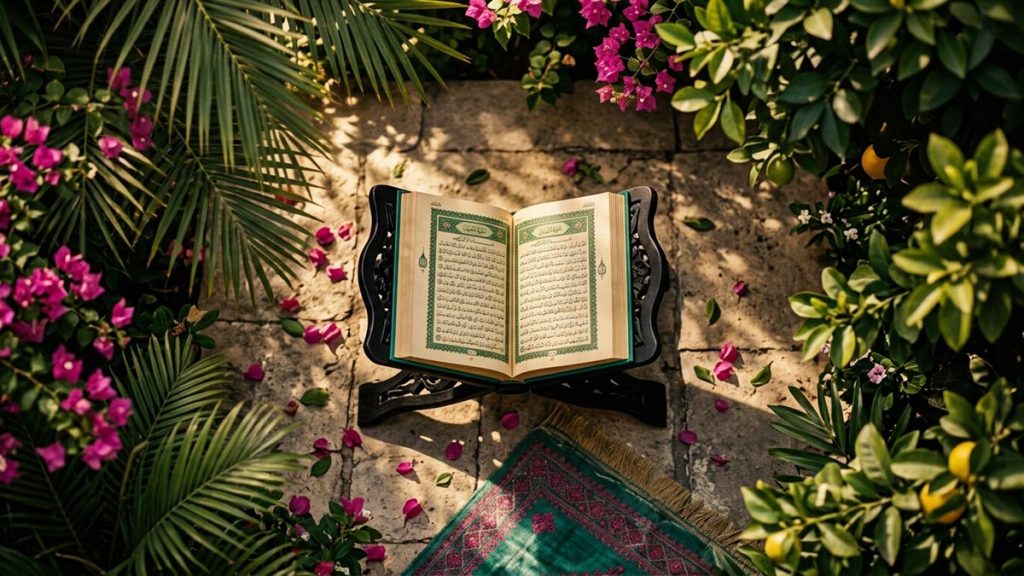
The dua reveals the heart of a grateful servant despite immense power. Sulayman (AS) asked Allah to enable him to be grateful, recognising that even gratitude itself is a gift from Allah. He included his parents in the blessings he gave thanks for, asked to do righteous deeds that please Allah, and sought to be admitted among the righteous by the mercy of Allah, not by his own deeds. With a kingdom at his command, his deepest desire was to be thankful, righteous, and counted among the servants of Allah.
Three Lessons in Grateful Living
The dua of Prophet Sulayman teaches the believer to live in gratitude to Allah. These three lessons flow from his prayer.
- Ask Allah to make you grateful, recognising that gratitude itself is a gift from Him.
- Use your blessings in good deeds, doing righteous works that please Allah with what He gave.
- Seek the company of the righteous, asking to be joined with them by the mercy of Allah.
لَئِنْ شَكَرْتُمْ لَأَزِيدَنَّكُمْ
La’in shakartum la’azidannakum
If you are grateful I will surely increase you in blessings
Living a Life of Gratitude
Given a kingdom beyond compare, a prophet responded not with pride but with a prayer to be grateful. The dua of Prophet Sulayman teaches the believer to ask Allah for the gift of gratitude, to use every blessing in good deeds that please Him, and to seek the company of the righteous by His mercy. By following his example, the believer turns each favour of Allah into a reason for thankfulness and obedience, living a grateful life that draws them nearer to the One who gave them everything.

This supplication pairs naturally with the dua of Prophet Yusuf in gratitude, and the gratitude in Islam. Together they teach the believer to meet every blessing with thankfulness and to use it in obedience to Allah.
Given a kingdom beyond compare, Sulayman (AS) responded not with pride but with a prayer for gratitude. Learn the Quranic duas with us on YouTube, where the supplications are recited aloud, on Facebook for a reminder to thank Allah for His favours, and on X where readers share how they live in gratitude.
Frequently Asked Questions
The dua of Prophet Sulayman (AS) is Rabbi awzi‘ni an ashkura ni‘matakal-lati an‘amta ‘alayya, asking Allah to enable him to be grateful, to do good deeds that please Him, and to join the righteous. It is in Surah An-Naml.
Say it when blessed with any favour, asking Allah to make you grateful and to use your blessings in good deeds. It is a beautiful prayer of gratitude for the gifts of Allah.
Hearing an ant warn its colony, he was reminded of the magnitude of the favours Allah had given him, including understanding the speech of creatures, and was moved to gratitude. Despite his power, his desire was to be thankful.
He asked Allah to enable him to be grateful, to do righteous deeds that please Him, and to be admitted among the righteous by His mercy. Even gratitude itself, he knew, is a gift from Allah.
It teaches that the proper response to blessings is gratitude and obedience, using the favours of Allah in good deeds that please Him. The believer turns each blessing into thankfulness.
The dua of Prophet Yusuf gives thanks in success, and gratitude in Islam reflects the heart of this prayer. Together with the dua of Prophet Sulayman, they teach a life of gratitude to Allah.