
Dua for Visiting Graves
3 Things to Know About the Greeting of Peace
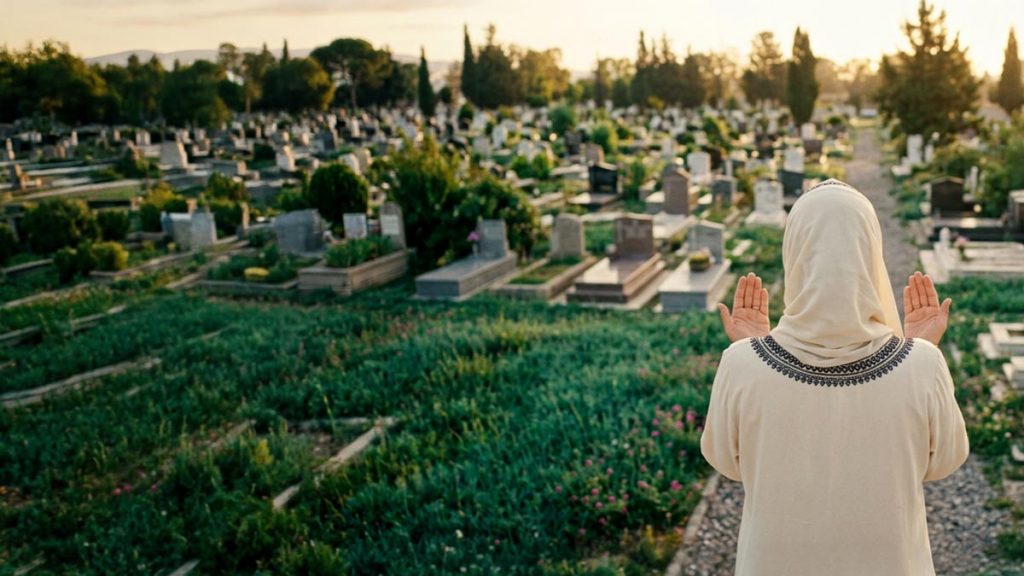
Visiting the graves of the dead is encouraged in Islam, for it softens the heart, brings the Hereafter to mind, and gives the believer the chance to pray for those who have passed. The Prophet Muhammad (pbuh) taught a beautiful greeting of peace to say upon reaching the graves, greeting the dead and asking Allah for wellbeing for the living and the deceased alike. The dua for visiting graves is this greeting, in which the believer remembers the dead with peace and prays for them.
السَّلَامُ عَلَيْكُمْ أَهْلَ الدِّيَارِ مِنَ الْمُؤْمِنِينَ وَالْمُسْلِمِينَ، وَإِنَّا إِنْ شَاءَ اللَّهُ بِكُمْ لَاحِقُونَ، أَسْأَلُ اللَّهَ لَنَا وَلَكُمُ الْعَافِيَةَ
As-salamu ‘alaykum ahlad-diyari minal-mu’minina wal-muslimin, wa inna in sha’Allahu bikum lahiqun, as’alullaha lana wa lakumul-‘afiyah.
“Peace be upon you, O inhabitants of these dwellings, believers and Muslims; we will, if Allah wills, join you; I ask Allah for wellbeing for us and for you.”
The Prophet (pbuh) taught that visiting graves reminds the believer of death and the life to come, and he encouraged it after first forbidding it in the early days of Islam. This guide explains the dua for visiting graves and three things to know about the greeting of peace, so that the believer may visit the dead with the right intention, greet them with peace and pray for them, and let the visit soften their heart and turn their thoughts to the Hereafter, while avoiding any practice that is not from the guidance of the Prophet (pbuh).
The Greeting of Peace at the Graves
The Prophet (pbuh) taught the believers to greet the dead when they reached the graves with the beautiful words quoted above, sending peace upon the believers and Muslims who rest there, affirming that the living will one day join them, and asking Allah for wellbeing for both the living and the dead. This greeting treats the dead with honour and love, and reminds the visitor that they too will one day lie in the earth, awaiting the life to come.

There is great wisdom in this greeting, for it joins the living and the dead in a single prayer for wellbeing, and reminds the visitor of their own mortality with the words that they will join the dead. By greeting the dead with peace and praying for them, the believer fulfils a beautiful kindness while taking the visit as a reminder of the Hereafter. The dua for visiting graves carries this greeting, turning the visit into an act of mercy for the dead and a softening of the heart.
السَّلَامُ عَلَيْكُمْ أَهْلَ الدِّيَارِ مِنَ الْمُؤْمِنِينَ
As-salamu ‘alaykum ahlad-diyari minal-mu’minin
Peace be upon you O inhabitants of these dwellings
Three Things to Know About the Greeting of Peace
Visiting graves softens the heart and recalls the Hereafter. These three things help the believer visit the dead.
- Greet the dead with peace and pray for them, as the Prophet (pbuh) taught.
- Let the visit remind you of death and the life to come, softening the heart.
- Avoid any practice that is not from the guidance of the Prophet (pbuh).
Remembering the Dead with Peace
The dua for visiting graves is the greeting of peace, in which the believer remembers the dead with honour and prays for them. By greeting the dead with peace, letting the visit remind you of the Hereafter, and avoiding any practice not from the guidance of the Prophet (pbuh), the believer visits the dead in the best way. Visiting graves softens the heart and brings the life to come to mind, and the believer who greets the dead with peace and prays for them fulfils a kindness while preparing their own heart for the journey ahead.

This supplication pairs naturally with the dua for the deceased and the dua for the grave. Together they help the believer remember the dead and the Hereafter with mercy and hope.
Peace be upon you, O inhabitants of these dwellings, the Prophet (pbuh) taught the believer to greet the dead. Learn the duas of the Hereafter with us on YouTube, where the supplications are recited aloud, on Instagram for a reminder when visiting graves, and on LinkedIn where readers share how visiting graves softens their hearts.
Frequently Asked Questions
The dua for visiting graves is the greeting the Prophet (pbuh) taught: As-salamu alaykum ahlad-diyari minal-muminina wal-muslimin, peace be upon you O inhabitants of these dwellings, believers and Muslims; we will, if Allah wills, join you; I ask Allah for wellbeing for us and for you.
Visiting graves is encouraged because it softens the heart, reminds the believer of death and the life to come, and gives the chance to pray for the dead. The Prophet (pbuh) encouraged it as a reminder of the Hereafter.
The believer greets the dead with peace, prays for them, reflects on death and the Hereafter, and shows respect. They avoid any practice not from the guidance of the Prophet (pbuh), such as seeking from the dead what only Allah can give.
The Prophet (pbuh) forbade visiting graves in the early days of Islam, then encouraged it, saying it reminds the believer of the Hereafter. The visit is now a recommended act, performed with the right intention and manners.
The scholars hold differing views, but many permit women to visit graves with proper manners and patience, as the visit reminds of the Hereafter and allows prayer for the dead. The believer follows reliable guidance and visits with the right intention.
The believer avoids seeking help or blessings from the dead, which only Allah can give, as well as wailing, building over graves, or any practice not from the guidance of the Prophet (pbuh). The visit is for greeting the dead, praying for them, and remembering the Hereafter.