
Dua During Difficulty
3 Things to Know About Distress
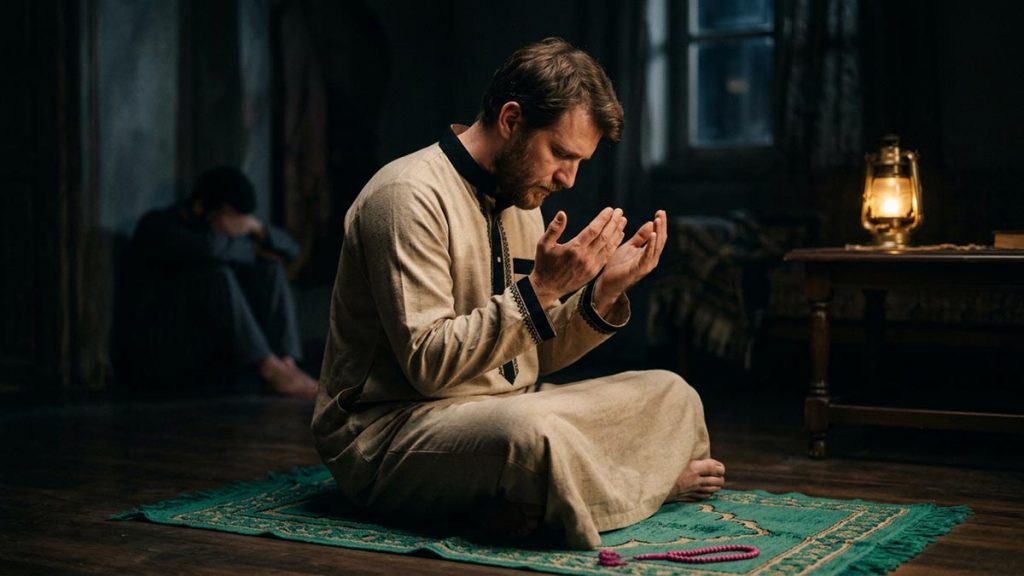
Difficulty and hardship are part of life, and in times of distress the believer turns to Allah, the One who alone can bring relief, with a supplication taught by the Prophet Muhammad (pbuh). When affliction weighed upon him, the Prophet (pbuh) would magnify Allah and affirm His greatness, sovereignty and forbearance, placing the hardship before the Lord of the Mighty Throne. The dua during difficulty calls upon Allah in this way, finding comfort in His power and mercy when the path grows hard.
لَا إِلَهَ إِلَّا اللَّهُ الْعَظِيمُ الْحَلِيمُ، لَا إِلَهَ إِلَّا اللَّهُ رَبُّ الْعَرْشِ الْعَظِيمِ، لَا إِلَهَ إِلَّا اللَّهُ رَبُّ السَّمَاوَاتِ وَرَبُّ الْأَرْضِ وَرَبُّ الْعَرْشِ الْكَرِيمِ
La ilaha illa-llahul-‘Azimul-Halim, la ilaha illa-llahu Rabbul-‘Arshil-‘Azim, la ilaha illa-llahu Rabbus-samawati wa Rabbul-ardi wa Rabbul-‘Arshil-Karim.
“There is no god but Allah, the Magnificent, the Forbearing. There is no god but Allah, Lord of the Mighty Throne. There is no god but Allah, Lord of the heavens, Lord of the earth, and Lord of the Noble Throne.”
Turning to Allah in difficulty does not mean abandoning the means He has provided, for the believer takes every lawful step to ease their hardship while placing their trust in Allah. This guide explains the dua during difficulty and three things to know about distress, so that the believer may meet hardship with a heart anchored in Allah, supplicating to Him for relief, taking the means available, and holding onto the certainty that with hardship comes ease, as Allah Himself has promised in His Book.
The Supplication of Distress
When distress and hardship weighed upon the Prophet (pbuh), he would recite the beautiful supplication quoted above, magnifying Allah and affirming that there is no god but He, the Magnificent and the Forbearing, the Lord of the Mighty Throne and of the heavens and the earth. This supplication meets difficulty not with panic, but with the remembrance of the greatness of Allah, placing the hardship in the hands of the One who controls all things. By affirming the sovereignty of Allah, the believer finds calm and strength in distress.
There is great wisdom in beginning the response to hardship with the affirmation of the oneness and majesty of Allah, for it reminds the believer that no difficulty is greater than their Lord. The One who is the Magnificent and the Forbearing, who owns the heavens and the earth, is able to lift any burden and ease any hardship. The dua during difficulty draws the heart back to this truth, so that the believer faces their trial with trust in the power and mercy of Allah rather than despair.
لَا إِلَٰهَ إِلَّا اللَّهُ الْعَظِيمُ الْحَلِيمُ
La ilaha illallahul-‘Azimul-Halim
There is no god but Allah the Forbearing
Three Things to Know About Distress
Distress is a test that turns the heart to Allah. These three things help the believer through times of difficulty.
- Recite the supplication of distress, affirming the greatness and sovereignty of Allah over all things.
- Take the lawful means available, for trusting Allah does not mean abandoning effort.
- Hold onto the promise that with hardship comes ease, as Allah declares in His Book.
Finding Relief in Allah
The dua during difficulty turns the heart to Allah in times of distress, finding relief in His greatness and mercy. By reciting the supplication of distress, taking the lawful means available, and holding onto the promise that with hardship comes ease, the believer meets difficulty in the best way. No hardship is greater than Allah, the Magnificent and the Forbearing, and the believer faces their trial with trust in Him, certain that the One who sent the difficulty is able to send its relief.
This supplication pairs naturally with the dua for grief and the dua for hope. Together they help the believer turn to Allah through the trials of life with patience and trust.
In times of distress, the Prophet (pbuh) magnified Allah, Lord of the Mighty Throne, placing his hardship before Him. Learn the duas for life with us on YouTube, where the supplications are recited aloud, on Facebook for a reminder to turn to Allah in difficulty, and on X where readers share how they find relief.
Frequently Asked Questions
The dua during difficulty is the supplication of distress the Prophet (pbuh) recited: La ilaha illallahul-Azimul-Halim, la ilaha illallahu Rabbul-Arshil-Azim, there is no god but Allah the Magnificent the Forbearing, Lord of the Mighty Throne.
It is recited in times of distress, hardship and affliction, when the believer faces a difficult trial. The Prophet (pbuh) would recite it when something weighed heavily upon him, turning to Allah for relief.
No, the believer takes every lawful means to ease their hardship while placing their trust in Allah. Trusting Allah and taking the means go together, for effort is part of the trust He commands of the believer.
Allah declares in His Book that with hardship comes ease, promising that no difficulty is permanent and that relief follows trial. This certainty gives the believer hope and patience in the midst of their hardship.
Because affirming the greatness and sovereignty of Allah reminds the believer that no hardship is greater than their Lord. The One who owns the heavens and the earth is able to lift any burden, giving the heart calm and strength in distress.
Yes, alongside the taught supplication the believer may pour out their own needs to Allah in any words, asking Him for relief and ease. Allah is near and answers those who call upon Him sincerely in their time of hardship.