
Dua of Prophet Nuh
3 Lessons in Patient Prayer
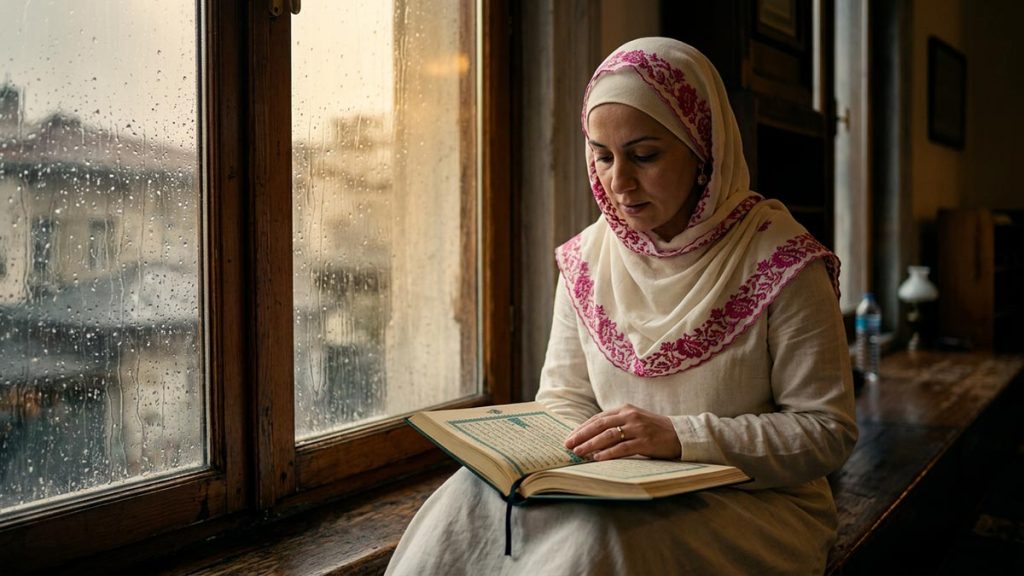
Prophet Nuh (AS) called his people to Allah for nine hundred and fifty years, with patience that few could imagine, and the dua of Prophet Nuh preserved in the Quran reflects a heart full of care even after such a long trial. In it, he asks Allah to forgive himself, his parents, everyone who enters his house as a believer, and all the believing men and women. It is a beautiful prayer of wide mercy, seeking forgiveness not only for himself but for the believers of every age.
رَبِّ اغْفِرْ لِي وَلِوَالِدَيَّ وَلِمَنْ دَخَلَ بَيْتِيَ مُؤْمِنًا وَلِلْمُؤْمِنِينَ وَالْمُؤْمِنَاتِ
Rabbigh-fir lī wa li-wālidayya wa liman dakhala baytiya mu’minan wa lil-mu’minīna wal-mu’mināt.
“My Lord, forgive me, my parents, whoever enters my house as a believer, and the believing men and women.”
This guide explains the dua of Prophet Nuh, its place after his long years of patient calling, and three lessons in patient prayer, so that the believer may learn from his perseverance and his care, asking the forgiveness of Allah for themselves and the wider community of believers with the same generous heart.
The Story Behind the Dua of Prophet Nuh
The dua of Prophet Nuh (AS) comes from Surah Nuh, which is named after him and recounts his long mission. For nine hundred and fifty years he called his people to worship Allah alone, by night and by day, openly and privately, yet only a few believed. After such immense patience, this dua appears near the end of the surah, where Nuh (AS) turns to Allah not with bitterness, but with a prayer seeking forgiveness for himself, his parents, the believers who entered his home, and all believing men and women to come.
What stands out in this dua is its breadth of care. Nuh (AS) does not pray only for himself, but extends his prayer to his parents, to those who supported the faith by entering his house as believers, and to the entire community of believers, men and women, across all time. Even after centuries of rejection, his heart remained generous, seeking the mercy of Allah for the wider community of faith. It is a model of how patient devotion expands the heart rather than hardening it.
Three Lessons in Patient Prayer
The dua of Prophet Nuh teaches the believer to persevere in prayer and to care for others. These three lessons flow from his patient devotion.
- Persevere in calling to Allah, never giving up hope despite long years and little response.
- Pray for the believers, extending your supplication beyond yourself to the wider community of faith.
- Keep a generous heart, letting patience expand your care for others rather than harden it.
وَالْمُؤْمِنُونَ وَالْمُؤْمِنَاتُ بَعْضُهُمْ أَوْلِيَاءُ بَعْضٍ
Wal-mu’minuna wal-mu’minatu ba‘duhum awliya’u ba‘d
And the believers men and women are allies of one another
Learning from a Lifetime of Devotion
A prophet who called to Allah for nine and a half centuries left us a prayer not of bitterness, but of mercy for the believers. The dua of Prophet Nuh teaches the believer to persevere in devotion and to keep a generous heart, praying for the whole community of faith. By following his example, the believer learns that patient worship expands the soul, and that the most beautiful response to a long trial is to seek the forgiveness of Allah for oneself and for believers everywhere.
This supplication pairs naturally with the dua of Prophet Ibrahim for the believers, and the patience in Islam that his life embodied. Together they teach the believer to persevere in faith and to pray for others with a generous heart.
After nine and a half centuries of calling to Allah, Nuh (AS) prayed with mercy for all believers. Learn the Quranic duas with us on YouTube, where the supplications are recited aloud, on Facebook for a reminder to persevere in prayer, and on X where readers share how they pray for the community of faith.
Frequently Asked Questions
The dua of Prophet Nuh (AS) is Rabbi-ghfir li wa li-walidayya wa liman dakhala baytiya mu’minan wa lil-mu’minina wal-mu’minat, asking Allah to forgive him, his parents, and all the believing men and women. It is in Surah Nuh.
Say it when seeking forgiveness for yourself and the wider community of believers, especially when you wish to pray for others. It teaches praying beyond oneself with a generous heart.
Prophet Nuh (AS) called his people to worship Allah alone for nine hundred and fifty years, with extraordinary patience, yet only a few believed. His dua reflects mercy even after this long trial.
It extends forgiveness beyond Nuh (AS) himself to his parents, those who supported the faith, and all believing men and women across time. It models a heart kept generous by patient devotion.
It teaches that patient worship expands the heart rather than hardening it, so even after centuries of rejection, Nuh (AS) prayed with mercy for the believers. Perseverance in faith deepens care for others.
The dua of Prophet Ibrahim also prays for the believers, and patience in Islam reflects the perseverance of Nuh (AS). Together with the dua of Prophet Nuh, they teach devotion and care for the community.