
Itikaf: The Spiritual Retreat of Ramadan
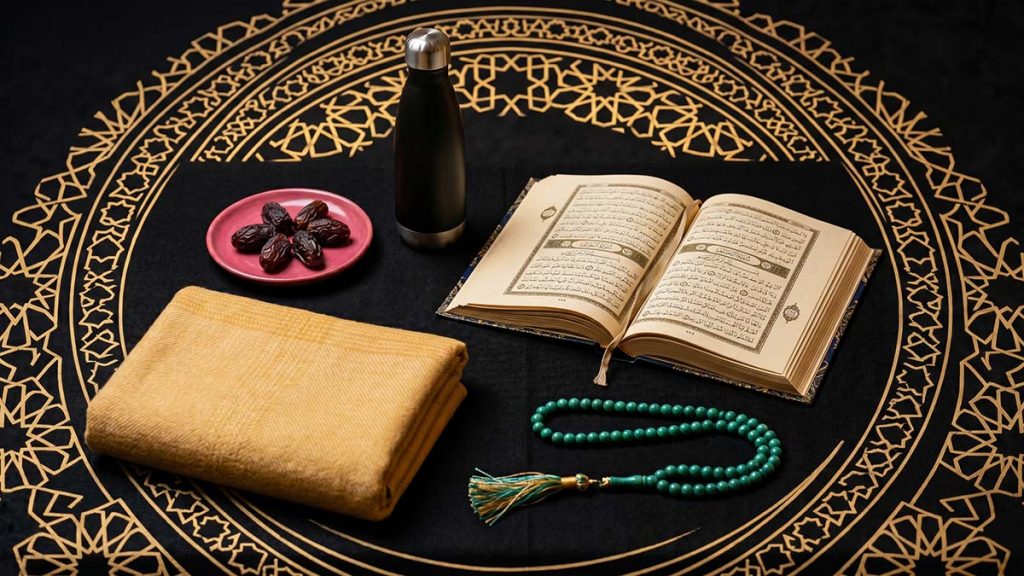
Itikaf is one of the most beautiful and overlooked acts of Ramadan, a deliberate retreat into the mosque to be alone with Allah. Setting aside work, phones, and the noise of daily life, the believer devotes a fixed period entirely to prayer, the Quran, and remembrance, usually during the last ten nights of the month. It is a Sunnah the Prophet (pbuh) kept every single year, a time of deep stillness in which the heart is polished and renewed. In this guide we explore what it is, its rules, its rewards, and how anyone can take part.
The Quran honours the houses of Allah and those who devote themselves within them, dedicating their hearts to worship and remembrance.
وَعَهِدۡنَآ إِلَىٰٓ إِبۡرَٰهِـۧمَ وَإِسۡمَٰعِيلَ أَن طَهِّرَا بَيۡتِيَ لِلطَّآئِفِينَ وَٱلۡعَٰكِفِينَ وَٱلرُّكَّعِ ٱلسُّجُودِ
“And We charged Ibrahim and Ismail, saying: Purify My House for those who circle it, those who stay there in devotion, and those who bow and prostrate.”
What Is Itikaf?
Itikaf is the act of secluding oneself in a mosque for a set period with the sole intention of worshipping Allah. During this time the believer remains within the mosque, leaving only for genuine necessities, and fills the hours with prayer, recitation of the Quran, dua, and remembrance, withdrawing from the distractions of the outside world.
It is most commonly observed in the last ten nights of Ramadan, when the search for Laylatul Qadr reaches its peak. By stepping away from ordinary life, the worshipper gives the soul space to breathe and the heart room to draw close to its Creator. For a few precious days, the mosque becomes both home and sanctuary, and the only appointment that matters is the meeting with Allah.
6 Powerful Benefits of Itikaf
This quiet retreat brings rewards that reach far beyond the days spent in the mosque. Here are six powerful benefits of secluding yourself for the sake of Allah:
- Undistracted worship, with hours given fully to prayer and the Quran.
- A better chance to catch Laylatul Qadr in the final nights.
- A reset for the heart, away from screens, noise, and worldly worries.
- Deep reflection on your life, your faith, and your relationship with Allah.
- Stronger self-discipline and control over desires and habits.
- Following the Sunnah the Prophet (pbuh) kept every year of his life.
Itikaf in the Quran and Sunnah
The practice is rooted in both the Quran and the example of the Prophet (pbuh). In Surah Al-Baqarah, Allah speaks of purifying His House for those who devote themselves within it, and the Prophet (pbuh) translated this into a yearly retreat that his companions cherished and continued after him.
Purify My House for those who devote themselves to worship within it bowing and prostrating in remembrance of their Lord
Why Muslims Seclude Themselves
At its heart, this retreat is about undivided attention. In ordinary life the heart is pulled in a hundred directions, but in seclusion there is only Allah. The Prophet (pbuh) observed it faithfully throughout his life, a habit so dear to him that he never abandoned it, even increasing it in his final year.
The Prophet observed this retreat in the last ten nights of every Ramadan until Allah took him and his wives continued it after him
When and Where the Retreat Takes Place
Itikaf is performed in a mosque, ideally one where the congregational prayers are held, and the most virtuous time for it is the final ten nights of Ramadan. The greatest of these retreats take place in the sacred mosques, such as the one around the Kaaba in Makkah and the Prophet’s Mosque in Madinah, though any mosque is a blessing for the worshipper who enters it with sincere intention.
The Rules of Itikaf
While the practice is gentle, a few essentials keep it valid and rewarding:
- Make a clear intention to devote the period to the worship of Allah.
- Remain within the mosque, leaving only for necessities like food or washing.
- Fill the time with prayer, the Quran, dhikr, and dua rather than idle talk.
- Avoid arguments, gossip, and anything that wastes the spirit of the retreat.
- Many scholars hold that fasting accompanies it during the days of Ramadan.
Seclusion and the Night of Power
The deepest reason many enter the mosque in these nights is the hope of catching Laylatul Qadr, the night worth more than a thousand months. By staying within the mosque through the last ten nights, the worshipper is awake and ready whenever the blessed night arrives, never letting it slip past in sleep or distraction.
The believer who secludes himself stands ready for the Night of Power awake in worship each night so the great reward is never missed
A Day in Retreat
Time in seclusion has a gentle rhythm. The worshipper prays the five daily prayers in congregation, recites portions of the Quran, rests a little, makes long dua, and returns again to prayer. The hours that the world spends on screens and errands are spent instead in the company of Allah, and the days pass with a peace that is hard to describe to anyone who has not tasted it. Time slows, the heart settles, and worship that once felt heavy begins to feel like rest.
Common Mistakes to Avoid
To protect the blessing of the retreat, steer clear of these pitfalls:
- Turning the mosque into a place for long chats and socialising.
- Spending the seclusion glued to a phone or distracted online.
- Leaving the mosque repeatedly without a genuine need.
- Neglecting sleep entirely until worship becomes heavy and joyless.
- Entering without a clear intention or plan for the days ahead.
What to Bring for the Retreat
A little preparation makes the days in the mosque smoother and frees the heart for worship. Most worshippers bring a copy of the Quran, simple bedding, a change of clothes, and basic toiletries, along with food and water or an arrangement for meals. Keeping belongings few and tidy reflects the spirit of the retreat, which is to simplify life and focus entirely on Allah.

Just as important is preparing the heart. Entering with clear goals, a portion of Quran to complete, a list of duas, and a sincere intention helps the worshipper use every hour well rather than drifting through the days without direction.
The Mosque as a Sanctuary
There is a deep wisdom in choosing the mosque for this retreat. It is the house of Allah, a place built for worship and free from the pull of work, entertainment, and the endless noise of modern life. Surrounded by the call to prayer, the recitation of the Quran, and others who have come to worship, the believer finds it far easier to keep the heart present and the mind still.
For these days the worshipper lives between the prayers, moving from one to the next, and the rhythm of the mosque slowly reshapes the soul, leaving it calmer, lighter, and more attached to its Lord.
The mosques are the houses of Allah the most beloved of places to Him where hearts find peace and souls draw near to their Lord
Retreat for Beginners
You do not need ten full nights to begin. Many start with a single night or even part of one, simply intending to worship Allah within the mosque. Women, too, can seek this nearness, and scholars have discussed how they may do so; it is always best to ask a trusted local scholar for guidance suited to your situation. The first step is sincere intention; Allah blesses every honest effort.
Returning to the World Renewed
The true test of Itikaf comes when it ends and the worshipper steps back into ordinary life. A retreat done well leaves a lasting mark: a softer heart, a stronger prayer, and a clearer sense of what matters. The believer returns to family and work carrying a little of the mosque’s stillness within them.
The goal of Itikaf was never to escape life forever, but to recharge the soul so it can face life better. The calm and focus gathered in those few days are meant to flow outward, shaping how the believer prays, speaks, and treats others long after the retreat is over.
Lessons This Retreat Teaches Us
Stepping away from the world, even briefly, teaches the believer how little the soul truly needs and how much it craves Allah. It builds patience, discipline, and a love of worship that lingers long after the retreat ends, reminding us to carve out quiet time for our Lord throughout the year.
Longing for stillness in a noisy world? It’s About Islam shares short, beautiful reminders on worship and Ramadan to help you draw closer to Allah. Find us on YouTube, Instagram and Threads.
Frequently Asked Questions About Itikaf
Itikaf is secluding yourself in a mosque for a set period with the intention of worshipping Allah, devoting the time to prayer, the Quran, and remembrance away from worldly distractions.
It is most commonly performed in the last ten nights of Ramadan, the time the Prophet (pbuh) chose for it, though it can be done at other times as well.
It is performed in a mosque, ideally one where congregational prayers are held. The most virtuous retreats take place in the sacred mosques of Makkah and Madinah.
Make a sincere intention, remain in the mosque leaving only for necessities, fill the time with worship, and avoid idle talk and arguments that waste the retreat.
Scholars have discussed how women may seclude themselves for worship, so it is best to consult a trusted local scholar for guidance suited to your own circumstances.
Yes. You can begin with a single night or even part of one, intending to worship Allah in the mosque. Allah rewards every sincere effort, however small.
Finding Stillness in the Mosque
Itikaf is a rare invitation to leave the world behind and be alone with Allah, polishing the heart in the most blessed nights of the year. By entering the mosque with sincere intention, guarding the hours with prayer and the Quran, and seeking the Night of Power, the believer returns renewed in faith. May Allah accept your worship, soften your heart, and grant you the sweetness of His nearness in the mosque and beyond.