
Eating in Islam
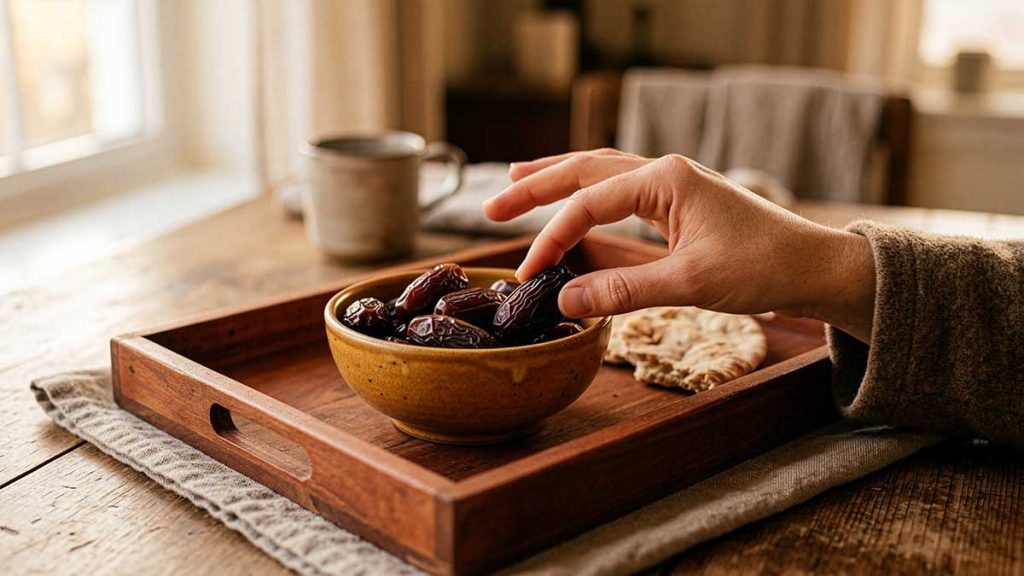
One third for food, one third for drink, one third for air
Eating in Islam is governed by a prophetic system of intention, moderation, and gratitude. The Prophet Muhammad (pbuh) said: “One third for food, one third for drink, one third for air” (Tirmidhi). He ate with his right hand, from what was nearest, never criticised food, and began every meal with Bismillah. Inside is everything the Sunnah teaches about turning every meal into worship.
What the Prophet Taught About Eating
The Prophet (peace be upon him) transformed eating from an act of survival into an act of worship, self-discipline, and community. He gave his Ummah guidelines that cover every aspect of the meal: what to say before and after, which hand to use, how much to eat, how to sit, how to share, and even how to handle food that falls on the ground. Nothing was left to chance, because in Islam, every habit is an opportunity to remember Allah.
The Sunnah Etiquettes
Say Bismillah before the first bite and Alhamdulillah after finishing. Eat with the right hand and from what is nearest to you on the plate. Sit down to eat rather than eating while standing or reclining. Eat with three fingers and lick them clean before wiping them. Never criticise food placed before you; either eat it or leave it.
The Prophetic Principles
Eat in moderation and never fill the stomach completely. Eat together as a family, for the blessing is in eating as a group. Do not waste food and pick up any morsel that falls. Choose halal and tayyib (pure and wholesome) food always. Make dua for your host when you eat in someone else’s home.
The Prophetic Way of Eating
The One-Third Rule

The Prophet (peace be upon him) said: “The son of Adam fills no vessel worse than his stomach. It is sufficient for the son of Adam to eat a few mouthfuls to keep his back straight. But if he must eat more, then one third for food, one third for drink, and one third for air” (Tirmidhi 2380, Ibn Majah 3349). This is perhaps the single most cited piece of prophetic dietary advice, and for good reason. It is a complete philosophy of eating compressed into one sentence. The Prophet is not forbidding fullness. He is ranking it: the best approach is a few bites, the acceptable approach is one third. Modern nutritional science has since confirmed that overeating is a leading cause of obesity, heart disease, and diabetes, conditions that were virtually unknown in the prophetic community.
“The son of Adam fills no vessel worse than his stomach”
Begin with Bismillah, End with Praise
The Prophet (peace be upon him) said: “When any one of you eats, let him mention the name of Allah. If he forgets to mention the name of Allah at the beginning, let him say: Bismillah fi awwalihi wa akhirihi (In the name of Allah at its beginning and at its end)” (Abu Dawud, Tirmidhi). In a remarkable hadith, the Prophet was sitting with six companions when a Bedouin came and consumed the food in two bites without saying Bismillah. The Prophet said: “If he had said Bismillah, it would have sufficed all of you” (Ibn Majah). This shows that Bismillah is not just a personal habit. It is a spiritual protection that places barakah (blessing) in the food. Without it, the Prophet said, Shaytan eats with you. With it, the food becomes blessed, nourishing, and sufficient.
Eat with the Right Hand, from What Is Nearest

Umar ibn Abu Salamah (may Allah be pleased with him) narrated: “I was a boy under the care of the Messenger of Allah, and my hand used to wander around the dish. He said to me: ‘O boy, mention the name of Allah, eat with your right hand, and eat from what is nearest to you'” (Bukhari and Muslim). Three instructions in one sentence, delivered gently to a child. The Prophet did not shout. He did not scold. He taught. Eating with the right hand is Sunnah because the Prophet said: “Shaytan eats with his left hand and drinks with his left hand” (Muslim). Eating from what is nearest prevents the hand from reaching across the communal plate into another person’s portion, a matter of both hygiene and respect.
“Say Bismillah eat with your right hand eat from what is nearest”
Never Criticise Food
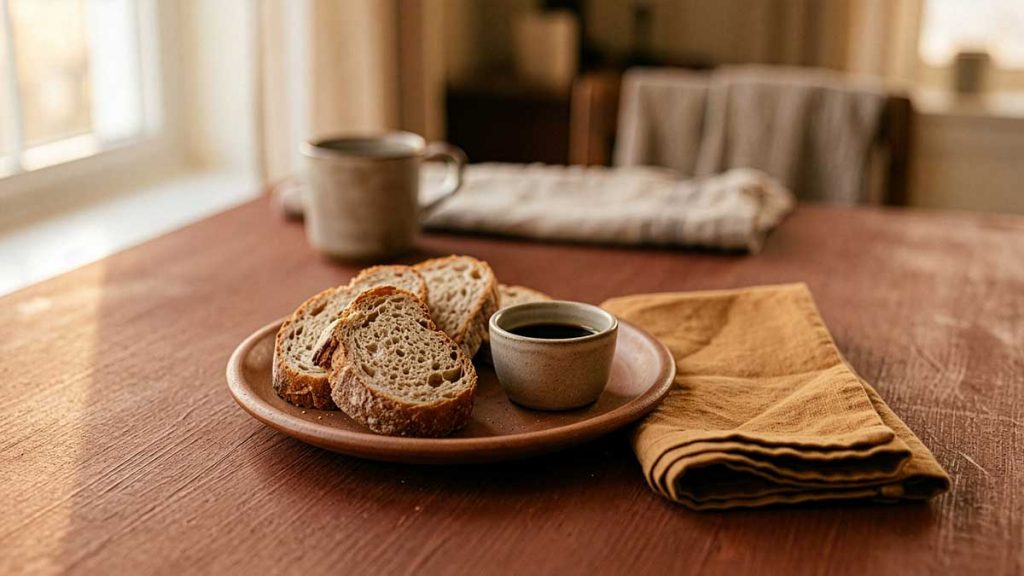
Abu Hurairah (may Allah be pleased with him) narrated: “The Messenger of Allah never criticised any food. If he liked it, he ate it. If he disliked it, he left it” (Bukhari and Muslim). This is one of the most beautiful etiquettes of the Prophet. Someone has prepared the food, used their time and effort, and placed it before you. To criticise it is to dishonour their effort and show ingratitude for the provision of Allah. The Prophet’s approach was the ultimate expression of good manners: appreciate what is given, eat what pleases you, and leave what does not, without a word of complaint.
“I Eat as the Servant Eats, and I Sit as the Servant Sits”
The Prophet Muhammad (peace be upon him) was the leader of an entire civilisation. He received ambassadors, commanded armies, and governed a growing state. Yet when he sat down to eat, there was no throne, no elevated table, and no ceremony. He said: “I eat as the servant eats, and I sit as the servant sits. For verily, I am only a servant” (Abu Ya’la).
He sat on the ground. He ate with his hands. He used three fingers, the thumb, index, and middle finger, and he licked them clean before wiping them (Muslim). He ate whatever was available and never demanded specific dishes. When there was only vinegar and bread, he said: “What an excellent condiment vinegar is” (Muslim). When there was nothing but dates and water, he was content. When guests came, he urged them to eat more, saying “Drink!” repeatedly until they said they could take no more (Bukhari).
This is the standard Islam sets. The most honoured human being who ever lived sat on the floor, ate with his hands, praised whatever food was in front of him, and never once asked for a meal that was not there. In a world obsessed with food culture, restaurant rankings, and elaborate plating, the Prophet’s table was the simplest on earth, and his gratitude was the greatest. The lesson is not that luxury is forbidden. The lesson is that contentment does not come from the plate. It comes from the heart that says Alhamdulillah regardless of what is on it.
Eat Together, Not Alone
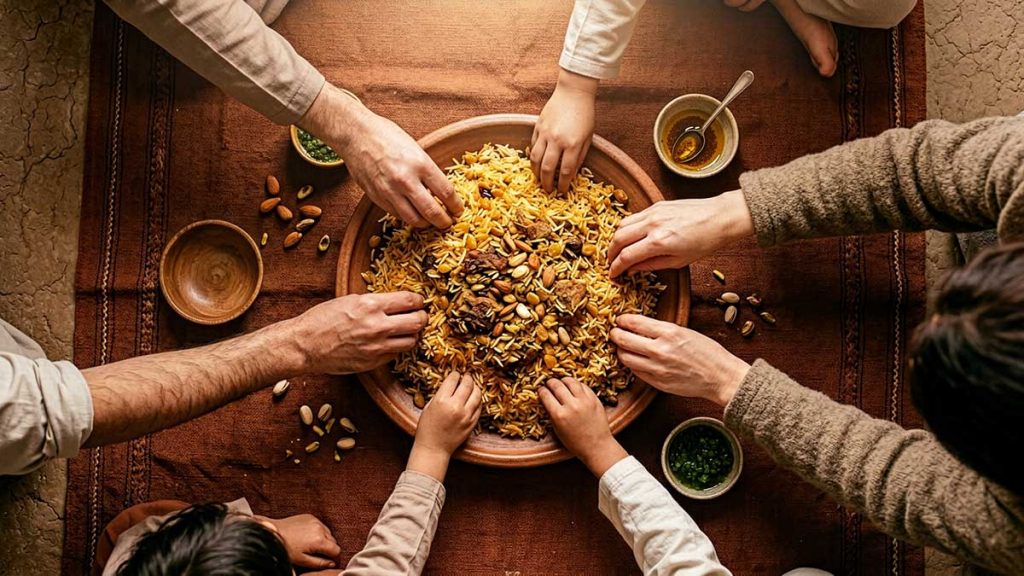
The Prophet (peace be upon him) said: “Eat together and do not eat separately, for the blessing is in eating together” (Ibn Majah). He also said: “The food of one person is sufficient for two, the food of two is sufficient for four, and the food of four is sufficient for eight” (Muslim). These hadiths reveal two things. First, that eating together is not merely social. It is spiritually blessed. When Muslims gather over food and mention the name of Allah, barakah enters the meal. Second, that generosity multiplies provision. The Prophet’s math defies logic: one plate feeds two, two plates feed four. But this is the economy of barakah, where Allah stretches what is shared and contracts what is hoarded.
“Eat together and do not eat separately for the blessing is together”
Islam’s Answer to Modern Life
The prophetic etiquettes of eating address the most urgent food-related crises of the modern world.
The Obesity Epidemic
According to the World Health Organisation, global obesity has nearly tripled since 1975. Over 1.9 billion adults are overweight. The leading cause is overconsumption. The Prophet’s one-third rule is the most concise anti-obesity prescription ever given: stop eating before you are full. Modern research into caloric restriction, intermittent fasting, and mindful eating has arrived at the same conclusion the Prophet stated in a single hadith fourteen centuries ago. The Muslim who follows the one-third rule is not dieting. They are following the Sunnah.
Food Waste
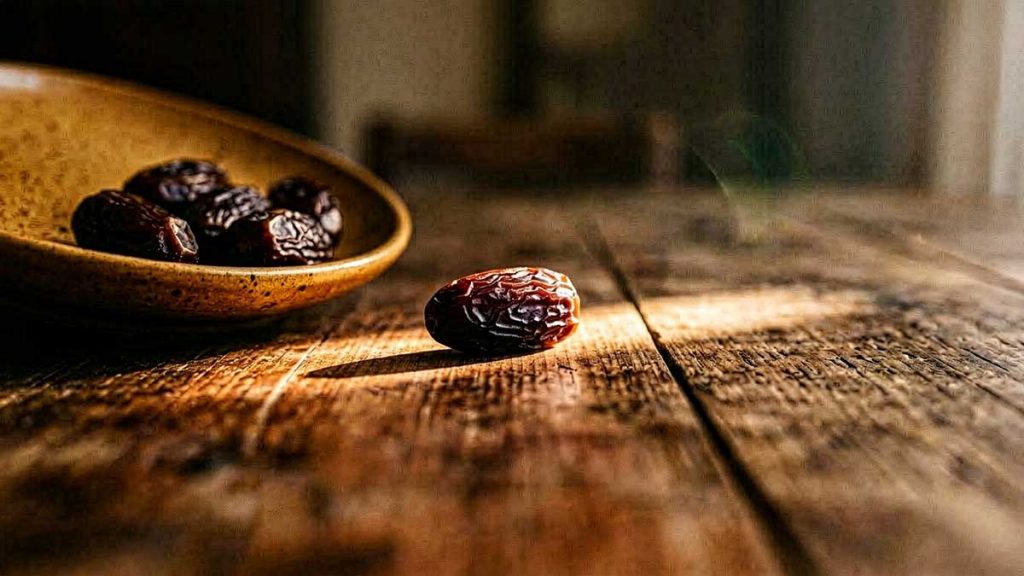
Around one third of all food produced globally is wasted every year. The Prophet’s response to this would have been direct and uncompromising. He told his companions: “If a morsel of food falls from any of you, let him pick it up, remove any dirt from it, and eat it, and not leave it for Shaytan” (Muslim). He also said: “You do not know in which part of your food the blessing lies” (Muslim). Islam treats food as a trust from Allah, not a commodity to be discarded. Every grain, every morsel, every drop was provided by the Creator. To waste it is to show ingratitude to the One who gave it.
Eating Alone in an Isolated World
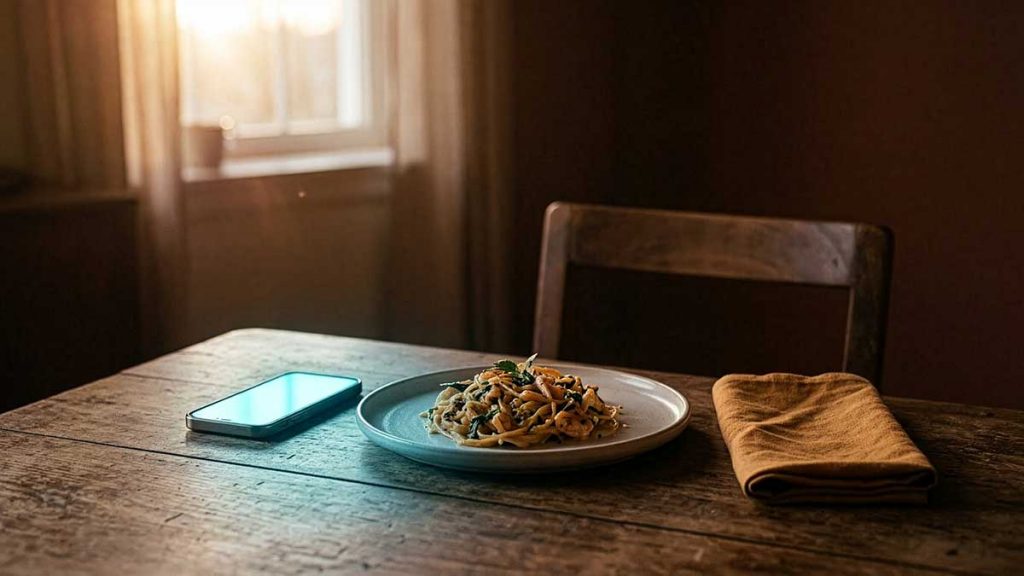
More people today eat alone than at any point in history. Single-person households are rising, family mealtimes are declining, and the communal table is being replaced by the solo screen. The Prophet’s command to eat together is both a spiritual instruction and a social prescription. The shared meal is where families reconnect, where guests are honoured, where children learn manners, and where barakah enters the home. Islam does not treat eating as a private act of consumption. It treats it as a communal act of worship, and the table is one of the most important gathering places in the Muslim home.
A Reflection from the Quran
Allah says in Surah Al-A’raf of the Quran:
وَکُلُوۡا وَاشۡرَبُوۡا وَلَا تُسۡرِفُوۡا ۚ اِنَّہٗ لَا یُحِبُّ الۡمُسۡرِفِیۡنَ
“Eat and drink, but do not be excessive. Indeed, He does not love those who are excessive.”
This verse is a masterclass in divine concision. Three words of permission: eat and drink. Three words of prohibition: do not be excessive. And then the reason: Allah does not love those who waste. The early Muslim scholar Ibn al-Qayyim said that if the people of medicine had nothing but this single verse, it would be sufficient for them. Excess in eating leads to disease of the body. Excess in consumption leads to disease of the soul. And excess in waste leads to the displeasure of the Creator. The Prophet’s one-third rule is the practical application of this verse: eat enough to live, not so much that living becomes a burden.

Frequently Asked Questions
The Sunnah involves saying Bismillah before eating, using the right hand, eating from what is nearest to you, sitting down rather than reclining, eating in moderation (the one-third rule), eating with three fingers, and saying Alhamdulillah after finishing. The Prophet also encouraged eating together as a group and never criticised any food placed before him.
The Prophet said: “The son of Adam fills no vessel worse than his stomach. A few mouthfuls are sufficient to keep his back straight. But if he must eat more, then one third for food, one third for drink, and one third for air” (Tirmidhi). This means leaving your stomach one third empty at every meal. Modern research confirms that this approach prevents overeating, aids digestion, and reduces the risk of chronic disease.
The Prophet said: “Shaytan eats with his left hand and drinks with his left hand” (Muslim). Eating with the right hand distinguishes the believer’s practice from Shaytan’s and is part of the broader Islamic principle of using the right hand for noble actions. The Prophet instructed young Umar ibn Abu Salamah with three simple rules: say Bismillah, eat with your right hand, and eat from what is in front of you (Bukhari and Muslim).
Before eating, say “Bismillah” (In the name of Allah). If you forget and remember midway, say: “Bismillah fi awwalihi wa akhirihi” (In the name of Allah at its beginning and its end). After eating, the Prophet would say: “Alhamdulillahil-ladhi at’amana wa saqana wa ja’alana Muslimin” (All praise is due to Allah who fed us, gave us to drink, and made us Muslims) (Abu Dawud, Tirmidhi).
Yes. The Prophet said: “I eat as the servant eats, and I sit as the servant sits. For verily, I am only a servant” (Abu Ya’la). He sat on the ground and ate with humility. He also said: “I do not eat reclining” (Bukhari). While eating on the floor is recommended (mustahab), it is not obligatory. Eating at a table is permissible, but the spirit of humility and gratitude the Prophet demonstrated should be maintained regardless of where you sit.
Islam strictly prohibits the wasting of food. The Quran says: “Eat and drink, but do not be excessive” (7:31). The Prophet instructed his companions to pick up any morsel that falls, clean it, and eat it, saying: “You do not know in which part of your food the blessing lies” (Muslim). He also advised licking the fingers and wiping the plate clean. Food is treated as a trust from Allah, and wasting it is a form of ingratitude.
The Prophet Muhammad (peace be upon him) ate over 80,000 meals in his lifetime, and not one of them was consumed without intention. Every meal began with the name of Allah and ended with praise. Every portion was measured by the one-third rule. Every plate was shared. Every morsel that fell was retrieved. Every guest was urged to eat more. And every host was honoured with dua. In a world that has turned food into entertainment, addiction, waste, and status, the prophetic table remains the most radical alternative: simple, grateful, moderate, shared, and blessed.
As Allah, Ar-Razzaq (The Provider), sustains every creature on earth and provides food from sources we cannot foresee, may we honour every provision He sends us by eating with gratitude, sharing with generosity, and stopping before excess, just as the Prophet taught.
May Allah bless our food, place barakah in every meal we share, and make us among those who eat to live in His service rather than live to eat. Ameen.
One third for food, one third for drink, one third for air. The Prophet’s advice on eating is the simplest health plan ever given and the most ignored. If this article inspired you to eat with more intention, share it at your next family meal. Follow us on YouTube for content on prophetic living, on X for daily Sunnah reminders, and on Pinterest for visuals you can save and revisit.