
Dua During Turbulence
3 Anchors of Calm in the Sky

When an aircraft shudders through turbulence or a journey turns suddenly frightening, the heart instinctively reaches for help. The dua during turbulence gives the believer the most powerful supplication of distress in the Quran, the words of Prophet Yunus from within the belly of the whale, which the Prophet Muhammad (pbuh) said Allah answers for any believer who calls upon Him with them. In the shaking of the sky, these words bring the calm of certainty.
لَا إِلَهَ إِلَّا أَنْتَ سُبْحَانَكَ إِنِّي كُنْتُ مِنَ الظَّالِمِينَ
Lā ilāha illā anta subhānaka innī kuntu minaz-zālimīn.
“There is no god but You, glory be to You. Indeed, I was among the wrongdoers.”
This guide explains the dua during turbulence, the story behind this supplication of distress, and three anchors of calm it offers, so that moments of fear in the air become moments of turning fully to Allah, who alone holds every traveller in His hands.
The Meaning of the Dua During Turbulence
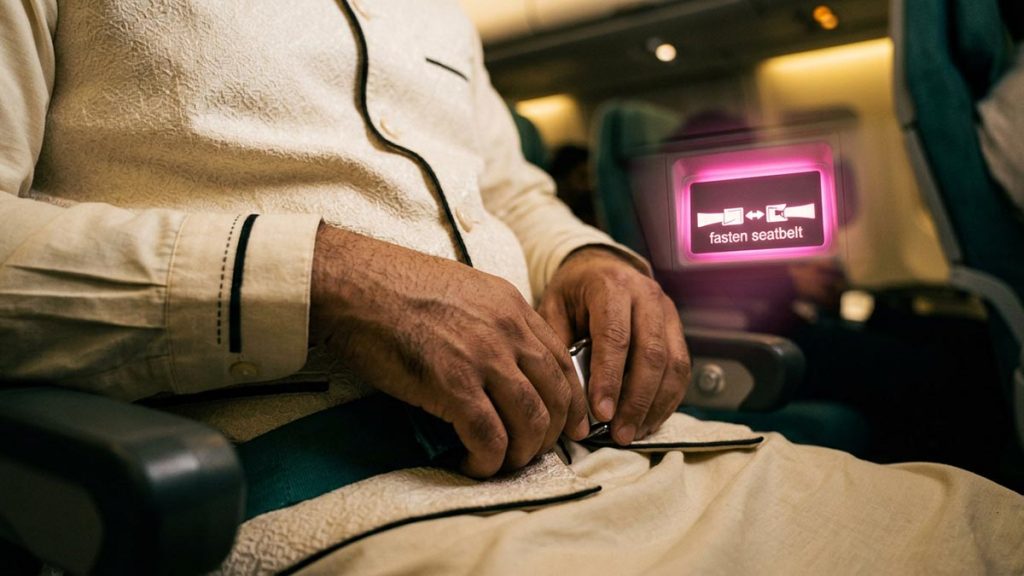
The dua during turbulence is the supplication of Prophet Yunus, peace be upon him, who called upon Allah from within the darkness of the whale’s belly. In it he affirms that there is no god but Allah, glorifies Him above all imperfection, and humbly admits his own shortcoming. The Prophet (pbuh) taught that no Muslim ever calls upon Allah with these words in any distress except that Allah answers him, making it the perfect supplication for a moment of fear in the sky.
The power of this dua lies in its order. The believer first declares the oneness of Allah, then His perfection, and only then mentions himself, and even that is in humility. It turns the heart away from panic and toward Allah, replacing fear of the turbulence with certainty in the One who controls it.
Three Anchors of Calm in the Sky
The supplication of Yunus offers the frightened traveller three anchors that steady the heart, each drawn from the words themselves.
- Affirm the oneness of Allah, that there is no god but Him in control of all things.
- Glorify Allah above all imperfection, trusting in His perfect wisdom and power.
- Turn to Allah in humility, calling on the One who answers the supplication of distress.
فَاسْتَجَبْنَا لَهُ وَنَجَّيْنَاهُ مِنَ الْغَمِّ وَكَذَٰلِكَ نُنْجِي الْمُؤْمِنِينَ
Fastajabna lahu wa najjaynahu minal-ghammi wa kadhalika nunjil-mu’minin
So We answered him and saved him from his distress and thus We save the believers
Steadying the Heart in Fear
Turbulence reminds the traveller how little he controls, and Islam answers that helplessness by turning the heart to the One who controls everything. The dua during turbulence does not deny the fear but transforms it, replacing panic with the certainty that no aircraft shakes or steadies except by the will of Allah. The believer who calls upon Allah with the words of Yunus joins a prophet who was saved from the darkest of distresses, and trusts that the same Allah hears him in the sky.
This supplication complements the dua before boarding an airplane said at the start of the flight, and reflects the reliance at the heart of patience in Islam. By turning to Allah in the shaking of the journey, the believer steadies his heart on the only One who can truly bring it peace.
When the journey shakes, the supplication of Yunus turns fear into certainty in Allah. Learn the travel duas with us on YouTube, where the supplications are recited aloud, on TikTok for a reminder to steady your heart in the air, and on Facebook where readers share how they find calm in moments of fear.
Frequently Asked Questions
The dua during turbulence is the supplication of Prophet Yunus, La ilaha illa anta subhanaka inni kuntu minaz-zalimin, there is no god but You, glory be to You, I was among the wrongdoers. The Prophet (pbuh) said Allah answers whoever calls on Him with it in distress.
The Prophet (pbuh) taught that no Muslim calls upon Allah with these words in any distress except that Allah answers him. It affirms the oneness and perfection of Allah before mentioning the self, turning the heart fully to Him.
It is found in Surah Al-Anbiya, verse 87, where Prophet Yunus calls upon Allah from within the darkness of the whale. The very next verse describes how Allah answered him and saved him from his distress.
No, it is the supplication of distress for any difficulty, fear or hardship, not turbulence alone. It is especially fitting in moments of fear in the air, but the believer may call upon Allah with it in any distress.
Say it the moment fear strikes during turbulence or any frightening part of a journey, turning your heart to Allah. You can repeat it until the fear settles and calm returns.
Focus on the meaning, first affirming that there is no god but Allah who controls all things, then His perfection, then turning to Him in humility. This order replaces panic with certainty and trust in Allah.