
Dua for Neighbours
3 Things to Know About the Rights of Neighbours
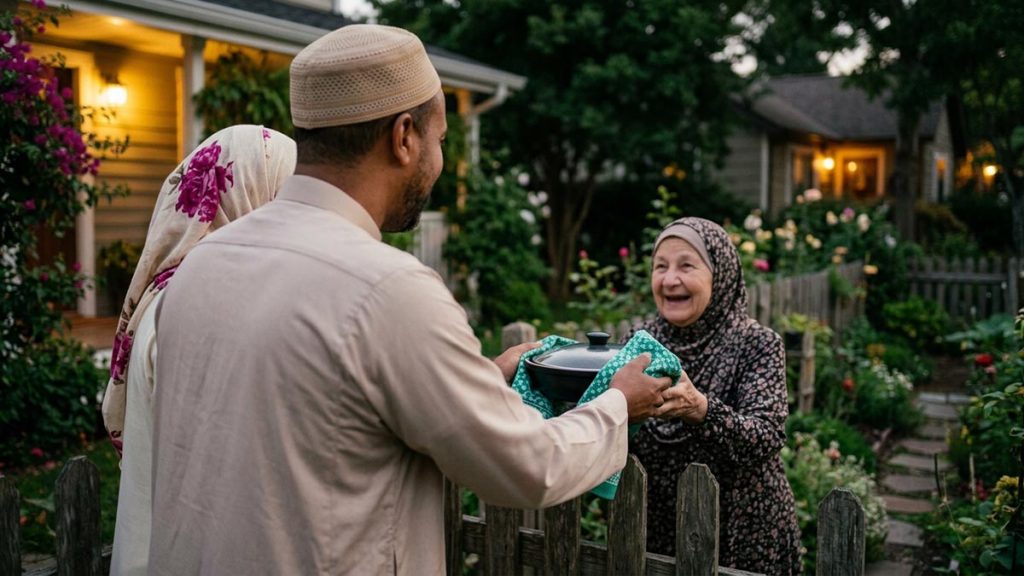
Neighbours hold a great right in Islam, so much so that the Prophet Muhammad (pbuh) said the angel Jibril kept urging kindness to the neighbour until he thought neighbours would be made heirs. The believer prays for those around them, asking Allah to forgive and bless the believers, including the neighbours among whom they live. The dua for neighbours turns the heart toward goodness for those nearby, seeking the forgiveness and mercy of Allah for oneself and for the believing community.
رَبِّ اغْفِرْ لِي وَلِوَالِدَيَّ وَلِمَنْ دَخَلَ بَيْتِيَ مُؤْمِنًا وَلِلْمُؤْمِنِينَ وَالْمُؤْمِنَاتِ
Rabbi-ghfir li wa li walidayya wa liman dakhala baytiya mu’minan wa lil-mu’minina wal-mu’minat.
“My Lord, forgive me and my parents and whoever enters my house as a believer, and the believing men and women.”
Honouring neighbours means treating them with kindness, sharing good with them, protecting them from harm, and praying for their wellbeing, regardless of who they are. This guide explains the dua for neighbours and three things to know about the rights of neighbours, so that the believer may care for those around them as Islam commands, praying for the believers including their neighbours, showing them kindness and generosity, and remembering that true faith is shown in how one treats the neighbour beside them.
Praying for Those Around Us
The Prophet Nuh (AS) prayed the beautiful words quoted above, asking Allah to forgive him, his parents, whoever entered his house as a believer, and all the believing men and women. This prayer extends beyond oneself and one family to the wider believing community, including the neighbours among whom one lives. By praying these words, the believer asks Allah for forgiveness and mercy not only for themselves, but for all the believers around them, embracing their neighbours in the breadth of the prayer.
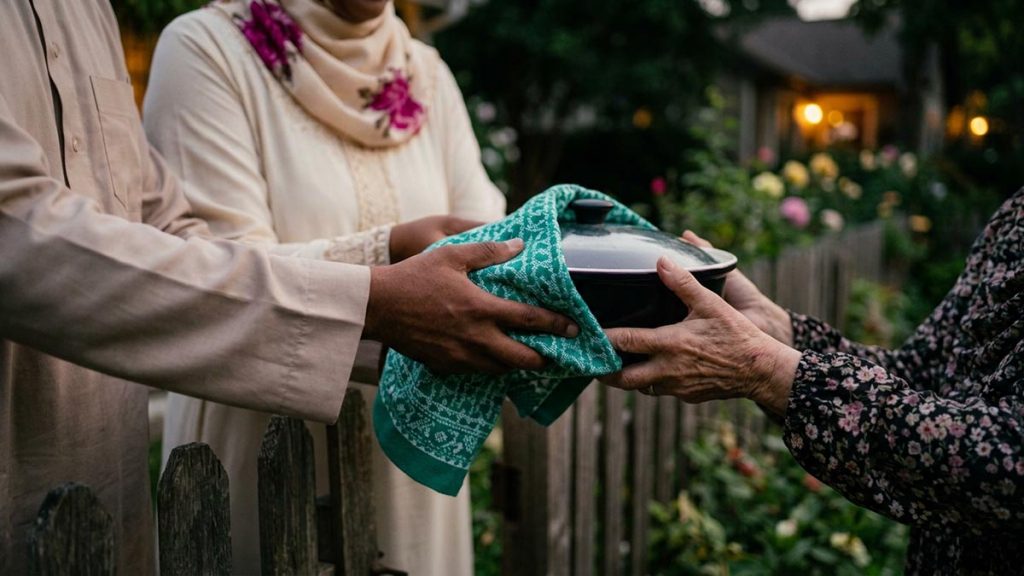
Praying for one neighbours reflects the great concern for them that Islam teaches, for the believer wishes for their neighbour what they wish for themselves. To ask Allah to forgive and bless the believing men and women is to include the neighbour beside whom one lives in the goodness one seeks. The dua for neighbours draws on this prayer, turning the heart toward goodness for those nearby and seeking the mercy of Allah for the whole community of believers.
وَلِلْمُؤْمِنِينَ وَالْمُؤْمِنَاتِ
Wa lil-mu’minina wal-mu’minat
Forgive the believing men and women around us
Three Things to Know About the Rights of Neighbours
Neighbours hold a great right in Islam. These three things help the believer honour the neighbour beside them.
- Pray for the believers including your neighbours, asking Allah to forgive and bless them.
- Show kindness and generosity, sharing good with neighbours and never harming them.
- Remember that true faith is shown in how the believer treats the neighbour beside them.
Caring for the Neighbour Beside You
The dua for neighbours turns the heart toward goodness for those nearby, seeking the forgiveness and mercy of Allah for the believers. By praying for the believers including your neighbours, showing them kindness and generosity, and remembering that faith is shown in how one treats the neighbour, the believer honours the rights of neighbours in the best way. Neighbours hold a great right in Islam, and the believer who prays for them, treats them with kindness, and protects them from harm fulfils a beautiful duty beloved to Allah.
This supplication pairs naturally with the dua for community unity and the dua for good character. Together they help the believer build bonds of kindness within the community.
Jibril kept urging kindness to the neighbour, said the Prophet (pbuh), until he thought neighbours would inherit. Learn the duas for life with us on YouTube, where the supplications are recited aloud, on Instagram for a reminder of the rights of neighbours, and on LinkedIn where readers share how they care for those around them.
Frequently Asked Questions
The dua for neighbours draws on the prayer of Nuh (AS): Rabbi-ghfir li wa li walidayya wa liman dakhala baytiya muminan wa lil-muminina wal-muminat, my Lord forgive me, my parents, whoever enters my house as a believer, and the believing men and women, including the neighbours around us.
The rights of neighbours are so great that the Prophet (pbuh) said the angel Jibril kept urging kindness to the neighbour until he thought neighbours would be made heirs. Honouring the neighbour is a sign of true faith.
By treating them with kindness, sharing good with them, protecting them from harm, checking on them, and praying for their wellbeing, regardless of who they are. The believer wishes for their neighbour what they wish for themselves.
Yes, the rights of the neighbour in Islam extend to all neighbours, and the believer treats every neighbour with kindness, generosity and protection from harm. Good treatment of neighbours is a sign of faith and good character.
The Prophet (pbuh) taught that the one whose neighbour is not safe from their harm does not truly believe, stressing how serious it is to harm a neighbour. The believer ensures their neighbour is safe from any harm from them.
The believer may pray for the guidance and worldly wellbeing of a non-Muslim neighbour and treat them with kindness. Praying for guidance and showing good character to neighbours reflects the mercy that Islam teaches.