
Dua During Hardship
3 Anchors in Difficult Times
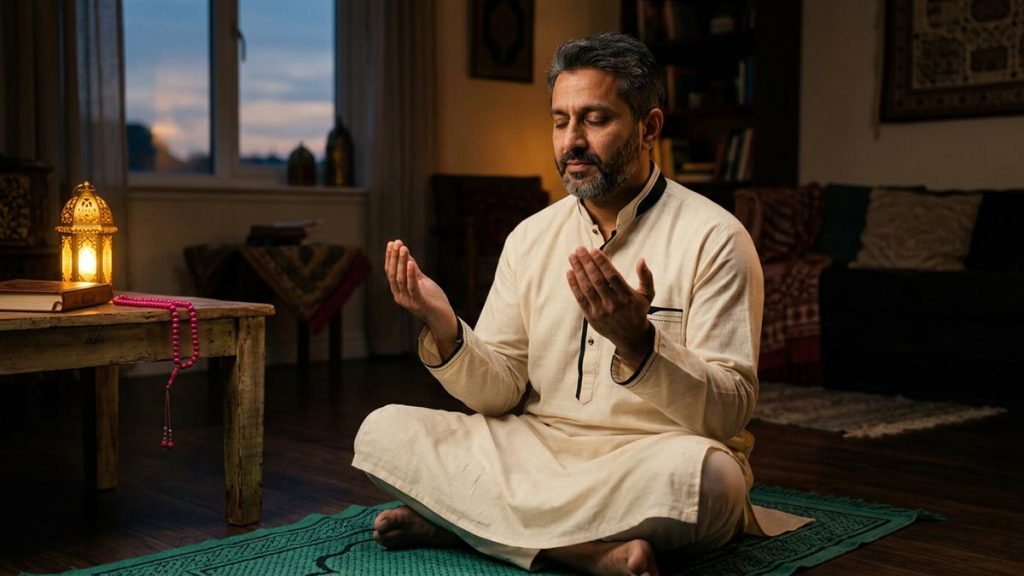
In the hardest moments of life, when a person feels they can no longer manage on their own, the believer turns to Allah and leans entirely on His mercy. The dua during hardship is a supplication the Prophet Muhammad (pbuh) taught for times of distress, asking Allah not to leave one to themselves even for the blink of an eye, and to set right all their affairs. It teaches the believer that in hardship, their only true reliance is on the mercy of Allah, who alone can carry them through.
اللَّهُمَّ رَحْمَتَكَ أَرْجُو فَلَا تَكِلْنِي إِلَى نَفْسِي طَرْفَةَ عَيْنٍ، وَأَصْلِحْ لِي شَأْنِي كُلَّهُ، لَا إِلَهَ إِلَّا أَنْتَ
Allāhumma rahmataka arjū falā takilnī ilā nafsī tarfata ‘ayn, wa aslih lī sha’nī kullah, lā ilāha illā ant.
“O Allah, I hope for Your mercy, so do not leave me to myself even for the blink of an eye; set right all my affairs; there is no god but You.”
This guide explains the dua during hardship, the meaning of hoping in the mercy of Allah and asking Him to set right every affair, and three anchors in difficult times, so that the believer may face the hardest moments leaning on Allah, certain that His mercy is enough and that He will not abandon those who turn to Him.
The Meaning of the Dua During Hardship
The dua during hardship is a supplication the Prophet (pbuh) taught for times of distress and difficulty. In it, the believer declares their hope in the mercy of Allah, asks Him not to leave them to themselves even for the blink of an eye, and begs Him to set right all their affairs, affirming that there is no god but Him. It is a complete surrender to the mercy of Allah, recognising that without His care, a person is helpless, and that with it, every affair can be set right.
The heart of this dua is the plea not to be left to oneself. The believer knows that their own strength is weak and their judgement limited, and that if Allah were to leave them to manage alone, even for a moment, they would falter. So in hardship, they cling to the mercy of Allah, asking Him to take charge of all their affairs. This is the deepest reliance, leaning not on oneself but entirely on the One whose mercy never fails.
Three Anchors in Difficult Times
The dua during hardship gives the heart three anchors to hold in difficult times. Each leans entirely on the mercy of Allah.
- Hope in the mercy of Allah, the believer’s truest reliance when all else fails.
- Ask not to be left to yourself, leaning on Allah rather than your own weak strength.
- Ask Allah to set right every affair, entrusting all your matters to His care.
وَمَنْ يَتَوَكَّلْ عَلَى اللَّهِ فَهُوَ حَسْبُهُ
Wa man yatawakkal ‘alallahi fahuwa hasbuh
And whoever relies upon Allah then He is sufficient for him
Leaning on the Mercy of Allah
There are moments when life becomes too heavy to manage alone, and the believer is taught to lean fully on the mercy of Allah. The dua during hardship hands every affair to Him, asking not to be left to oneself even for an instant, and trusting His mercy to carry one through. In the hardest times, this reliance is the believer’s deepest anchor, certain that the mercy of Allah is enough and that He will never abandon those who turn to Him. Reaching out to trusted people and seeking help is also part of being carried through hardship.

This supplication pairs naturally with the dua for patience that asks Allah for endurance, and the dua for stress. Together they help the believer face difficult times leaning on the mercy of Allah, who carries those who turn to Him.
In the hardest moments, the believer’s deepest anchor is the mercy of Allah, who never abandons them. Learn the healing duas with us on YouTube, where the supplications are recited aloud, on TikTok for a reminder to lean on the mercy of Allah, and on Pinterest where readers share how they are carried through hardship by Him.
Frequently Asked Questions
The dua during hardship is Allahumma rahmataka arju fala takilni ila nafsi tarfata ‘ayn, hoping in the mercy of Allah and asking Him to set right all affairs. The Prophet (pbuh) taught it for times of distress.
Say it in the hardest moments of life, when you feel you can no longer manage alone, leaning entirely on the mercy of Allah. It hands every affair to Him.
It means asking Allah not to leave you to your own weak strength and limited judgement even for a moment, but to take charge of your affairs. It is the deepest form of reliance on Allah.
It anchors the heart in the mercy of Allah, hands every affair to Him, and reminds the believer that His mercy never fails. Leaning on Allah carries one through hardship.
No, the believer leans on the mercy of Allah while also reaching out to trusted people and seeking help, which is part of being carried through hardship. Trust in Allah and seeking support go together.
The dua for patience asks Allah for endurance, and the dua for stress lightens a heavy heart. Together with the dua during hardship, they help the believer lean on the mercy of Allah.