
Dua After Leaving the Bathroom
3 Lessons in Gratitude
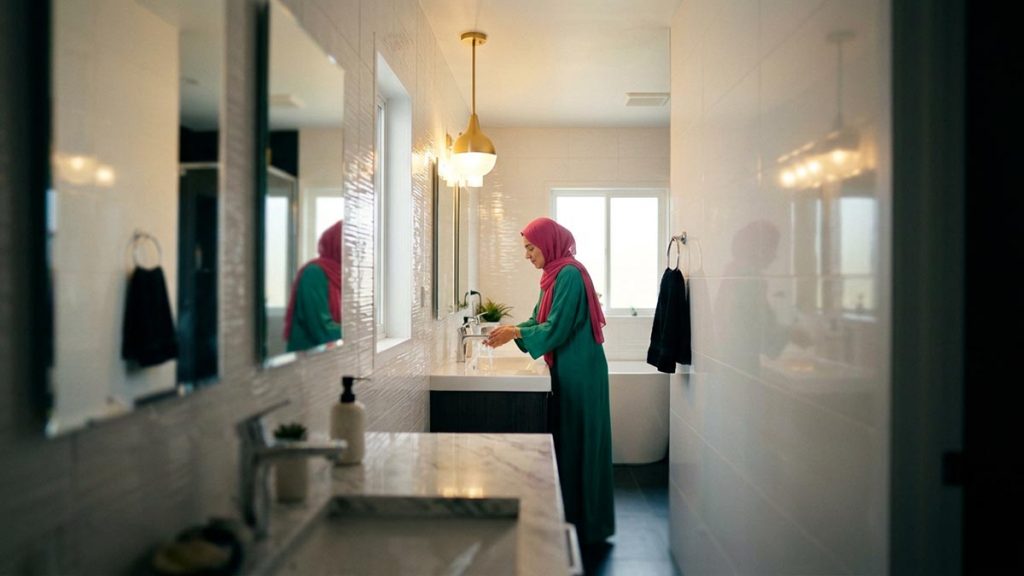
When the believer steps out of the bathroom, the first word on the tongue is not relief but the remembrance of Allah. The dua after leaving the bathroom seeks the forgiveness of Allah and quietly thanks Him for removing harm from the body and granting good health. The Prophet Muhammad (pbuh) taught this single beautiful word so that even this private moment ends in humility before Allah.
This short guide gathers the supplication for leaving the bathroom with three gentle lessons in gratitude, so that an ordinary necessity becomes a reminder of the countless quiet mercies that Allah grants the body every day.
The Meaning of the Dua After Leaving the Bathroom

The dua after leaving the bathroom is the single word Ghufranak, I seek Your forgiveness. Scholars explain that the believer asks forgiveness here for having been unable to remember Allah while inside, and gives thanks that Allah removed the harm of waste from the body and kept the person in good health. In one short word the supplication joins humility and gratitude together.
أَسْتَغْفِرُكَ رَبِّي وَأَسْأَلُكَ رَحْمَتَكَ
Astaghfiruka Rabbi wa as’aluka rahmatak
I seek Your forgiveness O my Lord and Your mercy
It teaches the believer to return to the remembrance of Allah the very moment it becomes possible again.
Three Quiet Lessons in Gratitude
This brief supplication carries lessons far larger than its few letters. The Prophet (pbuh) taught the believer to find meaning in the most ordinary moments.
- Good health is a hidden blessing, easily forgotten until it is taken away.
- The body relieving itself of harm is itself a mercy worthy of thanks.
- A believer returns to the remembrance of Allah at the first opportunity.
How many blessings are taken for granted until they are lost
Finding Mercy in the Ordinary
To seek forgiveness on leaving the bathroom is to see the hand of Allah even in the workings of the body. The dua after leaving the bathroom pairs with the dua before entering the bathroom that opened the moment in seeking refuge, and together they reflect the gratitude at the heart of gratitude in Islam. The believer who thanks Allah for good health in private will never run short of reasons to praise Him.

Modern life rarely pauses to be thankful for a healthy body, yet illness reminds everyone how precious that quiet gift truly is. The Prophet (pbuh) said that two blessings are squandered by many people, good health and free time, and this short supplication is a daily safeguard against that forgetfulness. Each time the body is relieved of harm without pain or difficulty, the believer is given fresh reason to praise Allah. To notice these hidden mercies is to live with a heart that is always full, never taking for granted the countless favours that make an ordinary day possible. Gratitude of this kind turns even the most overlooked moment into worship, and a heart trained to thank Allah in private grows ever more aware of His mercy in all things, finding reasons for thankfulness where others notice only routine.
Good health is the blessing we notice least and need most, and a word of thanks for it is a habit worth keeping. Learn the daily duas with us on YouTube, where the supplications are recited aloud, on Facebook for a gentle daily reminder, and on X where readers share the quiet mercies of the day.
Frequently Asked Questions
The dua after leaving the bathroom is the single word Ghufranak, meaning I seek Your forgiveness. The Prophet (pbuh) said it on stepping out, and it is recorded in the collections of Abu Dawud and Tirmidhi.
Scholars explain that the believer seeks forgiveness for being unable to remember Allah while inside, and gives thanks that Allah relieved the body of harm. The one word joins humility with gratitude for good health.
Say it the moment you step out of the bathroom, as the first remembrance of Allah after leaving. It marks the return to the worship and remembrance that was set aside inside.
Yes, the supplication Ghufranak is reported from the Prophet (pbuh) in the collections of Abu Dawud, Tirmidhi and others, and scholars have accepted it as established. It is the agreed sunnah for leaving the bathroom.
Before entering he sought refuge in Allah with Allahumma inni a‘udhu bika minal-khubuthi wal-khaba’ith, asking protection from the male and female evil ones. Together the two duas frame the moment in refuge and forgiveness.