
Gratitude in Islam

If you are grateful, I will surely increase you
Gratitude in Islam carries a divine guarantee: “If you are grateful, I will surely increase you” (Quran 14:7). The Prophet Muhammad (pbuh) prayed until his feet swelled and when asked why, he answered: “Should I not be a grateful servant?” He taught the Ummah to say Alhamdulillah after every blessing and to thank people as a path to thanking Allah. Here is what shukr truly means.
What the Prophet Taught About Gratitude
The Prophet (peace be upon him) lived gratitude at every level. He expressed it with his tongue through constant dhikr and Alhamdulillah. He expressed it with his body through long nights of worship. And he expressed it with his heart through a contentment so deep that he turned down valleys of gold because he preferred to alternate between hunger and fullness, thanking Allah in both states. He showed the Ummah that gratitude is not a reaction to good times. It is a permanent state of the believing soul.
The Three Levels of Shukr
Gratitude in the heart means recognising that every blessing comes from Allah, not from your own effort or intelligence. Gratitude on the tongue means praising Allah constantly through dhikr, Alhamdulillah, and thanking the people He uses as channels for His blessings. Gratitude in action means using every blessing Allah gives you in ways that please Him, not in ways that disobey Him.
The Rewards of Gratitude
Increased blessings as Allah promises to give more to those who are thankful. Protection from punishment for Allah has no reason to punish the grateful. Contentment of the soul which the Prophet called true wealth. Closeness to Allah who loves those who praise Him. The same reward as the one who fasts for “the one who eats gratefully has a reward similar to the one who fasts patiently.”
The Prophetic Teachings on Gratitude

Look at Those Below You, Not Above You
The Prophet (peace be upon him) said: “Look at those below you and do not look at those above you, lest you belittle the favours of Allah” (Muslim 2963). This is one of the most psychologically powerful hadiths in the entire Sunnah. The Prophet identified the exact mechanism by which gratitude dies: comparison. When you look at those who have more than you, money, status, beauty, health, you feel deprived. When you look at those who have less, you feel blessed. The same life, the same circumstances, but a completely different emotional experience, determined entirely by where you choose to look. Modern psychology calls this “downward social comparison.” The Prophet taught it fourteen centuries earlier.
“Look at those below you not those above you lest you belittle Allah’s favours”
Whoever Does Not Thank People Does Not Thank Allah
The Prophet (peace be upon him) said: “He who does not thank people does not thank Allah” (Abu Dawud 4811, Tirmidhi). In another narration: “Whoever is not grateful for small things will not be grateful for large things” (Ahmad). These hadiths connect gratitude to Allah with gratitude to people. They teach that shukr is not a private spiritual exercise between you and your Lord. It is a way of being that shows up in how you treat your mother when she cooks for you, your colleague who helps you at work, your spouse who sacrifices for you daily, and the stranger who holds a door. The person who cannot say “thank you” to a human being has not truly understood what it means to say Alhamdulillah to Allah.
“He who does not thank people does not thank Allah”
True Wealth Is Contentment
The Prophet (peace be upon him) said: “Wealth is not in having many possessions. True wealth is the contentment of the soul” (Bukhari and Muslim). This is one of the most counter-cultural statements the Prophet ever made. The entire modern economy is built on the premise that more possessions equal more happiness. The Prophet said the opposite: a rich soul is one that is satisfied, regardless of what is in the bank account. The person who has little and says Alhamdulillah is wealthier than the billionaire who has everything and still feels empty. Gratitude is the currency of this inner wealth. The more you practise it, the richer you become in the only way that matters.
Allah Is Pleased with the One Who Thanks Him
The Prophet (peace be upon him) said: “Allah is pleased with His servant who, when he eats something, praises Allah for it, and when he drinks something, praises Allah for it” (Muslim). Consider the simplicity of this. You eat a meal. You say Alhamdulillah. And the Creator of the heavens and the earth is pleased with you. Not because the word was elaborate. Not because the praise was lengthy. But because you remembered Him in a moment when most people forget. Gratitude pleases Allah because it is an acknowledgement of the truth: everything comes from Him, and without Him, we would have nothing.
“True wealth is not having many possessions but contentment of the soul”
“Should I Not Be a Grateful Servant?”
Aisha (may Allah be pleased with her) narrated that the Prophet (peace be upon him) used to stand in prayer at night so long that his feet would swell and crack. She said to him: “O Messenger of Allah, why do you do this when Allah has forgiven all your past and future sins?” He replied: “Should I not be a grateful servant?” (Bukhari 1130).
This is the single most powerful statement about gratitude in the Sunnah. The Prophet had already been guaranteed Paradise. He had already been forgiven everything. He had no obligation to stand in prayer until his body ached. And yet he did. Not out of fear. Not out of duty. Out of shukr. He understood something that most people never grasp: gratitude is not what you feel when life is easy. It is what you do when you realise how much you have been given.
His answer also reveals that the highest form of gratitude is worship. You can say Alhamdulillah a thousand times a day, but the Prophet showed that the ultimate expression of thankfulness to Allah is to stand before Him in the night, when no one is watching, when no one will know, and pour your gratitude into prostration. His feet swelled because his heart was overflowing. That is the standard. Not perfection. Overflow.
The Quran’s Warning to the Ungrateful
Gratitude in the Quran is not only praised. Its absence is warned against. Allah says: “If you are grateful, I will surely increase you. But if you are ungrateful, indeed My punishment is severe” (Quran 14:7). Shaytan himself predicted that ingratitude would be his weapon. When he was expelled from Paradise, he vowed: “Then I will come to them from before them and from behind them and on their right and on their left, and You will not find most of them grateful” (Quran 7:17). Shaytan’s entire strategy against humanity is to make people forget their blessings. Every time a person complains instead of saying Alhamdulillah, Shaytan has succeeded. Every time a person feels entitled instead of grateful, Shaytan has won a small victory. Gratitude is not just a virtue. It is a battle.
Islam’s Answer to Modern Life
The prophetic teachings on gratitude address the root cause of the modern world’s deepest unhappiness.

The Comparison Trap
Social media has turned comparison into a full-time activity. People scroll through curated versions of other people’s lives and feel inadequate about their own. The Prophet’s hadith, “Look at those below you, not those above you”, is the exact cure. It does not require deleting your accounts. It requires redirecting your gaze. When you feel envious of someone’s house, look at those who have no shelter. When you feel frustrated by your car, look at those who walk for hours to reach clean water. The shift is instant, and so is the gratitude.
The Epidemic of Entitlement
Modern culture has replaced gratitude with entitlement. People feel they deserve health, wealth, comfort, and success, and when these things are absent, they feel cheated. Islam teaches the opposite: every breath is a gift. Every heartbeat is a mercy. Every morning you wake is a resurrection that was not guaranteed. The Quran says: “If you tried to count the blessings of Allah, you could never enumerate them” (Quran 14:34). The person who truly absorbs this verse will never feel entitled to anything again. They will feel overwhelmed by how much they have already been given.
Gratitude as Mental Health
Modern psychology has discovered what Islam taught all along: gratitude improves mental health. Studies consistently show that people who practise daily gratitude experience lower rates of depression, better sleep, stronger relationships, and greater life satisfaction. The Prophet’s teaching to say Alhamdulillah after eating, drinking, waking, and sleeping is essentially a gratitude practice built into every hour of the day. The Muslim who follows the Sunnah does not need a gratitude journal. They have something better: a relationship with the Creator in which every transition of the day is marked by a word of thanks.
A Reflection from the Quran
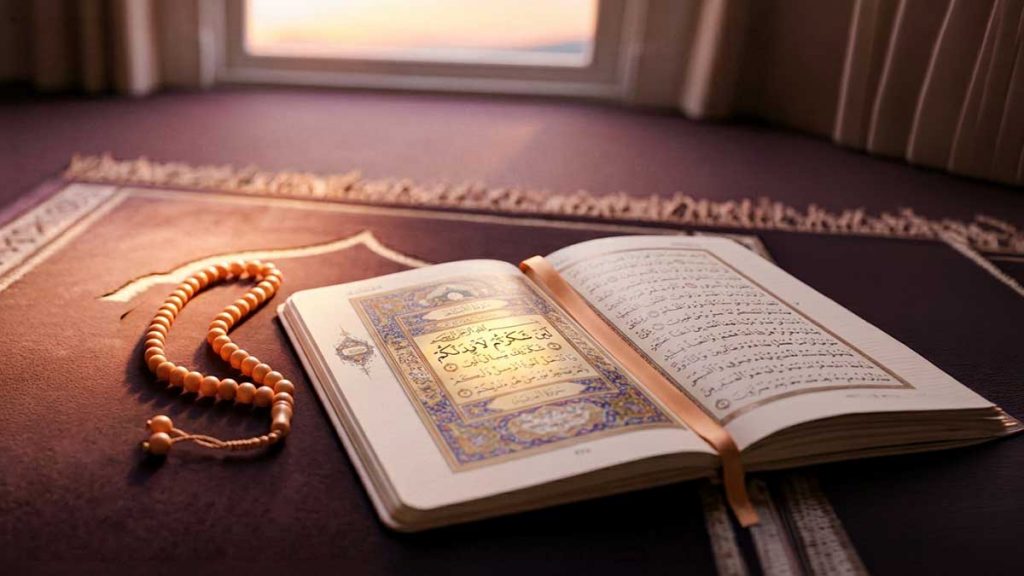
Allah says in Surah Ibrahim of the Quran:
لَئِنۡ شَکَرۡتُمۡ لَاَزِیۡدَنَّکُمۡ وَلَئِنۡ کَفَرۡتُمۡ اِنَّ عَذَابِیۡ لَشَدِیۡدٌ
“If you are grateful, I will surely increase you. But if you are ungrateful, indeed My punishment is severe.”
This verse contains a promise and a warning. The promise: gratitude triggers increase. The scholars say this increase is not limited to material wealth. It includes increase in faith, in peace of mind, in health, in barakah, in opportunities, and in closeness to Allah. The warning: ingratitude triggers severe consequences. Not because Allah needs our thanks, but because the ungrateful person has cut themselves off from the very source of all blessings. They are like a plant that refuses the rain and then wonders why it is dying. Gratitude keeps the channel between you and Allah open. Ingratitude closes it. And the choice between the two is made not once in a lifetime, but in every moment of every day.
Frequently Asked Questions
Shukr is the Arabic word for gratitude, thankfulness, and appreciation. In Islam, it operates on three levels: gratitude in the heart (recognising Allah as the source of all blessings), gratitude on the tongue (saying Alhamdulillah and praising Allah), and gratitude in action (using blessings in obedience to Allah). It is considered one of the foundational qualities of a true believer.
The Quran commands gratitude directly: “Be grateful to Me and do not be ungrateful” (2:152). It promises increase: “If you are grateful, I will surely increase you” (14:7). It warns against ingratitude: “My punishment is severe” (14:7). And it reveals that Shaytan’s primary strategy is to make people ungrateful: “You will not find most of them grateful” (7:17). Gratitude appears in over seventy verses of the Quran.
The Prophet expressed gratitude through worship. He prayed at night until his feet swelled, and when Aisha asked why, he said: “Should I not be a grateful servant?” (Bukhari). He also expressed it through his words, saying Alhamdulillah after eating, drinking, and at every transition of the day. And he expressed it through contentment, saying that true wealth is not possessions but the satisfaction of the soul (Bukhari and Muslim).
Gratitude brings increased blessings (Quran 14:7), protection from punishment (Quran 4:147), contentment of the soul (Bukhari), and Allah’s pleasure (Muslim). The Prophet also said that the one who eats gratefully earns a reward similar to the one who fasts patiently (Tirmidhi). Modern psychology confirms that daily gratitude practice reduces depression, improves sleep, and strengthens relationships.
Follow the Prophet’s Sunnah: say Alhamdulillah after every meal, every drink, and upon waking. Make the dua of Muadh ibn Jabal after every prayer: “O Allah, help me to remember You, to thank You, and to worship You in the best way” (Abu Dawud). Look at those who have less than you (Muslim). Thank the people around you (Tirmidhi). And reflect each night on at least three blessings you received that day.
The Prophet said: “He who does not thank people does not thank Allah” (Abu Dawud). Islam teaches that Allah delivers many of His blessings through other people: your parents, your teachers, your neighbours, your community. Thanking them is recognising Allah’s method of provision. Ignoring them is ignoring the channels through which Allah chose to bless you. Gratitude to people is therefore an extension of gratitude to Allah, not a separate act.
Gratitude is the simplest and most powerful act of worship available to any human being. It requires no money, no physical ability, no specific time or place. It requires only a heart that recognises and a tongue that praises. The Prophet showed us that the grateful person is never poor, never truly alone, and never without hope. They live in a state of continuous receiving because they live in a state of continuous thankfulness. And Allah’s promise stands for all time: if you are grateful, He will give you more. Not might. Not could. Will.
As Allah, Ash-Shakur (The Most Appreciative), rewards even the smallest act of gratitude with blessings far beyond what was deserved, and notices every whispered Alhamdulillah even when no one else hears it, may we become servants whose hearts overflow with thankfulness, whose tongues never tire of praising Him, and whose lives become a living expression of shukr from the first breath of the morning to the last word before sleep.
May Allah make us among the few whom He describes as truly grateful, increase us in every blessing we acknowledge, and never deprive us of the gift of saying Alhamdulillah with a heart that means it. Ameen.
If you are grateful, I will surely increase you. That is not a suggestion. It is a promise from Allah. If this article shifted how you see the blessings already in your life, share it with someone who needs to hear it today. Subscribe to YouTube for gratitude-centred content, follow us on TikTok for bite-sized Alhamdulillah reminders, and join our Facebook community where every blessing is counted and shared.