
Patience in Islam
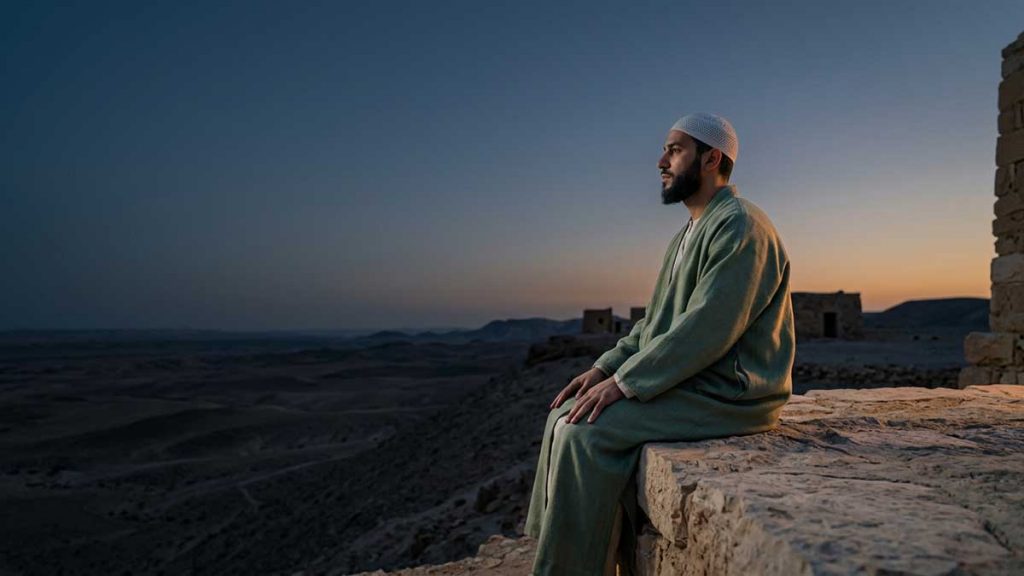
The patient will be given their reward without measure
Patience in Islam is the only virtue whose reward Allah promises without measure. The Prophet Muhammad (pbuh) said no gift is better than patience, and that true sabr is composure at the first shock of calamity. He endured the loss of his wife, uncle, and children without complaining against Allah. Ahead is a complete guide to the three forms of sabr and why it is the greatest gift.
What the Prophet Taught About Patience
The Prophet (peace be upon him) did not treat patience as passive endurance. He taught it as an active spiritual discipline that covers every aspect of life: patience in obeying Allah, patience in avoiding sin, and patience when life delivers its hardest blows. He showed the Ummah that patience is not weakness. It is the strongest thing a human being can do when every instinct is screaming to break.
The Three Types of Sabr
Patience in obedience to Allah: persevering in worship even when it is difficult, showing up for Fajr on cold mornings, fasting on long summer days. Patience in avoiding sin: restraining yourself from what is forbidden even when desire pulls you toward it. Patience in calamity: enduring loss, illness, injustice, and grief without losing faith or complaining against Allah.
The Rewards of Patience
Reward without measure from Allah, with no calculation or limit. Allah’s companionship for “Indeed, Allah is with the patient.” Paradise guaranteed for those who are patient at the first shock of calamity. Every hardship earns forgiveness even the pricking of a thorn. Victory and relief for “victory comes with patience, relief with affliction, and ease with hardship.”
The Prophetic Teachings on Patience

Patience Is at the First Shock
The Prophet (peace be upon him) once passed by a woman weeping beside a grave. He said: “Fear Allah and be patient.” She did not recognise him and replied sharply: “Go away from me! You have not been afflicted with a calamity like mine.” When she was told it was the Prophet, she rushed to his house, mortified, and said: “I did not recognise you.” He replied: “Verily, patience is at the first strike of a calamity” (Bukhari and Muslim). This hadith teaches something profound: real patience is not the calm that settles over you days or weeks after a loss. It is the discipline you show in the very moment the blow lands. Anyone can eventually accept what has happened. The believer accepts it immediately, trusting that Allah’s decree is wise even when it is painful.
“Patience is at the first strike of a calamity”
No Gift Greater Than Patience
The Prophet (peace be upon him) said: “Whoever seeks to be patient, Allah will make him patient. No one is given a gift better and more comprehensive than patience” (Bukhari). This hadith contains two extraordinary promises. First, that patience is not a personality trait you either have or you lack. It is a skill you develop. If you sincerely try to be patient, Allah Himself will grant you the ability. Second, that among all the qualities a human being can possess, patience is the single most valuable. It covers everything: worship, relationships, hardship, temptation, and grief. The person who has patience has everything they need to navigate this world and reach the next.
“No one is given a gift better and more comprehensive than patience”
The Amazing Affair of the Believer
The Prophet (peace be upon him) said: “Amazing is the affair of the believer, for there is good for him in every matter. If something pleasing happens to him, he is grateful, and that is good for him. And if something harmful happens to him, he is patient, and that is good for him. And this applies to no one except the believer” (Muslim). This hadith describes a win-win existence that only the believer has access to. The person without faith suffers in both happiness and hardship: they enjoy good times but with anxiety about losing them, and they suffer bad times without the comfort of divine purpose. The believer, by contrast, gains reward in both states. Gratitude earns them reward in ease. Patience earns them reward in difficulty. There is literally no scenario in which the believer loses.
Every Thorn Earns Forgiveness
Abu Sa’id and Abu Hurairah (may Allah be pleased with them) narrated that the Prophet (peace be upon him) said: “Never is a believer stricken with discomfort, illness, anxiety, grief, mental anguish, or even the pricking of a thorn, except that Allah expiates some of his sins through it” (Bukhari and Muslim). This hadith is one of the most consoling statements in the entire Sunnah. It means that nothing a believer suffers is wasted. Not the headache. Not the sleepless night. Not the worry about a child. Not the sting of an unkind word. Every moment of discomfort, if borne with patience, removes sin from the believer’s record. The one who understands this never sees suffering as pointless again.
“Victory comes with patience relief with affliction and ease with hardship”
The Year of Sorrow: When the Prophet Lost Everything
In the tenth year of prophethood, the Prophet (peace be upon him) lost the two people who had been his greatest supports on earth. First, his uncle Abu Talib died. Abu Talib had protected him from the Quraysh for years, shielding him politically even though he never embraced Islam. Then, just weeks later, Khadijah died. His wife of twenty-five years. The first believer. The woman who had wrapped him in her cloak when the first revelation came. The mother of his children. The love of his life. Both gone within days of each other.
The scholars called it Aam al-Huzn, the Year of Sorrow. With his protection and his emotional anchor both removed, the Prophet travelled to the city of Taif to seek new allies. The people of Taif did not merely reject him. They sent their children after him to throw stones at him until his sandals filled with blood. Bleeding, exhausted, and alone, he sat down and made one of the most moving duas in Islamic history, beginning with: “O Allah, to You alone I complain of my weakness, my lack of resources, and my insignificance before the people.”
Then Allah sent the angel of the mountains, who offered to crush the entire city between two mountains if the Prophet wished. His response defines patience in Islam forever: “No. Perhaps Allah will bring from their descendants people who will worship Him alone.” He had every right to be angry. He had the power of an angel at his disposal. And he chose mercy. He chose patience. He chose to hope for a future he would not live to see. This is sabr. Not passive endurance. Active faith in the midst of unbearable pain.
When Allah Tests Those He Loves
The Prophet (peace be upon him) said: “When Allah wants good for a person, He tests him” (Bukhari). In another hadith: “The greatest reward comes with the greatest trial. When Allah loves a people, He tests them. Whoever accepts it will have His pleasure, and whoever is angry about it will have His wrath” (Tirmidhi). These hadiths reframe the entire way a Muslim sees difficulty. A trial is not a punishment. It is a sign of love. The Prophets, who were the most beloved to Allah, were the most severely tested. The Prophet Muhammad endured more than any of us will ever face, and he was the most beloved creation of Allah. When life is hard, the believer does not ask: “Why is this happening to me?” The believer asks: “What is Allah preparing me for?”
“When Allah wants good for a person He tests him”
Islam’s Answer to Modern Life
The prophetic teachings on patience speak directly to the deepest struggles of the modern world.

The Culture of Instant Gratification
Modern life is built on speed. Same-day delivery. Instant streaming. Immediate results. The idea of waiting has become almost intolerable. Islam’s teaching on patience is the direct antidote. The Prophet said: “Know that victory comes with patience, relief comes with affliction, and ease comes with hardship” (Tirmidhi). Every hardship has an expiry date. Every test has a purpose. The person who learns to wait with faith will find that the waiting itself was the reward, because it was during the waiting that their soul was shaped, their sins were erased, and their rank with Allah was elevated.
Mental Health and Emotional Resilience
Rates of anxiety, depression, and burnout have reached epidemic levels across the world. While Islam does not dismiss the need for professional support, it offers something that no therapist can prescribe: a framework of meaning. The hadith that every thorn earns forgiveness transforms suffering from randomness into purpose. The hadith that trials are a sign of Allah’s love reframes adversity from punishment into promotion. And the Quranic promise that “with hardship comes ease” (Quran 94:5) provides hope that is anchored not in wishful thinking, but in the word of the Creator Himself.
Patience with People
The Prophet (peace be upon him) said: “The believer who mixes with people and bears their annoyance with patience will have a greater reward than the believer who does not mix with people and does not put up with their annoyance” (Ibn Majah). This hadith acknowledges a truth that anyone who has lived in a family, worked in an office, or belonged to a community already knows: people are difficult. But Islam does not give the believer permission to withdraw. It gives them permission to be rewarded for the difficulty. Every annoying colleague, every difficult relative, every challenging neighbour is an opportunity for sabr, and therefore an opportunity for the reward that comes without measure.
A Reflection from the Quran
Allah says in Surah Az-Zumar of the Quran:
اِنَّمَا یُوَفَّی الصّٰبِرُوۡنَ اَجۡرَہُمۡ بِغَیۡرِ حِسَابٍ
“Indeed, the patient will be given their reward without measure.”
This verse is unique in the Quran. Every other reward Allah mentions is quantified: charity is multiplied up to seven hundred times, a good deed is rewarded tenfold. But for patience, Allah removes the calculation entirely. Without measure. Without limit. Without end. The scholars explain that this is because patience is the hardest thing a human being can do. It is easy to open your wallet. It is easy to bow your head. It is not easy to lose your child and say Alhamdulillah. It is not easy to be wronged and remain silent. It is not easy to watch your plans collapse and trust that Allah has something better. Because it is the hardest act of worship, it receives the greatest reward. And the greatest reward is one that only Allah can measure.

Frequently Asked Questions
Sabr is an Arabic word that means patience, endurance, perseverance, and steadfastness. In Islam, it is not passive resignation but an active spiritual discipline. It involves restraining the soul from panic, the tongue from complaining against Allah, and the body from harmful actions. The Prophet called it the greatest gift a person can receive (Bukhari).
Scholars identify three types: patience in obeying Allah (persevering in acts of worship), patience in avoiding sin (resisting temptation and forbidden desires), and patience in the face of calamity (enduring loss, illness, and hardship with faith). All three are forms of worship and all three earn the reward that Allah promises without measure.
The Quran says: “Indeed, the patient will be given their reward without measure” (39:10). This is the only reward in the Quran described as unlimited. Additionally, Allah says He is “with the patient” (2:153), the Prophet promised Paradise for those patient at the first shock (hadith qudsi), and every hardship, even a thorn prick, expiates sins (Bukhari and Muslim).
The Prophet endured the Year of Sorrow when he lost his wife Khadijah and his uncle Abu Talib within weeks of each other. He was stoned in Taif until his sandals filled with blood, yet he refused the angel’s offer to destroy the city, saying: “Perhaps Allah will bring from their descendants people who will worship Him.” He lost multiple children during his lifetime. Through all of it, he never complained against Allah.
Yes. The Prophet said: “When Allah wants good for a person, He tests him” (Bukhari). He also said: “The greatest reward comes with the greatest trial. When Allah loves a people, He tests them” (Tirmidhi). This does not mean every difficulty is a test of love, but it reframes hardship as an opportunity for elevation rather than a sign of abandonment. The Prophets were the most tested people, and they were the most beloved to Allah.
The Prophet said: “Whoever seeks to be patient, Allah will make him patient” (Bukhari). This means patience is a skill that develops through practice, not a fixed personality trait. Start by seeking patience sincerely from Allah in your dua. Remind yourself of the reward. Study the lives of the Prophets who endured far worse. And practise patience in small daily frustrations, knowing that each moment of sabr brings you closer to the reward that has no limit.
Patience is not a feeling. It is a decision. It is the decision to trust Allah when you cannot see the wisdom. To remain still when every part of you wants to react. To say Alhamdulillah when your heart is breaking. To wait for relief when relief seems impossible. The Prophet showed us what this looks like through a life of staggering loss, relentless opposition, and a faith that never wavered. He lost his wife, his uncle, his children, his homeland, and his companions. And through all of it, he remained the most grateful, the most trusting, and the most patient human being who ever lived. The reward Allah has promised for this is unlike any other: without measure, without limit, and without end.
As Allah, As-Sabur (The Most Patient), withholds His punishment from those who disobey Him and gives them time to return, may we reflect a fraction of His patience in our own lives, enduring what He decrees with trust, accepting what He gives with gratitude, and waiting for His relief with the certainty that it will come.
May Allah grant us beautiful patience at the first shock of every trial, reward us for every hardship we endure in His name, and count us among the patient whom He loves and whose reward He has promised without measure. Ameen.
The patient will be given their reward without measure. No other virtue in Islam carries an unlimited promise. If this article gave you strength during a difficult time, share it with someone still waiting for their relief. Subscribe to YouTube for content that helps you hold on, follow us on TikTok for short reminders when patience runs thin, and save our reflections on Pinterest for the moments when you need them most.