

The Pink Mosque
Where light paints prayer
Tucked away in the historic city of Shiraz, in the Fars Province of Iran, the Nasir al-Mulk Mosque (مسجد نصیرالملک) is one of the most visually stunning mosques in the world. Known widely as the Pink Mosque for its extensive use of pink-coloured tiles, this 19th-century masterpiece transforms each morning into a breathtaking kaleidoscope of colour as sunlight streams through its famous stained-glass windows.
In this article, we explore the history, architecture, and fascinating facts about the Pink Mosque, a place where art, science, and faith come together in extraordinary harmony.
What Is the Pink Mosque?
The Nasir al-Mulk Mosque, commonly known as the Pink Mosque, is a traditional mosque built during the Qajar dynasty between 1876 and 1888. It was commissioned by Mirza Hasan Ali Nasir al-Mulk, a prominent nobleman of Shiraz, and designed by Muhammad Hasan-e-Memar and Muhammad Reza Kashi-Paz-e-Shirazi. The mosque gets its popular name from the distinctive pink-coloured tiles that adorn much of its exterior and interior.
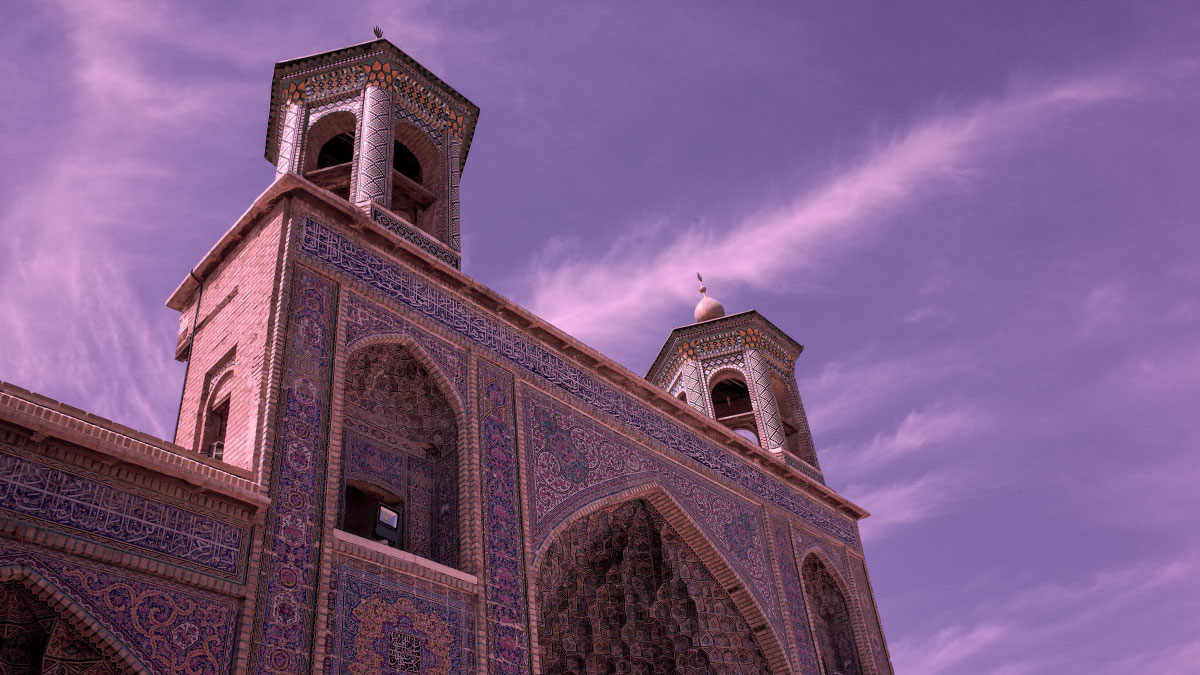
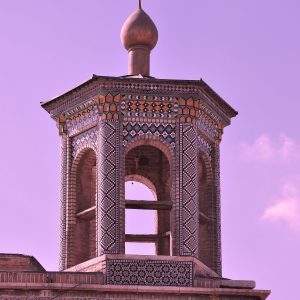
Unlike many grand mosques in Iran, the Nasir al-Mulk Mosque was originally built as a private mosque, which is why it does not have a large dome. Instead, it features a more intimate design with intricately decorated prayer halls, courtyards, and arcades. Today, it is one of the most visited sites in Iran, drawing visitors from around the world who come to witness its legendary morning light display.
The Architecture: Where Light Meets Design
The Famous Stained-Glass Windows
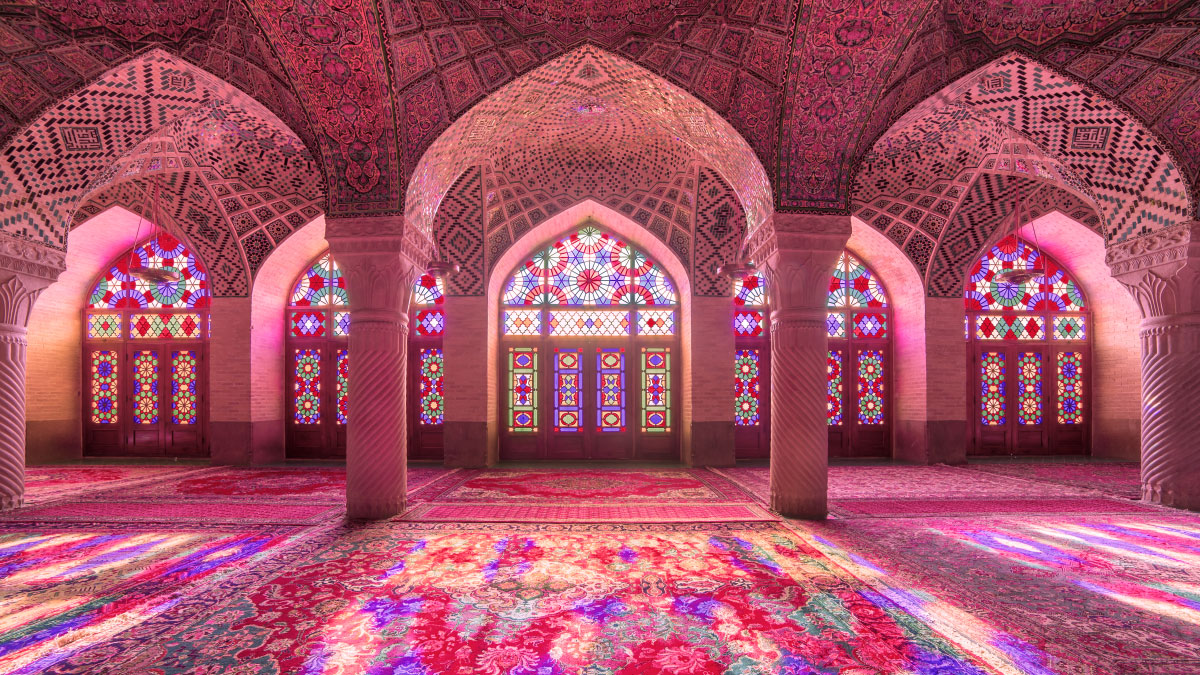
The most celebrated feature of the Pink Mosque is its colourful stained-glass windows, known as Orsi (ارسی). These exquisite panels are crafted using a traditional Persian lattice technique, combining wood and coloured glass to create geometric and floral patterns of extraordinary beauty.
The stained-glass windows keep insects away by confusing their perception with dense, colourful light
Every morning, as the sun’s rays pass through the Orsi windows, the interior of the western prayer hall is transformed into a dazzling display of colour. Reds, blues, greens, yellows, and pinks dance across the Persian carpets and intricately carved columns, creating one of the most photographed scenes in all of Iran.
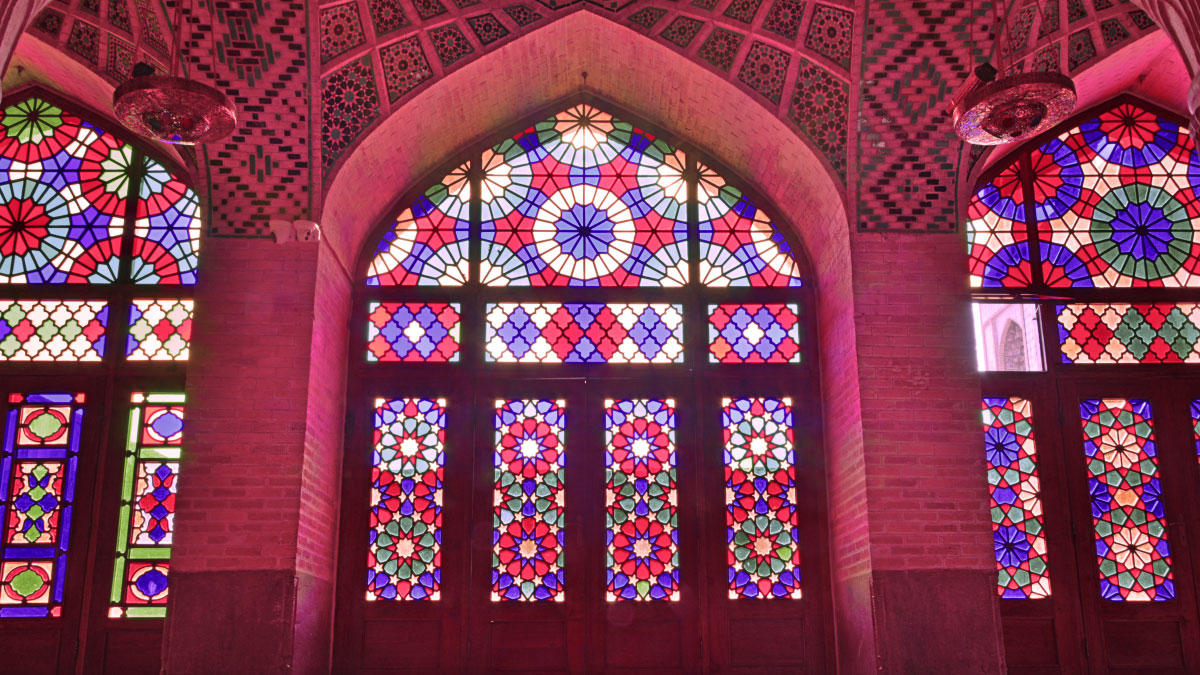
But these windows are not merely decorative. There is a scientific purpose behind the use of Orsi in the mosque. Since mosques are sacred spaces in Islam, there is considerable emphasis on keeping them clean and free from insects. Because the eyes of many insects are sensitive to light, the dense, multi-coloured rays created by the Orsi windows confuse their perception, effectively preventing them from entering the prayer area. It is a remarkable example of how traditional craftsmanship and practical wisdom come together in Islamic architecture.

Persian Carpets and Interior Design
The floors of the prayer halls are covered with fine Persian carpets, which complement the kaleidoscopic light and add warmth to the space. The interior walls and ceilings are adorned with intricate Muqarnas (honeycomb vaulting), detailed tile work featuring floral and geometric motifs, and painted panels that showcase the finest traditions of Shirazi craftsmanship.
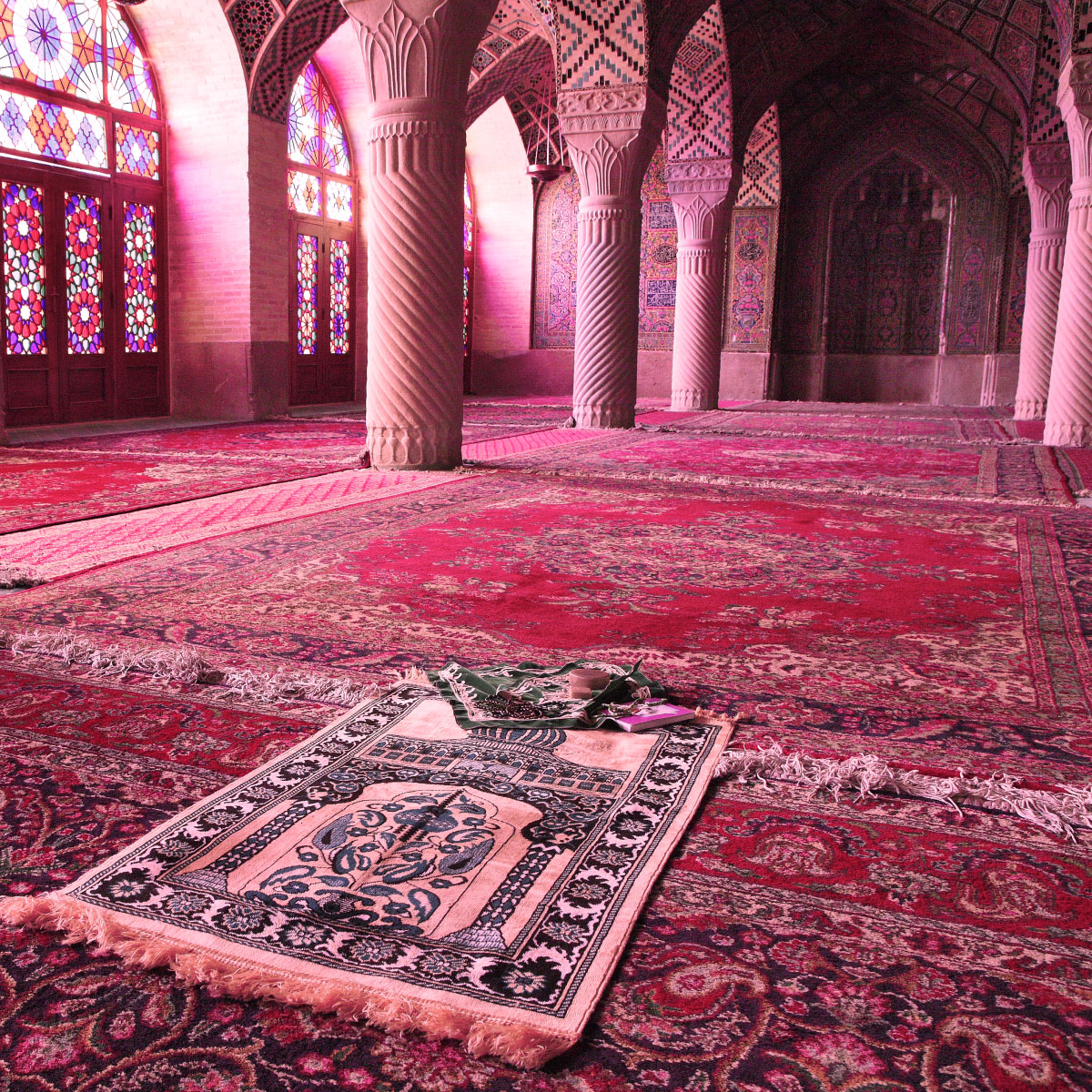
Every surface of the mosque tells a story of meticulous artistry. The twisted columns in the prayer hall, the carved stone arches, and the delicate plasterwork all reflect a level of devotion to beauty that is characteristic of Persian mosque architecture.
The Courtyard and Reflecting Pool
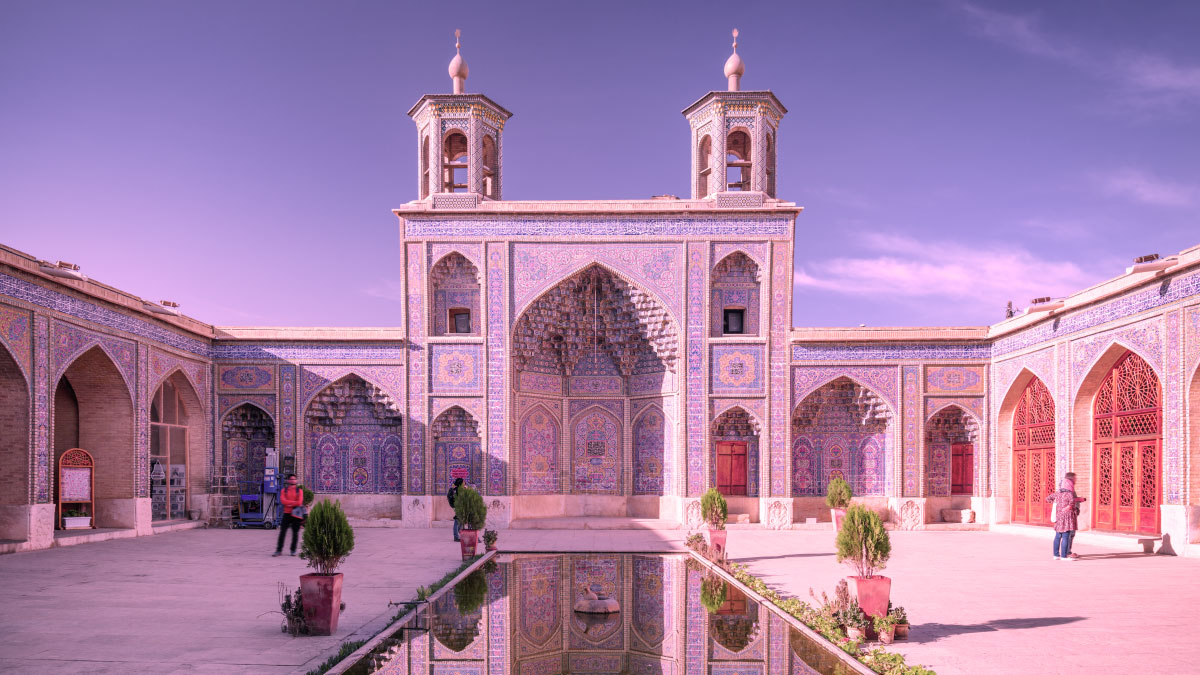
At the centre of the mosque lies a serene courtyard featuring a rectangular pool. The still water acts as a natural mirror, reflecting the ornate facade of the mosque and creating a sense of symmetry and tranquillity. This design element is a hallmark of Persian architecture, where water features are used to symbolise purity, reflection, and paradise.
The courtyard pool mirrors the building creating a perfect reflection of the mosque’s ornate facade
The mosque also once had its own water well, which served the community and worshippers for many years, a practical reminder of the mosque’s role as a place that serves both spiritual and everyday needs.
The History of the Pink Mosque
A Noble Commission
The Pink Mosque was commissioned in 1876 by Mirza Hasan Ali Nasir al-Mulk, one of the lords of the Qajar dynasty and a respected figure in Shiraz. He envisioned a mosque that would serve as both a place of worship and a monument to the artistic heritage of the region. The construction took 12 years to complete, finishing in 1888.
The architects, Muhammad Hasan-e-Memar and Muhammad Reza Kashi-Paz-e-Shirazi, drew upon centuries of Persian architectural tradition while incorporating distinctive elements that set the mosque apart from its contemporaries. The extensive use of pink-hued tiles, imported stained glass, and detailed stone carving made it a truly unique creation.
Construction Begins
Mirza Hasan Ali Nasir al-Mulk commissions the construction of a private mosque in Shiraz. The project is entrusted to the architects Muhammad Hasan-e-Memar and Muhammad Reza Kashi-Paz-e-Shirazi, who begin work on what would become one of Iran’s most beautiful mosques.
Construction Completed
After 12 years of painstaking work, the mosque is completed. Every surface has been adorned with intricate tile work, carved stone, stained-glass windows, and Muqarnas vaulting. The result is a masterpiece of Qajar-era architecture that blends traditional Persian design with innovative artistic techniques.
National Heritage Recognition
The Nasir al-Mulk Mosque was officially added to the Iran National Heritage List, administered by the Cultural Heritage, Handicrafts and Tourism Organisation of Iran. This formal recognition ensured that the mosque and its delicate artistry would be legally protected, marking the beginning of organised efforts to preserve the building for future generations.
Preservation and Recognition
As the 20th century progressed, the Pink Mosque gained recognition as a site of exceptional cultural and architectural heritage. It was placed under the protection of Iran’s Cultural Heritage Organisation, and restoration efforts were undertaken to preserve its delicate tile work and stained-glass panels for future generations.
A Global Attraction
The Nasir al-Mulk Mosque is now one of the most visited and photographed sites in Iran. Its morning light display has become world-famous, attracting visitors, photographers, and admirers of Islamic art from every corner of the globe. The mosque remains an active place of worship, continuing to fulfil its original purpose alongside its role as a cultural treasure.
Beauty as an Act of Worship
Throughout Islamic history, Muslims have poured their finest artistry into the construction of mosques, understanding that beautifying a place of worship is itself an act of devotion. The Pink Mosque is a powerful example of this tradition. Every tile, every pane of glass, and every carved surface was crafted with care and intention, reflecting a deep love for the Creator through the beauty of creation.
Allah encourages beautification when attending places of worship. He says in Surah Al-Araaf of the Quran:
یٰبَنِیۡۤ اٰدَمَ خُذُوۡا زِیۡنَتَکُمۡ عِنۡدَ کُلِّ مَسۡجِدٍ
“O Children of Adam, take your adornment at every masjid.”
The craftsmen who built the Pink Mosque embodied this spirit, adorning the house of Allah with the most beautiful work their hands could produce. The mosque stands today as a testament to the idea that beauty and faith are not separate, but deeply connected.
FAQ About the Pink Mosque
The Nasir al-Mulk Mosque, known as the Pink Mosque, is located in the city of Shiraz, in the Fars Province of southern Iran. Shiraz is one of Iran’s most historic and culturally rich cities, often called the city of poets, literature, and flowers.
The mosque earned its popular nickname from the extensive use of pink-coloured tiles in its decoration. These distinctive rose-hued tiles cover much of the exterior and interior surfaces, giving the entire building a warm, pinkish glow that sets it apart from other mosques in Iran.
Construction began in 1876 and was completed in 1888, taking 12 years to finish. It was built during the Qajar dynasty and commissioned by Mirza Hasan Ali Nasir al-Mulk, a nobleman of Shiraz.
Unlike many of Iran’s grand mosques, the Nasir al-Mulk Mosque does not have a dome. This is because it was originally built as a private mosque for the household and associates of Mirza Hasan Ali Nasir al-Mulk. Private mosques in Iran traditionally featured a more modest scale and design compared to the large congregational mosques commissioned by rulers.
The best time to experience the mosque’s famous light display is in the early morning, particularly between sunrise and mid-morning. During these hours, sunlight streams through the stained-glass windows at the ideal angle, flooding the prayer hall with vibrant colours. The effect is most striking during the autumn and winter months when the sun is at a lower angle.
Orsi (ارسی) refers to a traditional Persian technique of creating stained-glass windows using a wooden lattice framework filled with pieces of coloured glass. The technique produces intricate geometric and floral patterns that filter sunlight into vivid, multi-coloured beams. Beyond their beauty, the Orsi windows in the Pink Mosque also serve a practical purpose, as the dense, colourful light confuses the visual perception of insects and helps keep the prayer area clean.
A Masterpiece of Islamic Art
The Pink Mosque is more than a building; it is a living work of art that continues to inspire awe and wonder in all who visit. From the rainbow of light that fills its prayer hall each morning to the peaceful reflection of its courtyard pool, every element of its design speaks to the creativity, skill, and devotion of the Muslim craftsmen who built it over a century ago.
As Allah, Al-Musawwir (The Fashioner of Forms), has placed beauty throughout His creation, the artisans of the Pink Mosque sought to reflect that beauty in every tile, every pane of glass, and every carved surface, a humble offering to the One who shapes all things.
May Allah preserve the mosques of this Ummah and bless those who build and maintain them. Ameen.