

The Great Mosque of Xi’an
Faith along the Silk Road
Hidden within the bustling Muslim Quarter of Xi’an, China, the Great Mosque of Xi’an (西安大清真寺) is one of the oldest, largest, and best-preserved mosques in all of China. At first glance, it looks like a grand Chinese temple, with sweeping tiled roofs, wooden pavilions, and landscaped courtyards. But step inside and you discover a fully functioning mosque where Quranic calligraphy adorns the walls, the prayer hall faces Makkah, and the call to prayer has echoed through its courtyards for over 1,200 years. Founded in 742 CE during the Tang dynasty, when Xi’an was the largest city in the world, this mosque is a remarkable testament to the deep and ancient roots of Islam in China.
In this article, we explore the history, architecture, and fascinating facts about the Great Mosque of Xi’an, a monument where Islam and Chinese civilisation have been woven together for over a millennium.
愿 清真 充满乾坤
“May Islam fill the universe”
What Is the Great Mosque of Xi’an?
The Great Mosque of Xi’an, also known as Huajuexiangsi (the Mosque on Huajue Alley), covers over 12,000 square metres and houses more than 20 buildings arranged across five courtyards along a single east-west axis. Unlike any mosque in the Middle East, it has no dome and no traditional minaret. Instead, it is built entirely in the traditional Chinese architectural style, with wooden pavilions, glazed-tile roofs, carved stone steles, and ornamental gardens that would not look out of place in a Buddhist temple or a Confucian academy.
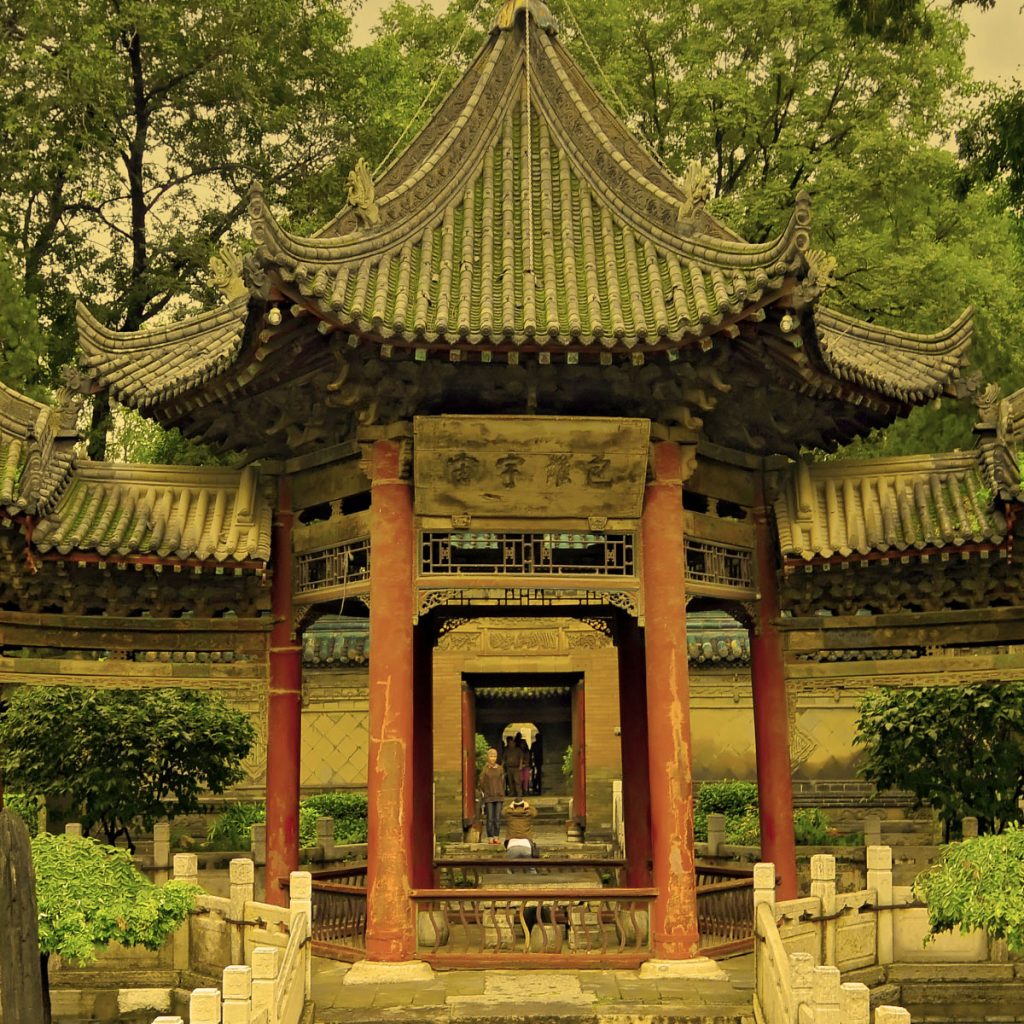
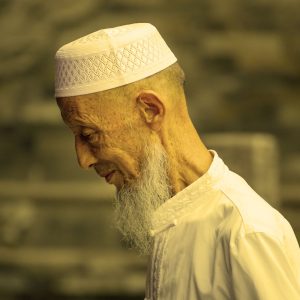
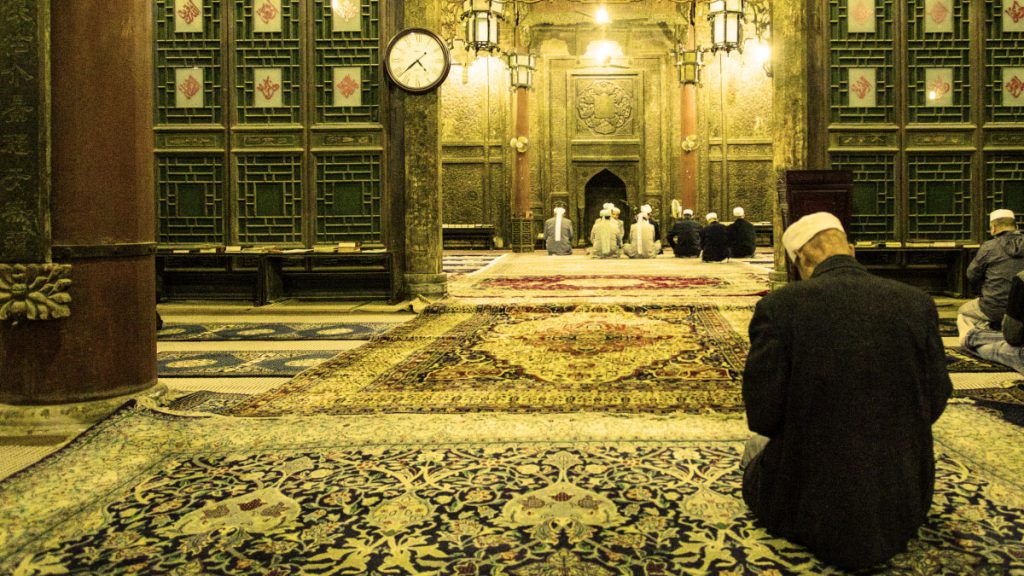
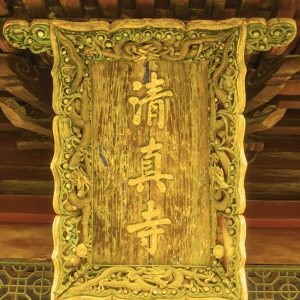
Yet this is unmistakably a mosque. The entire complex is oriented east to west, with the prayer hall at the western end facing the direction of Makkah, deliberately breaking the traditional Chinese feng shui principle of north-south alignment. The walls are covered with Arabic and Chinese calligraphy, including inscriptions in a unique style called Sini, where Arabic text is written using Chinese ink-brush techniques. Today, the mosque serves the Hui Muslim community of Xi’an, estimated at 50,000 people, and remains an active place of worship with five daily prayers.
The Architecture: A Mosque in the Shape of a Temple
Five Courtyards, Five Worlds
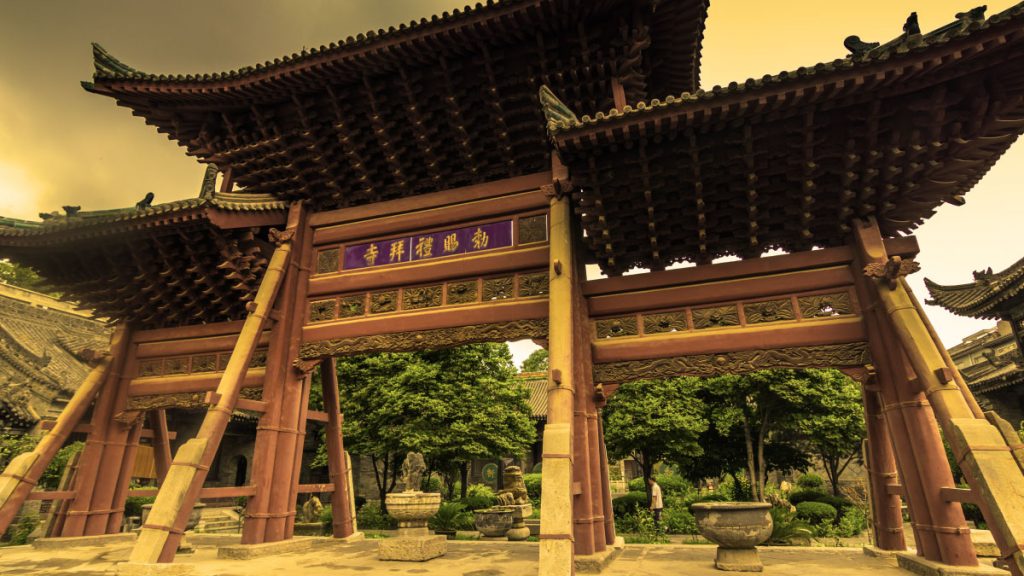
The mosque unfolds across five successive courtyards, each more sacred than the last, drawing the visitor deeper into the complex like a journey from the outer world towards the divine. The first courtyard is entered through an elaborate wooden paifang (ceremonial archway) 9 metres tall, covered in glazed tiles from the 17th century. The second courtyard houses two famous stone steles bearing the calligraphy of two of China’s greatest calligraphers: Mi Fu of the Song dynasty and Dong Qichang of the Ming dynasty.
The third courtyard is home to the Xingxin Tower (“Pavilion for Introspection”), a stunning three-storey, octagonal pagoda that serves as the mosque’s equivalent of a minaret. Scholars believe it was once used for the call to prayer, though today it stands as one of the most beautiful structures in the complex. Its blue-tiled roof, lotus-flower ceiling paintings, and flared eaves are purely Chinese in style, yet its function is entirely Islamic.
The fourth courtyard is dominated by the Phoenix Pavilion (Fenghua Ting), named for its resemblance to a phoenix spreading its wings. Beneath its Chinese-style roofline hides an Islamic-style wooden cupola, a subtle detail that captures the essence of the entire mosque: Chinese on the outside, Islamic at the heart. The Phoenix Pavilion also serves a clever purpose: it blocks the direct view to the prayer hall, building anticipation and reverence as the worshipper approaches the most sacred space.
The mosque has no dome and no traditional minaret yet it has served Muslims for over 1,200 years
The Prayer Hall and the Moon Gates
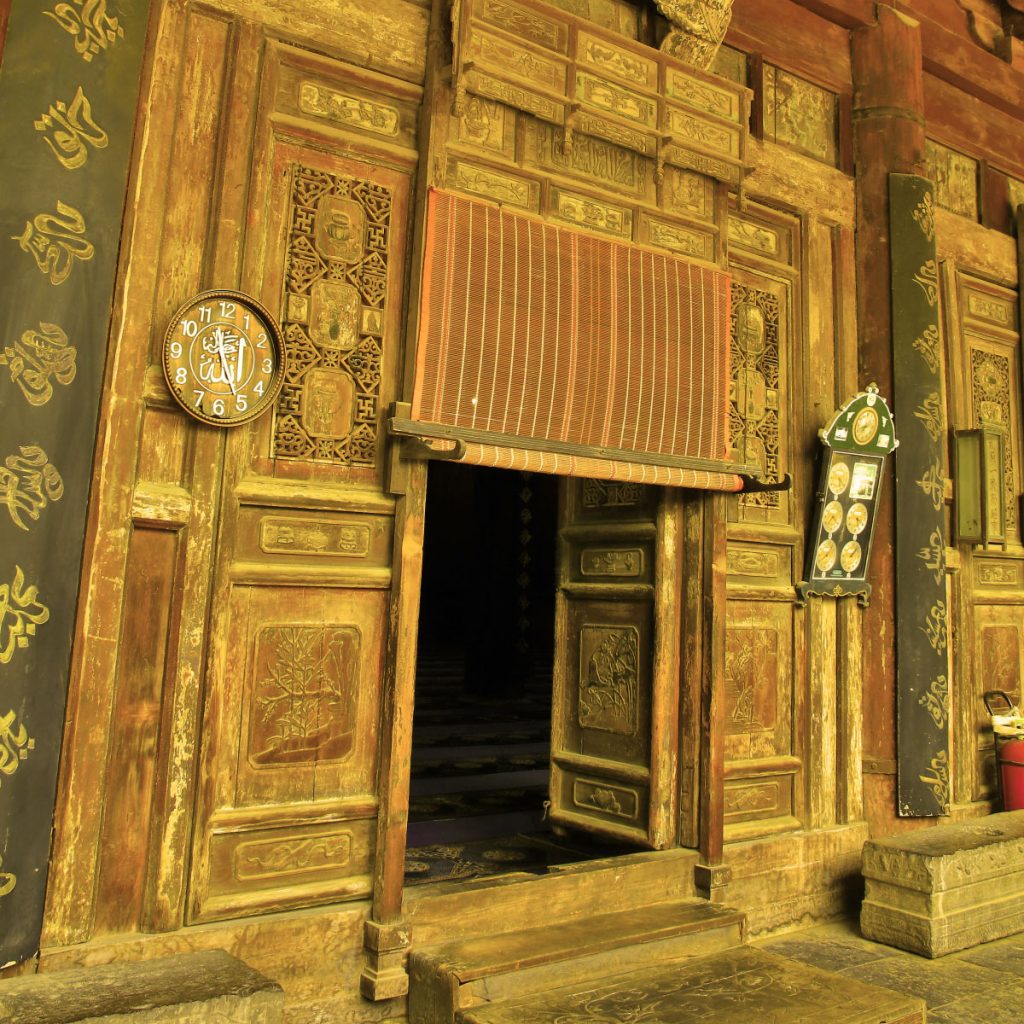
The prayer hall, located at the western end of the complex, is the largest in any ancient mosque in China, occupying 1,270 square metres and capable of holding over 1,000 worshippers. Its ceiling is covered with more than 600 paintings, all geometric patterns in the Arabic tradition, while the walls feature bas-relief woodwork and Quranic inscriptions. The mihrab (prayer niche) stands two metres tall, decorated with carved arabesques and surrounded by four bands of Quranic calligraphy in which the Arabic lettering shows the unmistakable influence of Chinese brush technique. One inscription is even embedded within a design of lotus flowers, a motif that would be unthinkable in a Middle Eastern mosque but feels entirely natural here.
Behind the prayer hall, accessed through two beautiful circular “moon gates”, lies the fifth and final courtyard. Here, two small man-made hills have been constructed for one of the most poetic rituals in Islam: the ceremonial viewing of the new moon, which marks the beginning of each Islamic month, including the start and end of Ramadan.
The fifth courtyard has man-made hills for the ceremonial viewing of the new moon
The History of the Great Mosque of Xi’an
Islam on the Silk Road
The story of this mosque is inseparable from the story of the Silk Road. Islam first reached China in the 7th century CE, carried by Arab and Persian merchants and envoys who travelled the vast trade routes connecting the Islamic world to the East. The first recorded contact between China and the Muslim world came around 651 CE, when the third Caliph, Uthman ibn Affan (may Allah be pleased with him), sent an envoy to the Tang imperial court. Many of these early Muslim visitors settled in Chang’an (ancient Xi’an), which was then the largest and most cosmopolitan city in the world, with a population that included Zoroastrians, Christians, Buddhists, and Muslims living side by side.
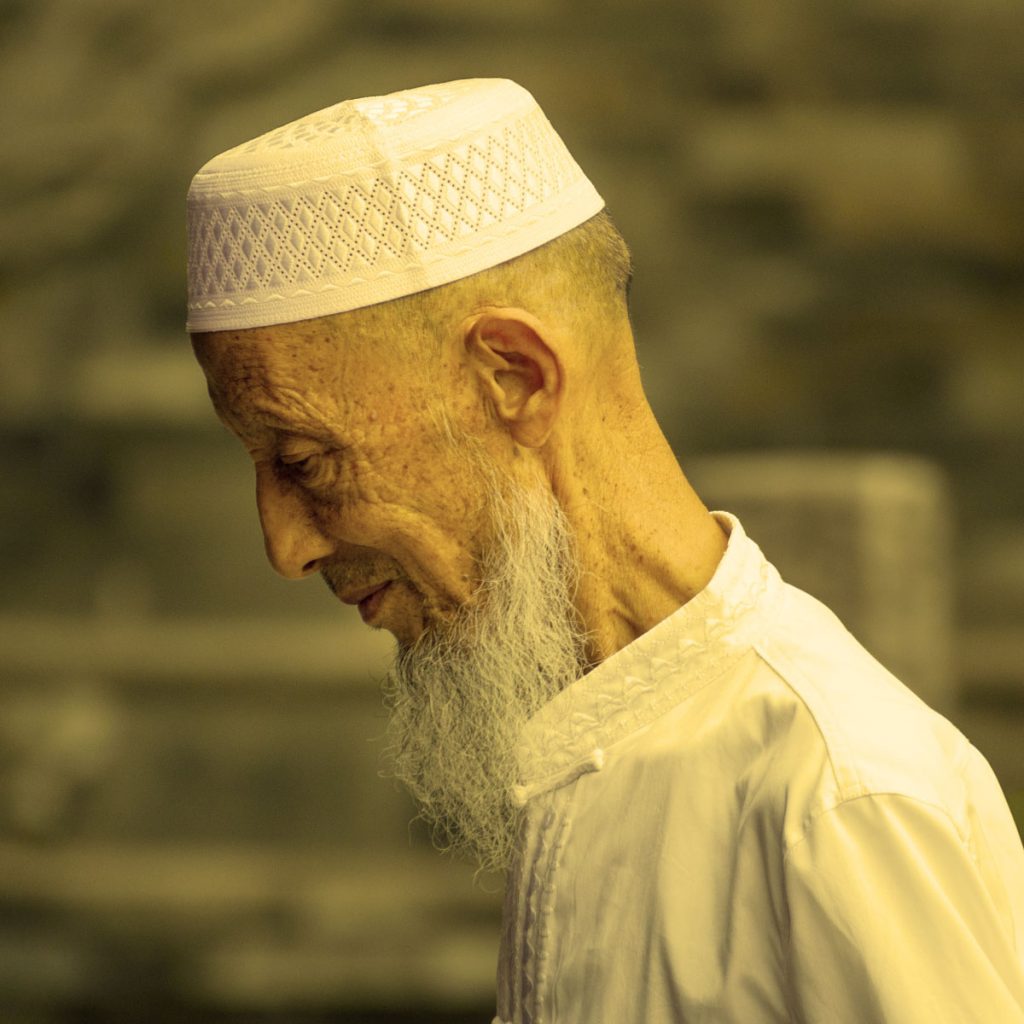
Over the centuries, these Muslim merchants and their descendants intermarried with the local Han population, forming the foundations of the Hui (回) ethnic group, one of China’s 56 officially recognised ethnic groups and the country’s most widely distributed Muslim community. Today, the Hui number over 10 million people across China, and the Great Mosque of Xi’an remains the spiritual heart of the Hui community in the city.

The Admiral Who Founded a Mosque
The Great Mosque is closely linked to one of history’s greatest Muslim explorers: Admiral Zheng He (1371-1433), the famous Chinese Muslim seafarer who commanded the largest fleet the world had ever seen. Zheng He, the son of a prestigious Muslim family, is credited with helping to establish the mosque in its present form during the Ming dynasty. Before clearing the China Sea of pirates and leading seven epic voyages across the Indian Ocean, Zheng He was a devout Muslim whose faith shaped his life and legacy.
The Mosque Is Founded
During the Tang dynasty, when Chang’an (Xi’an) is the largest city in the world, a mosque is established on the site, likely on the grounds of a former Buddhist monastery. Arab and Persian Muslim merchants who have settled in the city along the Silk Road require a place of worship. This is among the earliest mosques established in China.
Rebuilt Under the Yuan Dynasty
The Mongol Yuan dynasty, which brings a large wave of Muslim immigration into China, rebuilds the deteriorating mosque. Many of the new Muslim settlers are bureaucrats, soldiers, and merchants from Central Asia and Persia, collectively known as “People with Coloured Eyes.” They intermarry with the local Han population, consolidating the foundations of the Hui community.
The Ming Dynasty Reconstruction
Under Emperor Hongwu, the first Han Chinese emperor after Mongol rule, the mosque is reconstructed into its present form with imperial government patronage. The Muslim admiral Zheng He is credited with supporting the project. The mosque is rebuilt entirely in the traditional Chinese architectural style, fusing Islamic religious function with Chinese aesthetics in a way that will define Chinese mosque architecture for centuries.
Qing Dynasty Additions
The mosque receives further additions during the Qing dynasty, including the front gate, the ornamental paifang archway, and the sebil (drinking fountain). Imperial plaques declaring the mosque’s official patronage are placed within the complex, including a “Declaration of the Reconstruction of the Mosque” in 1606 and a “Declaration to Fix the Mosque” in 1768.
The Cultural Revolution
During the Cultural Revolution, the mosque, like virtually all religious sites in China, is temporarily shut down. It is converted into a steel factory, and worship is forbidden. After the revolution ends, the mosque is restored and returned to the Muslim community, reopening as a place of worship once again.
National Monument Status
After being designated a provincial-level protected site in 1956, the Great Mosque of Xi’an is elevated to the status of a national monument in 1988. UNESCO recognises it as one of the Islamic relics of world importance. Today, it serves approximately 50,000 Hui Muslims in Xi’an and welcomes visitors from around the world.
Where East Meets the Qibla
The Great Mosque of Xi’an is a living testament to one of Islam’s most remarkable qualities: its ability to take root in any culture without losing its essence. Here, the five daily prayers are offered beneath Chinese timber ceilings, the Quran is recited within courtyards that could belong to a Song dynasty palace, and the Shahada is written in brushstrokes that flow with the rhythm of Chinese calligraphy. The building is Chinese in every outward sense, yet every element serves the worship of Allah alone.
Allah says in Surah Al-Hujuraat of the Quran:
یٰۤاَیُّہَا النَّاسُ اِنَّا خَلَقۡنٰکُمۡ مِّنۡ ذَکَرٍ وَّاُنۡثٰی وَجَعَلۡنٰکُمۡ شُعُوۡبًا وَّقَبَآئِلَ لِتَعَارَفُوۡا
“O humanity, indeed We created you from a male and a female, and made you into peoples and tribes so that you may get to know one another”
The Great Mosque of Xi’an is the embodiment of this verse. Born from the meeting of Arab merchants and Chinese civilisation along the Silk Road, it is a mosque that belongs to two worlds at once, proof that Islam is not confined to any single culture, language, or architectural style, but is a universal faith that finds its home wherever sincere hearts turn towards Makkah.
FAQ About the Great Mosque of Xi’an
The Great Mosque is located on Huajue Lane in the heart of the Muslim Quarter of Xi’an, Shaanxi Province, China, near the famous Drum Tower. Xi’an, known in ancient times as Chang’an, was the eastern terminus of the Silk Road and one of the four great ancient capitals of China. The mosque is easily accessible by Metro Line 2 to Bell Tower Station.
The mosque was founded in 742 CE during the Tang dynasty, making it over 1,280 years old. However, the buildings that stand today were largely constructed during the Ming dynasty (1384 CE) and further expanded during the Qing dynasty (17th-18th century). It has undergone at least four major reconstructions over the centuries.
When Islam arrived in China, Muslim communities adopted the local Chinese architectural traditions for their places of worship, just as they used local building styles in other parts of the world. The majority of Chinese mosques built during the Ming and Qing periods combine traditional Chinese architectural forms (timber frames, glazed-tile roofs, courtyard plans) with Islamic religious function (qibla alignment, mihrab, Quranic calligraphy). The result is a unique form of Islamic architecture found nowhere else in the world.
The Hui (回) are one of China’s 56 officially recognised ethnic groups and the country’s most widely distributed Muslim community. They are descended from Arab, Persian, and Central Asian merchants and settlers who arrived in China via the Silk Road from the 7th century onward and intermarried with the local Han Chinese population. The Hui speak Chinese, follow Islamic practice, and number over 10 million people across China. The Great Mosque of Xi’an is the spiritual centre of the approximately 50,000 Hui who live in the city today.
Yes, the mosque is open to visitors year-round for a small admission fee. The courtyards, gardens, pavilions, steles, and exterior of the prayer hall can all be explored. However, the main prayer hall is reserved for Muslim worshippers only and is off-limits to non-Muslim visitors, though it can be admired from the outside. Visitors should dress modestly and avoid bringing pork products onto the premises out of respect for Islamic custom.
Sini (from the Arabic word for “Chinese”) is a unique style of Arabic calligraphy developed by Chinese Muslims, in which Arabic text is written using traditional Chinese ink-brush techniques. The result is a script that is unmistakably Arabic in content but has the flowing, painterly quality of Chinese brushwork. Sini calligraphy can be found throughout the Great Mosque of Xi’an, including on the walls of the prayer hall, where Quranic inscriptions sit alongside Chinese text in a visual expression of the mosque’s dual cultural heritage.
Where the Silk Road Meets the Qibla
The Great Mosque of Xi’an is one of the most extraordinary Islamic monuments in the world, not for its size or grandeur, but for what it represents: 1,200 years of Islam thriving within the heart of Chinese civilisation. It is a mosque built by merchants who crossed deserts and mountains to bring trade and faith to the East, sustained by their descendants who made China their home and Islam their anchor. Every courtyard, every stele, every brushstroke of Sini calligraphy is a testament to the meeting of two great civilisations along the Silk Road.
As Allah, Al-Hadi (The Guide), guides whom He wills to the straight path, this mosque stands as a reminder that His guidance has reached every corner of the earth, from the deserts of Arabia to the ancient capital of China.
May Allah preserve the mosques of this Ummah and bless those who build and maintain them. Ameen.