

The Blue Mosque
Ottoman grandeur in blue tiles
Rising majestically from the heart of Istanbul, Turkey, the Sultan Ahmed Mosque (Sultanahmet Camii) is one of the most iconic landmarks of the Ottoman Empire. Known across the world as the Blue Mosque for the thousands of blue Iznik tiles that line its interior, this 17th-century masterpiece stands as the last great mosque of the classical Ottoman period. With its six soaring minarets, cascading domes, and a prayer hall that can hold 10,000 worshippers, it remains a living symbol of faith, artistry, and imperial ambition.
In this article, we explore the history, architecture, and fascinating facts about the Blue Mosque, a monument where Ottoman grandeur and devotion to Allah are woven into every tile, dome, and minaret.
What Is the Blue Mosque?
The Sultan Ahmed Mosque, universally known as the Blue Mosque, is an Ottoman-era imperial mosque built between 1609 and 1617 during the reign of Sultan Ahmed I. It was designed by the royal architect Sedefkar Mehmed Aga, whose title “Sedefkar” means “mother-of-pearl inlayer”, revealing his origins as a master craftsman before rising to become a student of the legendary Mimar Sinan. The mosque gets its popular nickname from the more than 20,000 handmade Iznik ceramic tiles that adorn its interior walls, decorated with intricate floral patterns of tulips, roses, carnations, and cypresses in predominantly blue tones.
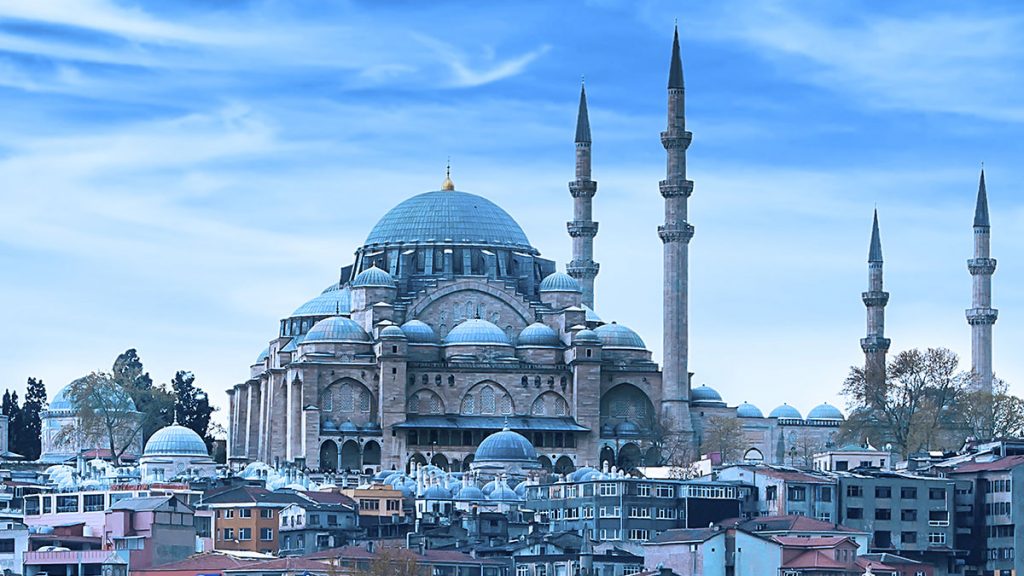
The mosque was built on the site of the ancient Byzantine Hippodrome and stands directly across from the Hagia Sophia, a position chosen deliberately by Sultan Ahmed I to create a monument that would rival its grandeur. Today, it sits at the heart of the Sultanahmet district, a UNESCO World Heritage Site since 1985, and remains one of the most visited landmarks in Istanbul, welcoming both worshippers and visitors from around the world.
The Architecture: A Masterclass in Ottoman Design
The Six Minarets
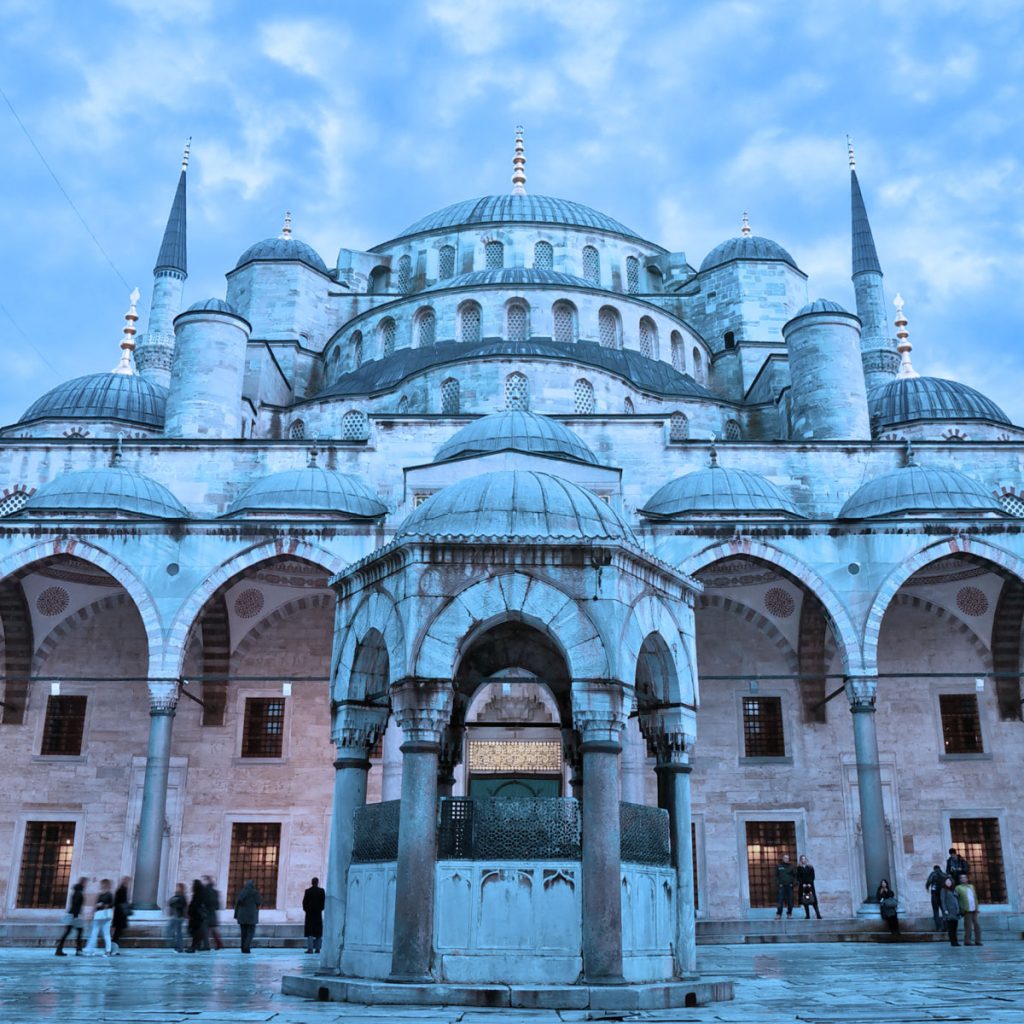
One of the most distinctive features of the Blue Mosque is its six pencil-shaped minarets, rising to a height of approximately 64 metres. At the time of its construction, most mosques in Istanbul had two or four minarets, making the Blue Mosque’s six a source of considerable controversy, as only the mosque at the Kaaba in Makkah had the same number.
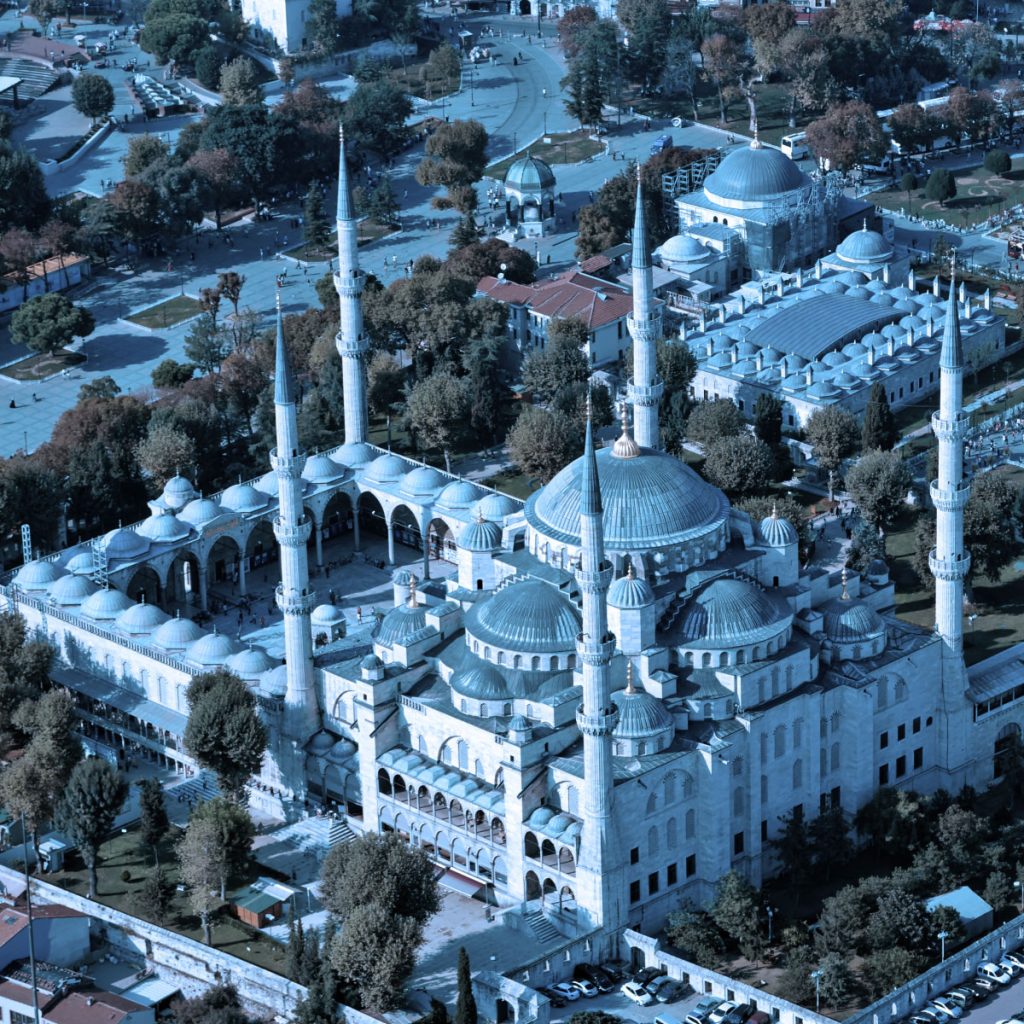
According to popular legend, the architect misheard the Sultan’s request for “altin minareler” (gold minarets) as “alti minare” (six minarets). Whatever the true origin, Sultan Ahmed reportedly resolved the matter by funding the construction of a seventh minaret at the mosque in Makkah, preserving its primacy. The four minarets at the corners of the prayer hall each have three balconies, while the two at the outer corners of the courtyard have two balconies each.
Historically, the muezzin would climb a narrow spiral staircase inside each minaret five times a day to call the faithful to prayer from these balconies. Today, the call to prayer is amplified by speakers, but the minarets remain a powerful visual symbol of the mosque’s grandeur and its place in the skyline of Istanbul.
The Blue Mosque was the first Ottoman mosque ever built with six minarets each rising to 64 metres
The Cascading Domes
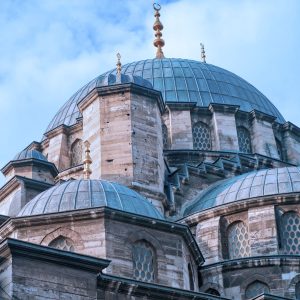
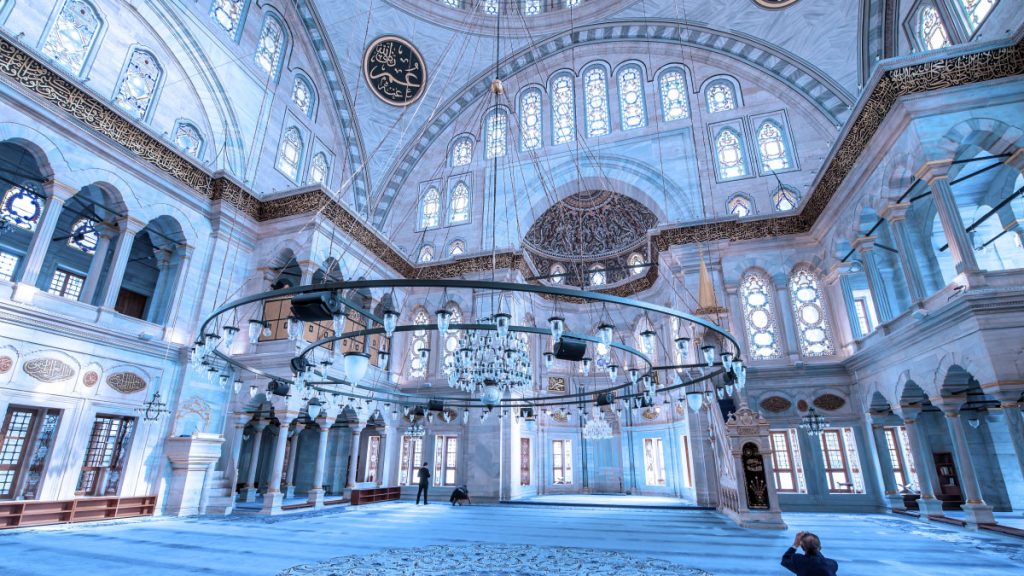
The mosque follows a classical Ottoman layout with a central dome that stands 43 metres (141 feet) high and spans 23.5 metres (77 feet) in diameter. This central dome is supported by four massive fluted columns, known as “elephant foot” pillars, and is surrounded by four semi-domes and eight secondary domes, creating a cascading effect that draws the eye upward and fills the interior with a sense of height and openness.
The central dome features 28 windows, and each semi-dome has a further 14 windows, flooding the vast prayer hall with natural light. The overall effect is one of weightlessness and serenity, a space designed to lift the heart and turn the mind towards the Creator.
The Iznik Tiles and Stained-Glass Windows
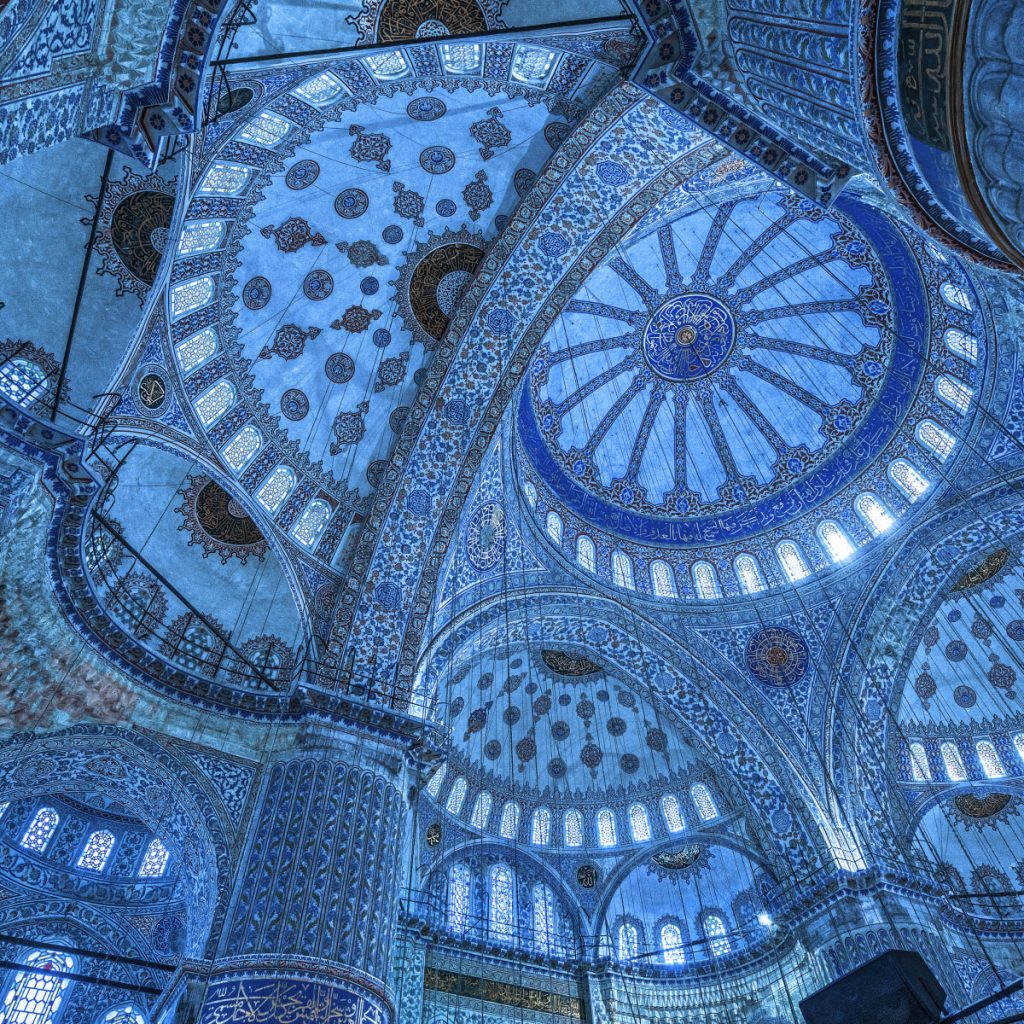
The lower walls and every pier of the interior are lined with more than 20,000 handmade ceramic tiles from Iznik (ancient Nicaea), produced in over 50 different tulip designs. These tiles feature intricate patterns of flowers, fruits, and cypresses in shades of blue, white, green, and turquoise, evoking images of paradise gardens. The upper walls are painted with flowing floral motifs in predominantly blue tones, giving the entire interior the distinctive colour from which the mosque takes its name.
The mosque is illuminated by 260 stained-glass windows, which were originally filled with 17th-century coloured glass, some of which were a gift from the Signoria of Venice. Though many of the original windows have since been replaced with replicas, the effect remains breathtaking, as light pours through the coloured panes and mingles with the blue tiles to create an atmosphere of profound calm.
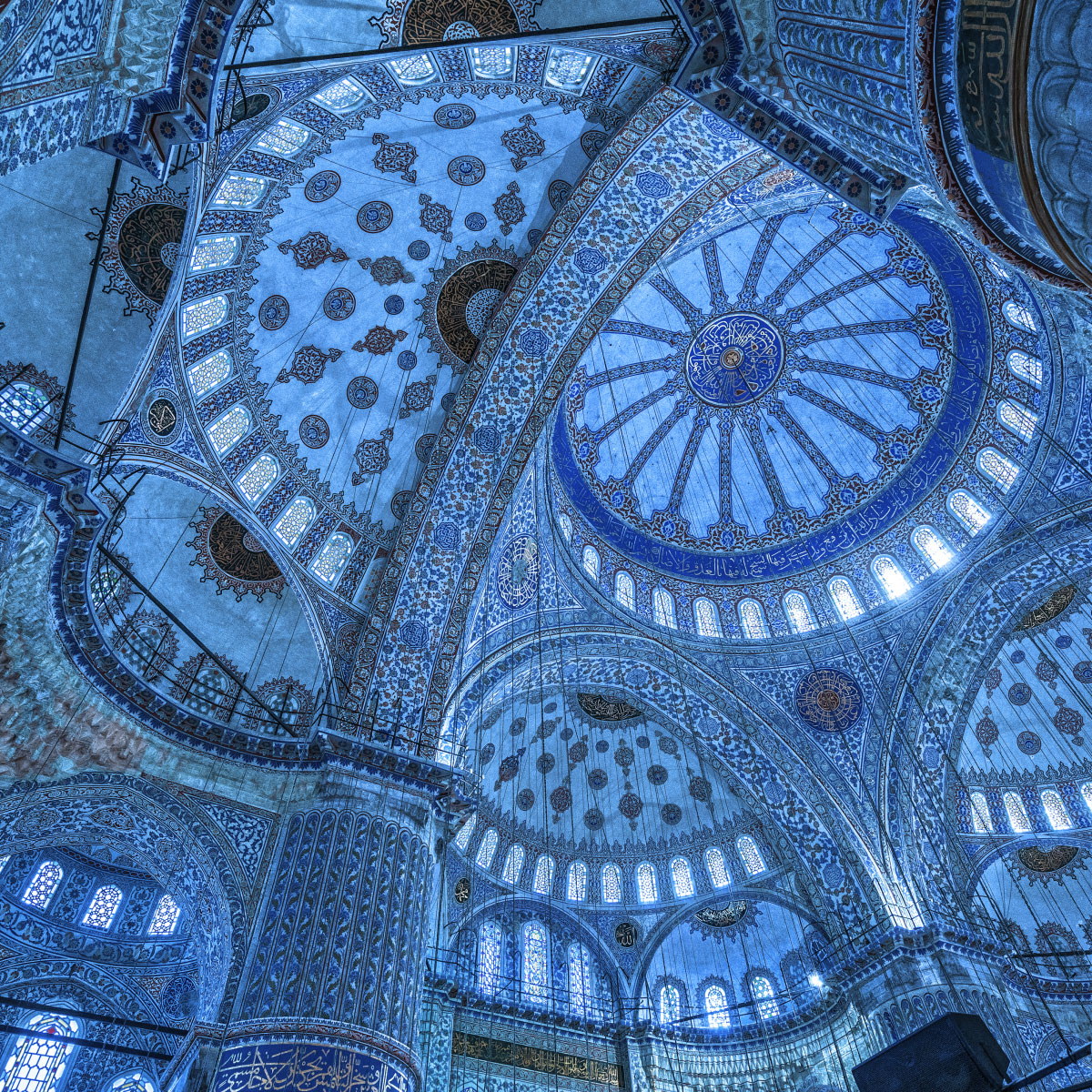
Over 20,000 handmade Iznik ceramic tiles line the interior walls in more than 50 tulip designs
The Kulliye: More Than a Mosque
Like many great Ottoman mosques, the Blue Mosque was not built as a standalone place of worship but as the centrepiece of a kulliye (religious and social complex). The original complex included a madrasah (educational institution), a hospital, an imaret (public soup kitchen), a primary school, a market (bazaar), a hammam (public bath), and a royal tomb for the Sultan and his family.
The complex also included a remarkable room called the Muvakkithane (time house), where astronomers calculated the precise times of the five daily prayers and other important occasions in the Islamic calendar. Many of these surrounding buildings were dismantled or repurposed during the 19th century, but the mosque itself has endured as the magnificent centrepiece of the Sultanahmet district.
The Iron Chain and the Courtyard
The mosque is preceded by a spacious courtyard that is deliberately built to be the same size as the prayer hall itself, a remarkable symmetry that doubles the sense of scale as one approaches the entrance. Surrounded by a continuous vaulted arcade with ablution facilities on both sides, the courtyard features a small hexagonal fountain at its centre.
At the western entrance to the courtyard hangs a heavy iron chain, suspended surprisingly low above the gateway. This chain was placed there for a powerful reason: since only the Sultan was permitted to enter the courtyard on horseback, the chain forced him to lower his head every time he entered to avoid being struck. It was a deliberate and symbolic gesture, a physical reminder that even the most powerful ruler must bow in humility before Allah.
Ostrich Eggs and Hidden Wonders
Among the mosque’s most curious features are the ostrich eggs that were traditionally placed on the chandeliers. This was a common practice in Ottoman mosques: the eggs were believed to repel spiders and prevent cobwebs from forming inside the prayer hall. In earlier centuries, the many lamps inside the mosque were also covered in gold and gems, with crystal balls and glass bowls hanging among them. Most of these decorations have since been removed or taken to museums, but the ostrich eggs remain one of the mosque’s most intriguing traditional details.
The History of the Blue Mosque
A Young Sultan’s Ambition
Sultan Ahmed I ascended to the Ottoman throne in 1603 at just 14 years of age. He inherited an empire that stretched across three continents but was weakened by military setbacks, including a humbling treaty with the Habsburg Monarchy. Determined to reassert Ottoman prestige and leave a lasting legacy, the young Sultan decided to build an imperial mosque that would rival the Hagia Sophia itself.

A Presidential Visit
On 7th April 2009
US President Barack Obama visits the Blue Mosque during a diplomatic trip to Turkey, removing his shoes at the entrance as a mark of respect. The visit brought worldwide attention to the mosque and highlighted its significance as a bridge between cultures and faiths.
The decision was controversial. Previous sultans had funded their mosques with spoils of military conquest, but Ahmed I had won no major victories and was forced to use funds from the imperial treasury. The ulema (Islamic scholars) protested, and some even discouraged Muslims from praying there. Despite this opposition, the Sultan pressed ahead, and at just 19 years old he commissioned Sedefkar Mehmed Aga to bring his vision to life. It is said that the Sultan showed his personal devotion to the project by working as a labourer on the site himself.
Construction Begins
Sultan Ahmed I, aged just 19, commissions the architect Sedefkar Mehmed Aga to build an imperial mosque on the site of the ancient Byzantine Hippodrome, directly facing the Hagia Sophia. The ambitious project is funded from the imperial treasury, a decision that provokes fierce criticism from the ulema and the public alike.
Completion and the Sultan’s Death
After approximately eight years of construction, the mosque is completed and opened for prayer. With its six minarets, cascading domes, and interior lined with over 20,000 Iznik tiles, it quickly becomes one of the most celebrated mosques in the Ottoman Empire. Tragically, Sultan Ahmed I passes away the same year at just 27 years old, and is buried in a mausoleum beside the mosque he built.
Major Restoration
The Blue Mosque undergoes a significant restoration project to preserve its structure and artistry. Over the centuries, wear, earthquakes, and the dismantling of many buildings in the original kulliye complex had taken their toll. This restoration marks the beginning of modern efforts to safeguard the mosque for future generations.
UNESCO World Heritage Status
The Blue Mosque is inscribed on the UNESCO World Heritage List as part of the “Historic Areas of Istanbul”, alongside the Hagia Sophia and Topkapi Palace. This international recognition affirms its significance not only to the Muslim world but to global cultural heritage as a whole.
A Papal Visit
Pope Benedict XVI visits the Blue Mosque during a goodwill tour of Turkey, making it only the second visit to a Muslim place of worship by a pope in history. The visit is widely seen as a significant gesture of interfaith dialogue and respect, drawing international attention to the mosque’s role as a bridge between cultures and faiths.
Light, Devotion, and the Ottoman Spirit
Light plays a central role in the design of the Blue Mosque. The hundreds of windows, the reflective glaze of the Iznik tiles, and the painted blue surfaces all work together to create an interior bathed in a soft, luminous glow. This was no accident. In Islamic tradition, light is a powerful symbol of divine guidance, and Ottoman architects understood that the experience of entering a mosque should itself be an act of spiritual elevation.
Allah says in Surah An-Nur of the Quran:
اَللّٰہُ نُوۡرُ السَّمٰوٰتِ وَالۡاَرۡضِ
“Allah is the Light of the heavens and the earth.”
The master calligrapher Seyyid Kasim Gubari, regarded as one of the greatest of his time, inscribed verses from the Quran across the interior walls and domes of the mosque. These inscriptions, combined with the light and colour of the tiles, transform the Blue Mosque into a space where every surface speaks of Allah and every beam of light is a reminder of His presence.
FAQ About the Blue Mosque
The Sultan Ahmed Mosque, known as the Blue Mosque, is located in the Sultanahmet district of Istanbul, Turkey. It stands on the site of the ancient Byzantine Hippodrome, directly facing the Hagia Sophia. The surrounding area is a UNESCO World Heritage Site and home to many of Istanbul’s most famous landmarks, including the Topkapi Palace and the Grand Bazaar.
The mosque earned its popular nickname from the more than 20,000 handmade Iznik ceramic tiles that line its interior. These tiles, decorated with floral patterns in shades of blue, white, green, and turquoise, combined with the blue-painted upper walls, give the entire interior a distinctive blue hue. Interestingly, Turkish people themselves refer to it as the Sultanahmet Camii (Sultan Ahmed Mosque); the name “Blue Mosque” was coined by Western visitors.
The Blue Mosque has six minarets, each rising to approximately 64 metres in height. At the time of its construction, this was highly unusual and controversial, as only the mosque at the Kaaba in Makkah had six minarets. According to legend, the architect misheard the Sultan’s request for gold minarets (“altin”) as six minarets (“alti”). The Sultan reportedly resolved the matter by funding a seventh minaret at the Makkah mosque.
Yes, the Blue Mosque is open to visitors of all faiths outside of the five daily prayer times. Visitors are asked to remove their shoes before entering, and modest dress is required. Women should cover their hair, arms, and legs; headscarves are available at the entrance for those who need them. The mosque is closed to tourists for approximately 90 minutes during each prayer time and on Friday mornings for the congregational prayer.
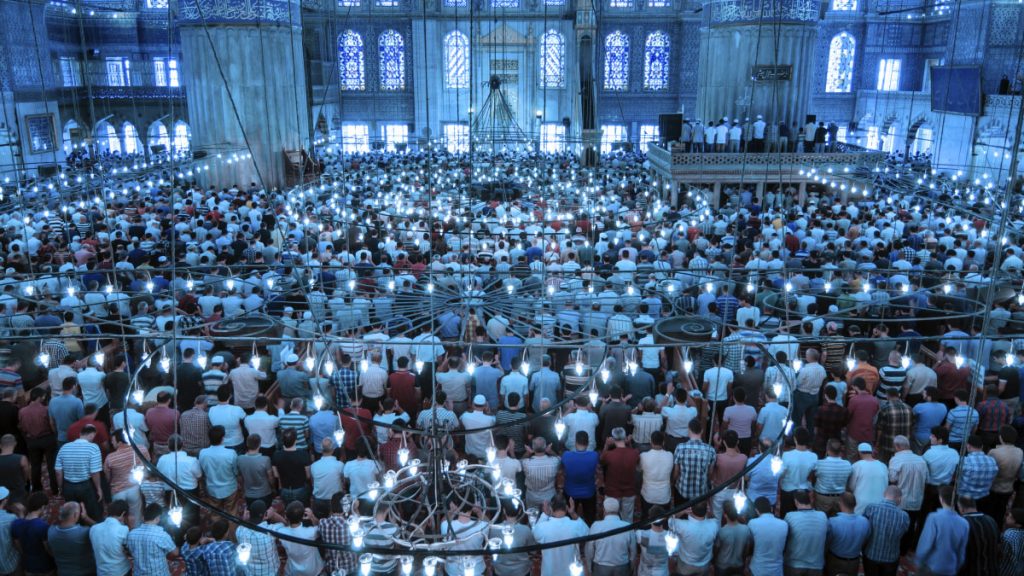
The Blue Mosque can accommodate approximately 10,000 worshippers at one time. Hundreds of Muslims use it for daily prayers five times a day, with far greater numbers attending on Fridays and during Islamic festivals. During the summer months, the mosque receives an average of around 20,000 visitors daily.
The Blue Mosque was originally the centrepiece of a large kulliye (religious and social complex) that included a madrasah, hospital, soup kitchen, primary school, market, hammam, and the Muvakkithane (time house) where astronomers calculated prayer times. Many of these buildings were dismantled or repurposed during the 19th century. The Sultan’s mausoleum and some ancillary structures survive, and parts of the original complex are now used by Marmara University.
A Monument to Faith and Beauty
For over four centuries, the Blue Mosque has stood as a testament to the devotion of a young Sultan who poured his faith, ambition, and personal labour into creating a house worthy of the worship of Allah. From the shimmering blue tiles that line its walls to the cascading domes that crown its silhouette, every element of the mosque speaks to the Ottoman belief that beauty in worship is an offering to the Divine.
As Allah, An-Nur (The Light), illuminates the heavens and the earth, so too does the Blue Mosque fill the hearts of those who enter with a sense of awe and remembrance, a space where the beauty of this world points towards the beauty of the next.
May Allah preserve the mosques of this Ummah and bless those who build and maintain them. Ameen.