

The Sheikh Zayed Grand Mosque
A vision built in marble
Standing in radiant white against the desert sky of Abu Dhabi, the capital of the United Arab Emirates, the Sheikh Zayed Grand Mosque (جامع الشيخ زايد الكبير) is one of the largest and most breathtaking mosques in the world. Built from 100,000 tonnes of white marble, adorned with gold, semi-precious stones, and millions of Swarovski crystals, this modern masterpiece was the vision of the nation’s founding father, Sheikh Zayed bin Sultan Al Nahyan, who dreamed of a mosque that would unite the world and embody the moderation and beauty of Islam.
In this article, we explore the history, architecture, and fascinating facts about the Sheikh Zayed Grand Mosque, a monument where the finest craftsmanship of dozens of nations comes together in a single act of devotion.
What Is the Sheikh Zayed Grand Mosque?
The Sheikh Zayed Grand Mosque is the largest mosque in the United Arab Emirates and one of the largest in the world, covering an area of more than 12 hectares (30 acres). It was constructed between 1996 and 2007, taking 11 years to complete. Over 3,000 workers and 38 contracting companies from around the world took part in its construction, using artisans and materials sourced from Syria, India, Italy, Germany, Turkey, Pakistan, Iran, China, the United Kingdom, New Zealand, North Macedonia, and the UAE itself.
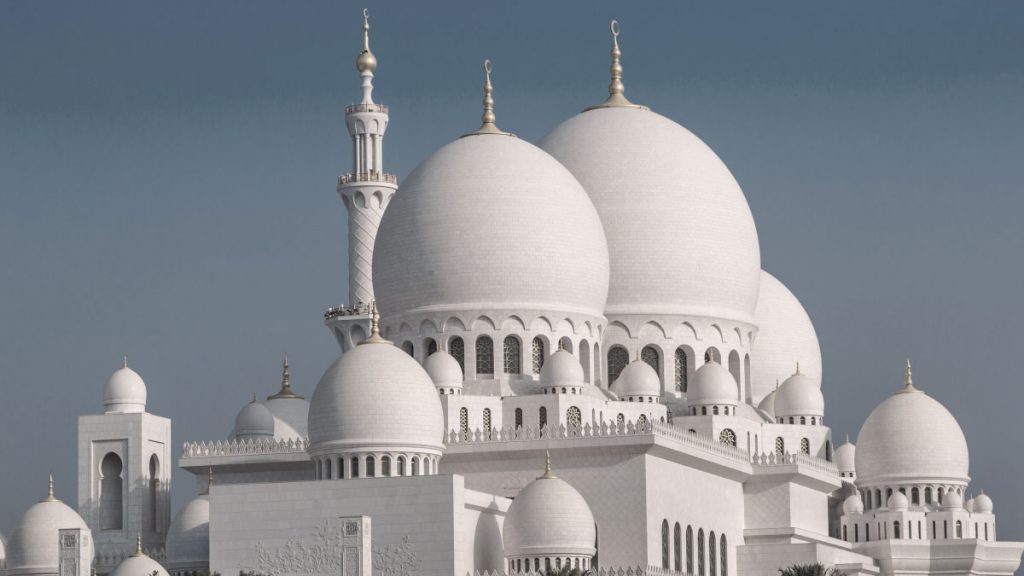
The mosque was designed under the management of the Syrian architect Yusef Abdelki, who drew inspiration from the Badshahi Mosque in Lahore, Pakistan, as well as Persian, Mughal, and Indo-Islamic architectural traditions. The result is a building that fuses the best of Islamic architecture from across the centuries and across the world into a single, harmonious whole. The main axis of the building is aligned precisely in the direction of the Kaaba in Makkah.
The Architecture: A Monument That Unites the World
Domes, Minarets, and Pillars
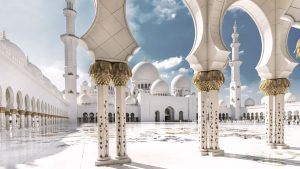
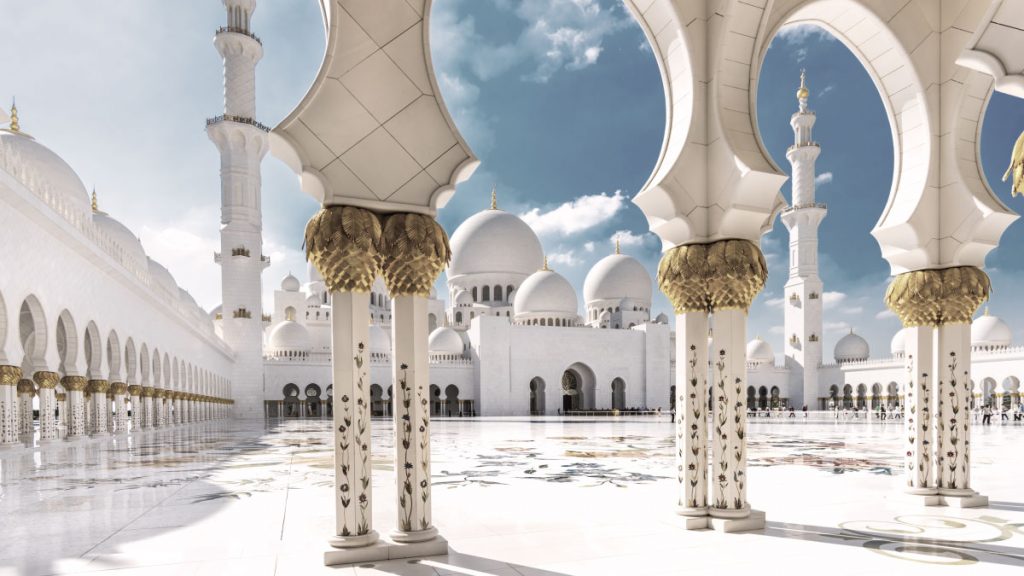
The mosque features 82 domes of varying sizes, each topped with stunning gold leaf spires and adorned with intricate Moroccan-inspired interior art. The largest dome crowns the main prayer hall, standing 85 metres high with a diameter of 32.8 metres. The exterior of every dome is clad in pure white marble, giving the mosque its serene and majestic silhouette.
Four minarets stand at the corners of the courtyard, each rising to an impressive 107 metres (351 feet) in height. Their design blends Mamluk, Ottoman, and Fatimid architectural styles, reflecting the mosque’s mission to unite the artistic heritage of the Islamic world in a single structure.
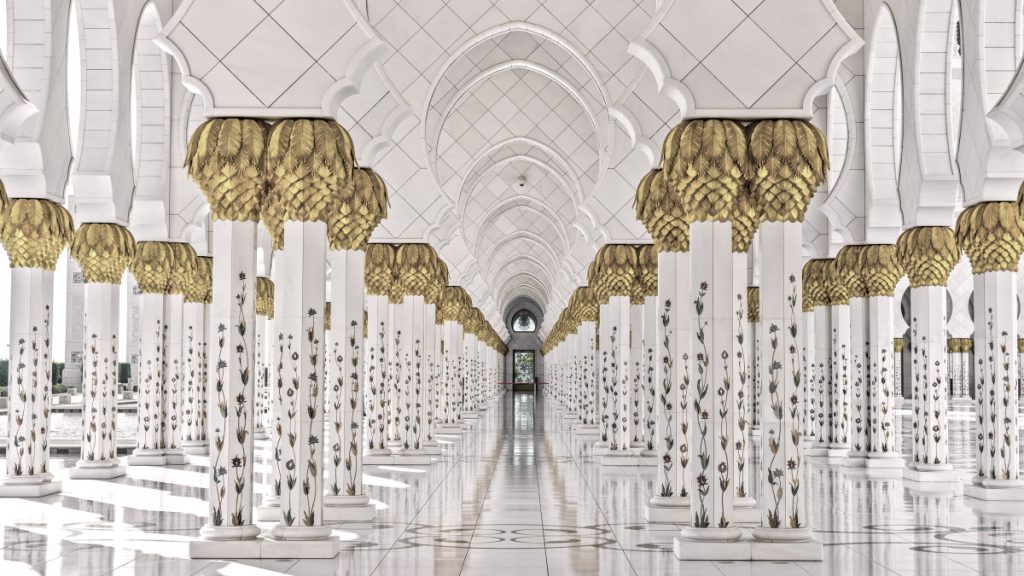
A total of 1,192 pillars support the mosque’s structure: 1,096 columns line the exterior arcade, each made of white marble panels inlaid with semi-precious stones including lapis lazuli, carnelian, amethyst, abalone shell, and mother of pearl using the ancient pietra dura technique, the same inlay method famously used in the Taj Mahal. A further 96 columns inside the main prayer hall are decorated with mother of pearl and crowned with golden capitals shaped like the top of a palm tree.
The mosque has 82 domes 1,192 pillars and four minarets rising to 107 metres each
The World’s Largest Hand-Knotted Carpet
The main prayer hall is home to the world’s largest hand-knotted carpet, certified by Guinness World Records. Designed by the Iranian carpet master Dr Ali Khaliqi, the carpet spans 5,700 square metres and weighs approximately 35 tonnes. Made from 70% New Zealand wool and 30% cotton, it contains an astonishing 2.268 billion knots. Around 1,200 artisans worked on the carpet, which took two years to complete. It was crafted in nine separate pieces in Iran, then transported to Abu Dhabi in two jumbo jets and seamlessly woven together on site.
The Crystal Chandeliers
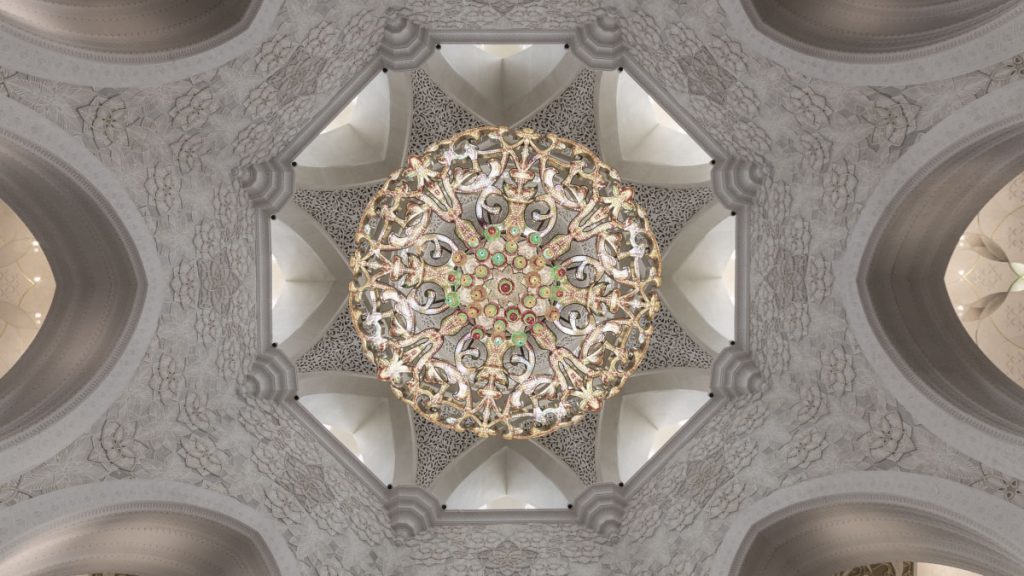
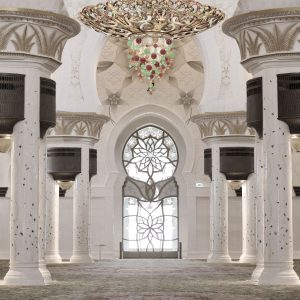
Suspended from the domes are seven magnificent chandeliers, designed by the German firm Faustig. Each chandelier is crafted from stainless steel plated with 24-carat gold and adorned with Swarovski crystals, with nearly 40 million crystal units used across all seven. The largest chandelier hangs in the main prayer hall, weighing 12 tonnes and measuring 10 metres in diameter. Their design resembles an upturned palm tree, symbolising the UAE’s heritage, sustenance, and prosperity.
The seven chandeliers contain nearly 40 million Swarovski crystal units plated with 24-carat gold
The Qibla Wall and the 99 Names of Allah
The Qibla wall, the wall facing the direction of Makkah, is one of the mosque’s most spiritually significant features. It is adorned with all 99 Names of Allah, inscribed in traditional Kufic calligraphy by the prominent UAE calligrapher Mohammed Mandi Al Tamimi. Each name is set within an elegant pentagonal floral pattern, with the word “Allah” at the centre. The calligraphy is subtly back-illuminated with fibre-optic lighting, giving the sacred names a gentle, glowing presence. The mihrab (prayer niche) is inlaid with stripes of 24-carat gold.
The Moonlit Facade
One of the most innovative and poetic features of the mosque is its exterior lighting system, designed by the London-based firm Speirs and Major Associates. The 360-degree lighting scheme is synchronised with the lunar cycle, causing the facade to shift in colour: from a cool white glow during a full moon to a gradually deeper blue as the moon wanes, changing every two evenings. On the fourteenth night of the cycle, the mosque is lit in its deepest blue, signifying the absence of the moon in the sky. The result is a building that quite literally breathes with the moon, a stunning visual connection between the mosque and the Islamic lunar calendar.
The History of the Sheikh Zayed Grand Mosque
A Founder’s Vision
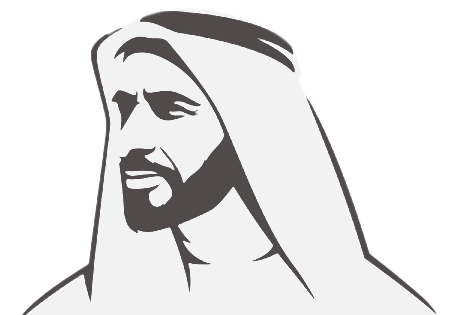
The mosque takes its name from Sheikh Zayed bin Sultan Al Nahyan (1918-2004), the founding father of the United Arab Emirates. Born in Abu Dhabi, Sheikh Zayed united the seven emirates under one flag in 1971 and dedicated his life to building a nation rooted in tolerance, coexistence, and progress. His dream was to create a mosque that would personify the moderation of Islam and serve as a bridge between cultures and civilisations.
The first considerations for the mosque began in the late 1980s, and construction officially started on 5th November 1996. Sheikh Zayed oversaw the project personally, insisting that only the finest materials and craftsmen from around the world be used. He chose white marble as the primary material, symbolising peace and purity. Tragically, Sheikh Zayed passed away on 2nd November 2004, three years before the mosque’s completion. He was buried in the courtyard of the mosque, and certified Quran reciters rotate around the clock at his mausoleum, reciting the Quran 24 hours a day, 7 days a week in his honour.
Construction Begins
On 5th November 1996, construction officially begins on the Sheikh Zayed Grand Mosque in Abu Dhabi. The Syrian architect Yusef Abdelki leads the initial design, drawing inspiration from the Badshahi Mosque in Lahore and from Persian, Mughal, and Indo-Islamic traditions. Over the following years, artisans and materials are sourced from more than a dozen countries.
Sheikh Zayed Passes Away
On 2nd November 2004, Sheikh Zayed bin Sultan Al Nahyan, the founding father of the UAE and the visionary behind the mosque, passes away at the age of 86. He is buried in the courtyard of the mosque he commissioned but would never see completed. Quran reciters begin reciting at his mausoleum around the clock, a practice that continues to this day.
The Mosque Opens for Worship
After 11 years of construction involving over 3,000 workers and 38 contracting companies, the Sheikh Zayed Grand Mosque is inaugurated and opened for worship on Eid al-Adha 2007. With its 82 domes, 1,192 pillars, and four minarets rising to 107 metres, it immediately becomes one of the most iconic landmarks in the Islamic world.
Global Recognition
The mosque rapidly gains international recognition, becoming one of the world’s top-rated landmarks on TripAdvisor and a must-visit destination for heads of state, dignitaries, and millions of visitors each year. Queen Elizabeth II visits the mosque and pays her respects at the tomb of Sheikh Zayed, reflecting the building’s status as a bridge between cultures.
Record-Breaking Worship
During Ramadan 2025, the mosque reaches a record congregation of 70,680 worshippers on the 27th night, believed to coincide with the first revelation of the Quran. Over the course of the holy month, more than 80,000 iftar meals are distributed daily, and the mosque’s “Our Fasting Guests” initiative delivers a total of over 2.6 million iftar and suhoor meals across Abu Dhabi.
A Space Built for All of Humanity
The Sheikh Zayed Grand Mosque is more than a place of worship. It is a platform for tolerance, learning, and cross-cultural dialogue. The mosque welcomes visitors of all faiths and backgrounds, offering free guided cultural tours, exhibitions, and educational programmes that promote understanding and appreciation of Islamic civilisation. Its library, housed within one of the minarets, holds a collection of classic books and publications on Islamic sciences, art, and calligraphy in multiple languages.
Allah says in Surah Al-Hujuraat of the Quran:
یٰۤاَیُّہَا النَّاسُ اِنَّا خَلَقۡنٰکُمۡ مِّنۡ ذَکَرٍ وَّاُنۡثٰی وَجَعَلۡنٰکُمۡ شُعُوۡبًا وَّقَبَآئِلَ لِتَعَارَفُوۡا
“O humanity, indeed We created you from a male and a female, and made you into peoples and tribes so that you may get to know one another.”
This spirit of unity is woven into the very fabric of the mosque. Its materials come from dozens of nations, its design draws from centuries of Islamic architecture, and its doors are open to people of every background. It is a living expression of Sheikh Zayed’s belief that Islam is a faith of moderation, beauty, and welcome.
FAQ About the Sheikh Zayed Grand Mosque
The mosque is located in Abu Dhabi, the capital city of the United Arab Emirates. It sits on an elevated site near the Maqta Bridge, at the gateway to Abu Dhabi City Island, and is visible from the Sheikh Zayed, Maqta, and Mussafah Bridges connecting the island to the mainland.
The mosque complex covers a total area of more than 555,000 square metres, with the building itself measuring approximately 290 by 420 metres. It can accommodate over 40,000 worshippers, with the main prayer hall alone holding up to 10,000. During Ramadan 2025, the mosque reached a record congregation of 70,680 on the 27th night.
The mosque was designed under the management of the Syrian architect Yusef Abdelki, alongside fellow Syrian designers Basem Barghouti, Moataz Al-Halabi, and Imad Malas. The design draws on Persian, Mughal, Mamluk, Ottoman, and Moorish architectural traditions, with the dome layout and floor plan inspired by the Badshahi Mosque in Lahore, Pakistan.
The main prayer hall contains the world’s largest hand-knotted carpet, certified by Guinness World Records. Designed by Iranian carpet master Dr Ali Khaliqi, it spans 5,700 square metres, weighs 35 tonnes, and contains 2.268 billion knots. It was crafted by 1,200 artisans over two years, made in nine pieces in Iran, and transported to Abu Dhabi in two jumbo jets before being woven together on site.
Yes, the Sheikh Zayed Grand Mosque welcomes visitors of all faiths and backgrounds. Free guided cultural tours are available throughout the week. Modest dress is required, and the mosque provides traditional attire for visitors who need it. The mosque receives millions of visitors each year and consistently ranks among the world’s most popular landmarks.
The mosque’s exterior lighting system, designed by London-based Speirs and Major Associates, is synchronised with the phases of the moon. During a full moon, the facade glows with a cool white light; as the moon wanes, the colour gradually shifts to a deeper blue, changing every two evenings. On the night of the new moon, the mosque is bathed in its deepest blue. The effect creates a building that visually “breathes with the moon,” connecting the mosque to the Islamic lunar calendar.
A Legacy in Marble and Light
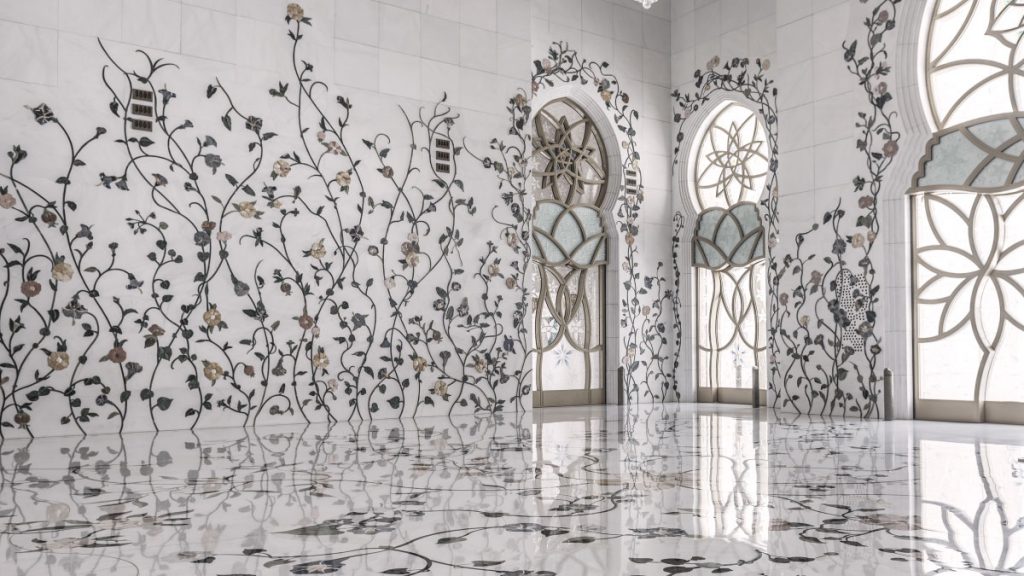
The Sheikh Zayed Grand Mosque is the realisation of one man’s dream to create a house of worship that would bring the world together. From its foundations of steel and concrete to its surfaces of marble, gold, and precious stone, every element was chosen to reflect the beauty, unity, and moderation of Islam. The mosque stands not only as a tribute to its founder but as a gift to humanity, a space where people of every nation and every faith can experience the serenity and splendour of Islamic art and devotion.
As Allah, Al-Jameel (The Beautiful), loves beauty, the Sheikh Zayed Grand Mosque stands as a profound expression of that love, written in marble, light, and the Names of the Creator Himself.
May Allah preserve the mosques of this Ummah and bless those who build and maintain them. Ameen.