

The Koutoubia Mosque
The mosque of the booksellers
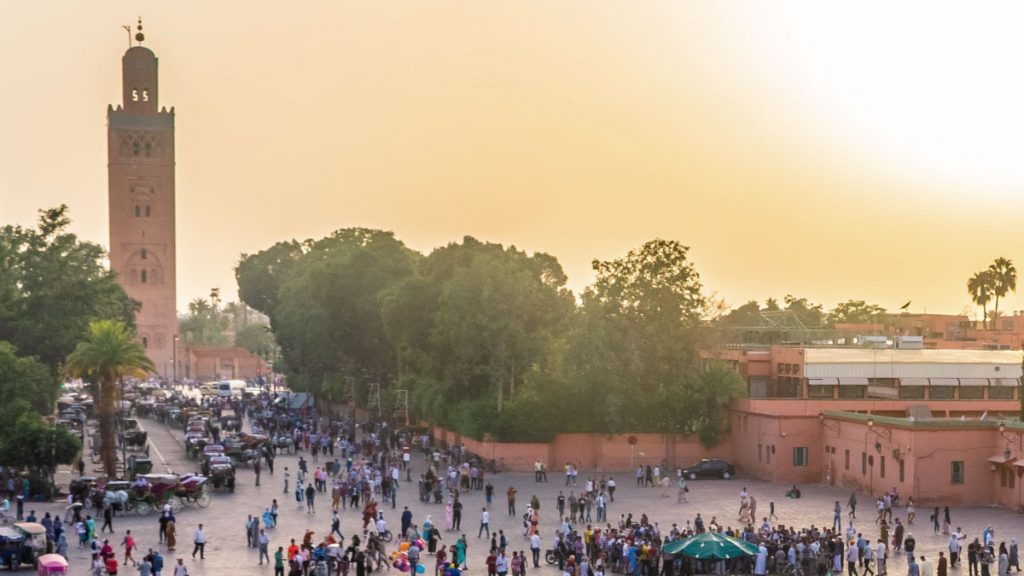
Towering over the rooftops of Marrakesh, Morocco, the Koutoubia Mosque (جامع الكتبية) is one of the finest examples of Almohad architecture in the world. Its magnificent 77-metre minaret, visible from 25 kilometres away, has stood as the defining symbol of Marrakesh for nearly nine centuries. Named after the kutubiyyin (booksellers) who once traded manuscripts and scrolls at its feet, this mosque is a monument to faith, knowledge, and a dynasty that shaped the architecture of an entire civilisation, from Morocco to Spain.
In this article, we explore the history, architecture, and fascinating facts about the Koutoubia Mosque, a landmark that inspired some of the world’s most famous towers and survived one of Morocco’s most devastating earthquakes.
What Is the Koutoubia Mosque?
The Koutoubia Mosque is the largest mosque in Marrakesh and one of the most important in all of Morocco. Founded in 1147 by the Almohad caliph Abd al-Mu’min after he conquered Marrakesh from the Almoravids, the mosque that stands today is actually the second version, rebuilt around 1158 after the first was found to have its qibla (direction of prayer) misaligned with Makkah. The minaret was likely finalised by Ya’qub al-Mansur around 1195.
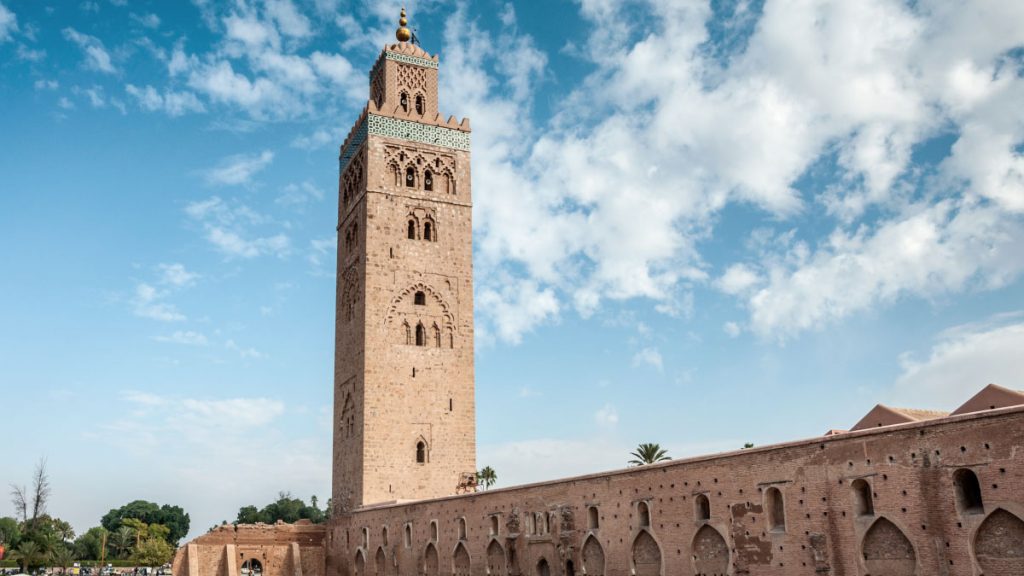
The mosque’s name means “Mosque of the Booksellers”, from the Arabic word kutubiyyin (كُتُبيين). At the height of its fame, as many as 100 book vendors worked in the streets surrounding the mosque, trading handwritten manuscripts, religious scrolls, and scholarly works. The mosque is located about 200 metres from the legendary Jemaa el-Fna market square and is flanked by beautiful gardens filled with orange trees, rose bushes, and fountains. It can accommodate up to 25,000 worshippers.
The Architecture: The Tower That Inspired a Civilisation
The 77-Metre Minaret
The most celebrated feature of the Koutoubia is its magnificent minaret, rising to a height of 77 metres (253 feet). It is the tallest structure in Marrakesh, and an official ordinance forbids any building in the city from being taller than the palm trees, ensuring that the Koutoubia’s minaret remains the dominant feature of the skyline. The square tower is built from local sandstone brought from Mount Gueliz and is decorated with varying geometric arch motifs, with a distinctive strip of green-glazed tiles near the top that has become one of its most recognisable features.
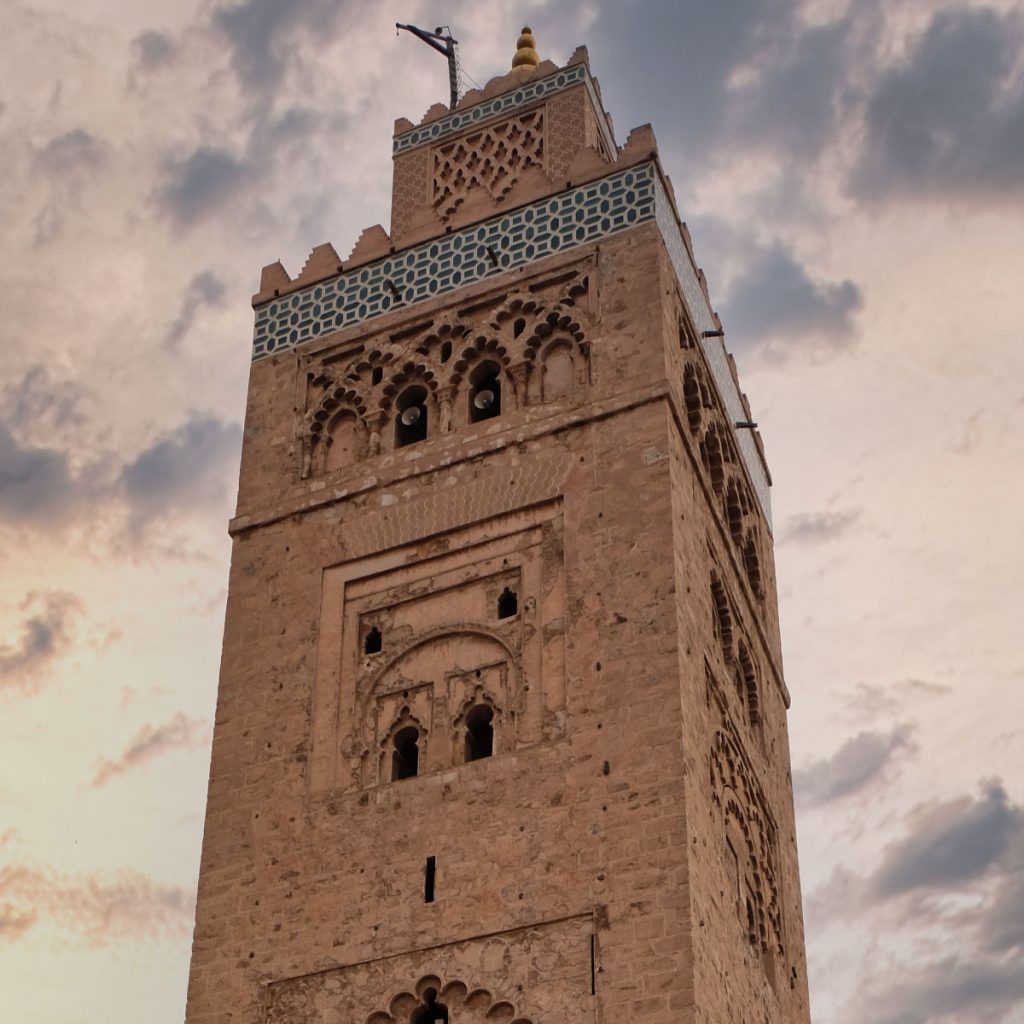
One of the minaret’s most remarkable features is that, instead of a staircase, it has an interior ramp wide enough to allow the muezzin to ride a horse to the top to make the call to prayer. The ramp winds upward through six storeys, passing rooms that were once used for various functions. At the very summit, the minaret is crowned by a bronze dome topped with a finial of four copper balls of decreasing size.
A famous legend surrounds these golden balls. According to the story, there were originally three balls of pure gold, made from the melted-down jewellery of Caliph Ya’qub al-Mansur’s wife, who had committed the sacrilege of breaking her fast during Ramadan and offered her gold as penance. Other legends say the balls represent the three holiest mosques in Islam: al-Haram in Makkah, the Prophet’s Mosque in Madinah, and al-Aqsa in Jerusalem.
The minaret has an interior ramp wide enough for a horse to carry the muezzin to the top for the call to prayer
A Model for the World
The Koutoubia’s minaret is far more than a local landmark. It served as the architectural model for two of the most famous towers in the Islamic and Christian world: the Giralda of the Seville Cathedral in Spain and the Hassan Tower in Rabat, Morocco, both of which were built shortly after in the same Almohad era. These three towers are often called “sisters”, as they share the same proportions, decorative style, and square design, and all three are built along the same longitudinal line stretching from Seville through Rabat to Marrakesh.
The Prayer Hall and Interior
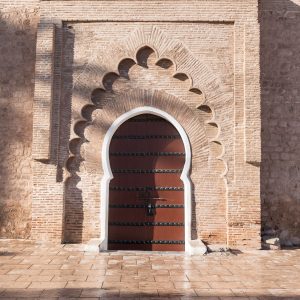
The interior of the Koutoubia, which is reserved exclusively for Muslims, features a vast prayer hall supported by rows of more than 100 pillars connected by horseshoe arches. The decoration follows the sober, austere principles of Almohad architecture, which valued functionality and spiritual simplicity over ornamental excess. The arches are left uncarved, the columns are raw, and the overall atmosphere is one of quiet dignity. The mihrab, however, is a jewel: made of finely carved white marble, surmounted by a half dome in painted gilded wood, and adorned with coloured earthenware tiles.
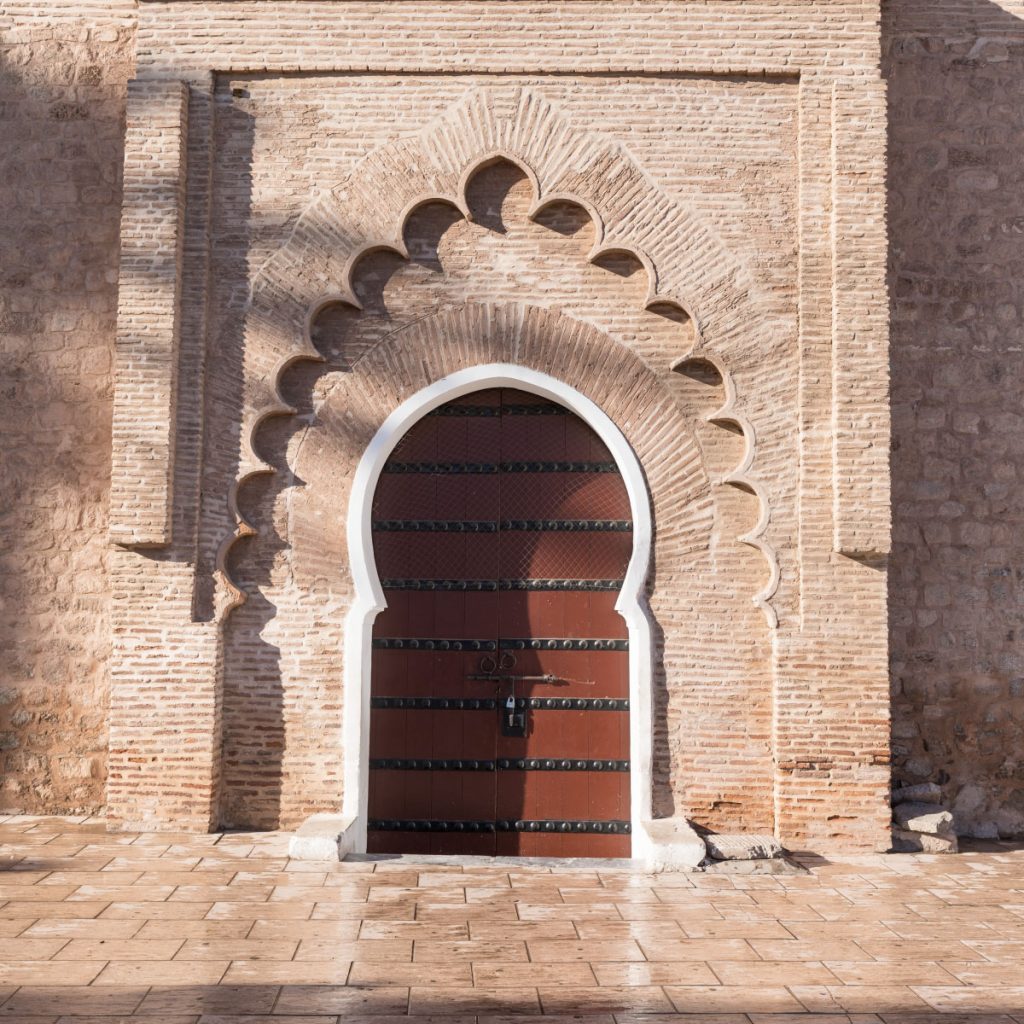
The mosque also houses a library with various books on Islamic studies and other topics, continuing the scholarly tradition from which the mosque takes its name.
The Koutoubia’s minaret inspired the Giralda of Seville and the Hassan Tower of Rabat its architectural “sisters”
The History of the Koutoubia Mosque
Two Mosques, One Legacy
The story of the Koutoubia is unusual: it was actually built twice. When Almohad caliph Abd al-Mu’min conquered Marrakesh in 1147, he ordered the construction of a grand mosque on the grounds of the defeated Almoravid ruler’s palace. The first mosque was completed around 1157, but it was soon discovered that its qibla (the direction of Makkah) was misaligned. A second mosque was built next to the first, with the corrected orientation, and completed around 1158. The ruins of the first mosque are still visible today beside the standing structure, a fascinating archaeological reminder of the Koutoubia’s complex origins.
The First Mosque Is Founded
Almohad caliph Abd al-Mu’min conquers Marrakesh from the Almoravids and orders the construction of a grand mosque on the grounds of the former ruler’s palace. The first mosque is completed around 1157 but is later found to have its qibla misaligned with the direction of Makkah.
The Second Mosque Is Built
A second mosque is constructed beside the first with the corrected orientation. Nearly identical in layout and design, it becomes the structure that stands today. The two mosques likely coexisted as one large complex for a period before the first was eventually abandoned.
The Minaret Is Completed
Under caliph Ya’qub al-Mansur, the magnificent 77-metre minaret is finalised. Crowned with four copper balls and featuring an interior ramp wide enough for a horse, it becomes the tallest and most iconic structure in Marrakesh. It will go on to inspire the Giralda of Seville and the Hassan Tower of Rabat.
Churchill Paints the Minaret
After the Casablanca Conference during the Second World War, British Prime Minister Winston Churchill persuades US President Franklin D. Roosevelt to visit Marrakesh. Captivated by the Koutoubia’s silhouette against the Atlas Mountains at sunset, Churchill paints “Tower of the Koutoubia Mosque”, the only painting he completed during the entire war. The painting was later owned by Angelina Jolie and sold at auction in 2021 for over $11.5 million.
Going Green
The Koutoubia Mosque is fitted with solar panels, solar water heaters, and energy-efficient LED lights as part of a national effort to make Morocco’s state-run mosques more dependent on renewable green energy. The project reflects Morocco’s commitment to sustainability and its role as a leader in clean energy across the African continent.
The Earthquake
A devastating earthquake with a magnitude of 6.8 strikes the region, causing widespread destruction across Morocco. Video footage shows the Koutoubia’s structure shaking violently. While cracks are observed in the minaret, the 77-metre tower does not collapse. After nearly nine centuries, the minaret remains standing, a testament to the engineering skill of its Almohad builders.
Nine Centuries and Still Standing
The Koutoubia Mosque has witnessed nearly 900 years of history, from the rise and fall of dynasties to the devastating earthquake of 2023. Through it all, its minaret has remained standing, a beacon above the rooftops of Marrakesh, calling the faithful to prayer just as it did in the days of the Almohads. It has inspired towers from Seville to Rabat, been immortalised by the brush of a wartime prime minister, and today leads the way in renewable energy innovation.
Allah says in Surah At-Tawbah of the Quran:
اِنَّمَا یَعۡمُرُ مَسٰجِدَ اللّٰہِ مَنۡ اٰمَنَ بِاللّٰہِ وَالۡیَوۡمِ الۡاٰخِرِ
“The mosques of Allah are only to be maintained by those who believe in Allah and the Last Day”
From the booksellers who once gathered at its feet to the engineers who fitted it with solar panels, the Koutoubia has always been maintained by those who believe. It is not just a monument to the past but a living house of worship that continues to serve, inspire, and endure.
FAQ About the Koutoubia Mosque
The Koutoubia Mosque is located in the southwest of the medina of Marrakesh, Morocco, on Avenue Mohammed V, about 200 metres from the famous Jemaa el-Fna market square. It is the largest mosque in the city and its 77-metre minaret is visible from almost everywhere in Marrakesh.
“Koutoubia” derives from the Arabic word kutubiyyin (كُتُبيين), meaning “booksellers”. The mosque was named after the 100 or more book vendors who once traded handwritten manuscripts, religious scrolls, and scholarly works in the streets surrounding it. The tradition of gathering around books after prayers fostered a culture of learning that enriched Marrakesh’s intellectual life for centuries.
The minaret stands at 77 metres (253 feet), making it the tallest structure in Marrakesh. An official ordinance forbids any building in the city from being taller than the surrounding palm trees, ensuring the Koutoubia’s minaret remains the dominant feature of the skyline. It is visible from approximately 25 kilometres away.
On 8th September 2023, a devastating earthquake measuring 6.8 magnitude struck the region, causing widespread destruction. Video footage showed the Koutoubia’s structure shaking violently. While cracks were observed in the minaret, the 77-metre tower did not collapse, standing firm after nearly nine centuries as a testament to the engineering skill of its Almohad builders.
No, the interior of the Koutoubia Mosque is reserved exclusively for Muslims, as is the case with all active mosques in Morocco. However, non-Muslim visitors can admire the minaret and exterior from the surrounding streets and enjoy the beautiful Koutoubia Gardens, which are open to all and filled with orange trees, rose bushes, and fountains. The best time to visit the exterior is at sunset, when the minaret is beautifully lit.
The minaret is crowned with four copper balls of decreasing size. According to one famous legend, the balls were originally made from pure gold, fashioned from the melted-down jewellery of Caliph Ya’qub al-Mansur’s wife, who offered her gold as penance for breaking her fast during Ramadan. Another tradition holds that the three largest balls represent the three holiest mosques in Islam: al-Haram in Makkah, the Prophet’s Mosque in Madinah, and al-Aqsa in Jerusalem.
The Mosque of the Booksellers
For nearly 900 years, the Koutoubia Mosque has stood at the crossroads of faith, knowledge, and beauty. From the booksellers who once filled its streets to the caliph who built its tower, from the prime minister who painted its silhouette to the engineers who crowned it with solar panels, the Koutoubia has always been a place where the past and the future meet. Its minaret survived earthquakes, its design inspired cities across continents, and its name preserves the memory of a time when books and worship were inseparable.
As Allah, Al-Alim (The All-Knowing), has made knowledge a path to Him, the Koutoubia stands as a reminder that the pursuit of learning and the devotion of prayer have always gone hand in hand.
May Allah preserve the mosques of this Ummah and bless those who build and maintain them. Ameen.